
There’s a sameness to cars these days. In many ways, it benefits you and me, as consumers. Most cars are now fairly well-made.
The average car on American roads is now 12.9 years old – a number that would have baffled our parents. Their cars required careful handling to get to that point. Today, keeping up with the maintenance is enough.
The cars in a class tend to have largely the same features. Apple CarPlay and Android Auto mean that even the experience of using their technology varies little from car to car.
All that similarity, though, can make choosing one a slog.
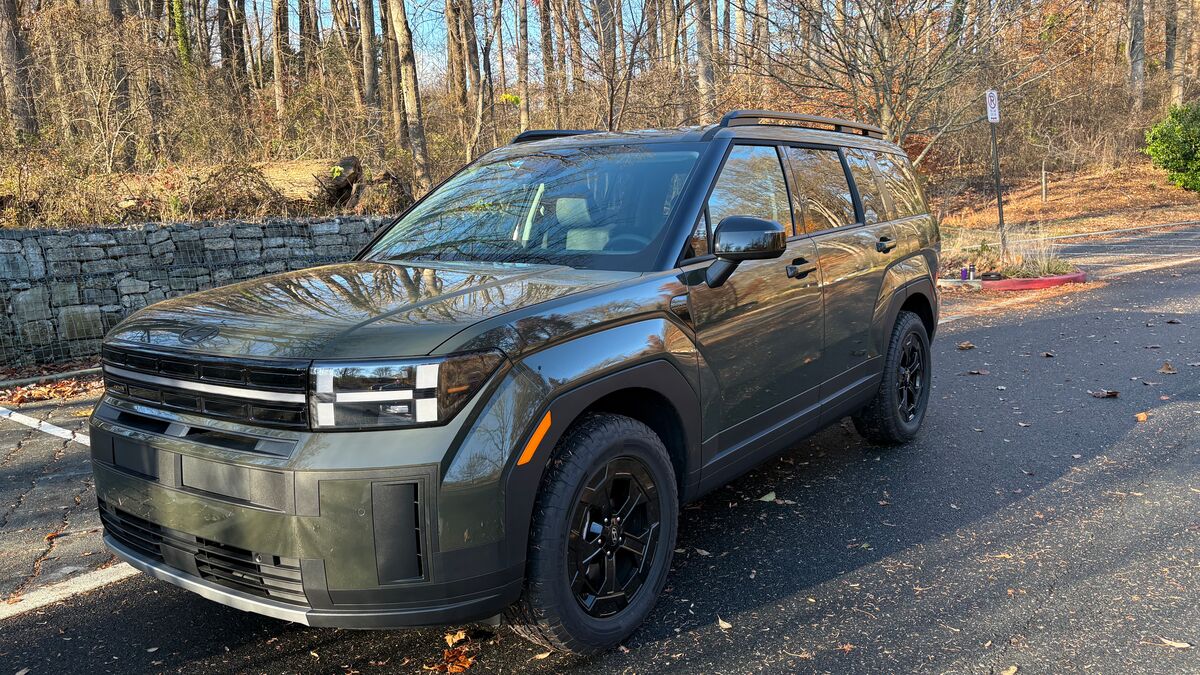
That’s probably why the current generation of the Hyundai Santa Fe won so much attention. Born for the 2024 model year, it took on distinctive, upscale styling you might compare to a Land Rover product, if you had to compare it to anything. It doesn’t resemble its competition. It doesn’t even resemble its stablemates at Hyundai.
Two years into its design cycle, you may now be familiar with the shape of the 2026 Santa Fe. Perhaps not. I do this for a living, and it still looks fresh to me. But the surprise of the thing has passed, and we can more easily evaluate it now on purely practical terms.
I spent a week using the 2026 Santa Fe XRT 2.5T AWD as a commuter and family hauler around the Washington, D.C., suburbs, mostly in traffic. What’s it like to live with? Let’s dive in.
Which Trim Level
Hyundai builds the Santa Fe in five trim levels for 2026. Hyundai loaned me the one in the middle, the XRT 2.5T AWD model. XRT is Hyundai-speak for a light off-roader. In this case, it refers to standard all-wheel drive (AWD), 1.3 inches of added ground clearance, extra towing capacity (4,500 pounds instead of 3,500), and additional terrain-based driving modes.
New 2026 Hyundai Santa Fe Prices
|
Retail Price
|
Fair Purchase Price (95354)
|
|||
|---|---|---|---|---|
$36,650 |
$35,400 |
|||
$39,190 |
$37,600 |
|||
$43,640 |
$41,800 |
|||
$46,200 |
$44,200 |
|||
$49,200 |
$47,000 |
Favorite Feature
Hyundai designers may have gone with the ultra-boxy, luxury safari-vehicle look to turn heads. But they may equally have done it for the interior dimensions. The Santa Fe packs a lot of space into roughly the same footprint as most midsize SUVs.
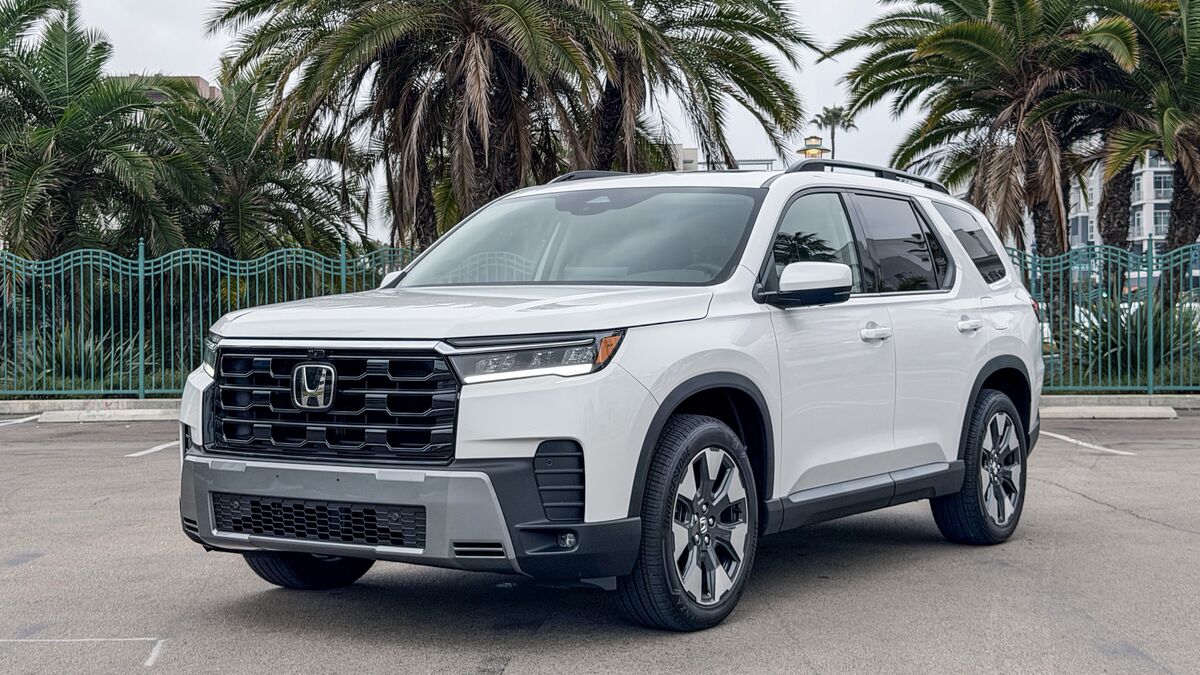
You get more headroom and legroom than in a Toyota Highlander, and more of both in the first two rows than in a Honda Pilot (though the Pilot’s third row bests the Santa Fe slightly).
The cargo area is perhaps the most user-friendly in its class. The load floor is relatively low, and the huge liftgate means it opens wider than most, making loading and unloading easy. My days of hauling kids to and from college are almost over, but if I had to do it over again, I’d want one of these for the trip.
What It’s Like to Drive
What most shoppers ask of a family SUV is that it be easy to drive. Hyundai has done well on that front.
The 2.5-liter turbocharged 4-cylinder engine of the Santa Fe makes 277 horsepower, on the high end of average for its class and more than you need in any circumstance you’re going to find yourself in.
Hyundai introduced a new 8-speed automatic transmission for the 2026 model year. There was little wrong with the old dual-clutch version, but this one is mechanically simpler and likely to hold up better years down the line than last year’s model.
Braking is firm and progressive. I did not have much occasion to test the HTRAC AWD system. Colleagues who have taken it on an off-road course tell me the XRT acquits itself well over bumps and ruts.
Interior Comfort and Technology
The cabin of the 2026 Santa Fe is not just spacious, but well-designed.
I’m not a fan of the trend of mounting two screens side-by-side as one, but Hyundai does it well. This looks polished and high-tech.
I am absolutely a fan of two side-by-side wireless phone chargers in the front row and 3-zone climate control that lets second-row passengers control their own temperature. These little comforts make a family trip more pleasant for everyone.
Lower trim levels, I should note, get just one charging pad. But so do higher trims of most rivals.
Temperature controls get physical knobs, not just touchscreen taps.
The second row is sufficiently roomy for adults. But the third row is meant for children or occasional use. If you indicate that you’ll carry adults back there often, dealers are likely to point you toward the larger Palisade, and you should let them.
The XRT comes upholstered in Hyundai’s H-Tex faux leather, which is nearly as soft as the real thing and easier to care for.
You have to step up to the more expensive Limited or Calligraphy trims, however, for second-row captain’s chairs with their easier passage to the third row.
Limitations
The Santa Fe is truly spacious in the first two rows, but the third row is tight, and cargo space is slightly limited with it in place. Think of this as 2.5 rows, in which case, it’s one of the more spacious options you’ll find. If you need to fill all three rows often, or carry adults and their suitcases, you’ll want to move up to a larger class.
Key Considerations
The old reason to consider a Hyundai was the 10-year powertrain warranty. It hasn’t gone anywhere. Now that Hyundai designers are doing some of the most interesting work in the auto industry, I keep expecting to see the company dial back to match its rivals on warranty coverage. But it hasn’t. For now, it still beats them outright.