
It’s no surprise that achromatic colors like white, black, silver, and gray are among the most popular car colors worldwide. They’ve held their place at the top for years, and it’s safe to assume that they’ll stay there in the future. When it comes to car colors, it’s not just about personal preference or what makes you happiest.
Like many vehicle features, color plays a role in determining your car’s resale value. If you don’t care about resale value, you may want to consider how your car will look out in the wild. Because most cars are painted in achromatic colors, a colored car will stand out and attract attention. If you want your vehicle to turn heads, you may want to choose a bright color. There are many factors to consider when choosing car colors, and we’re here to help.
Most Popular Car Colors
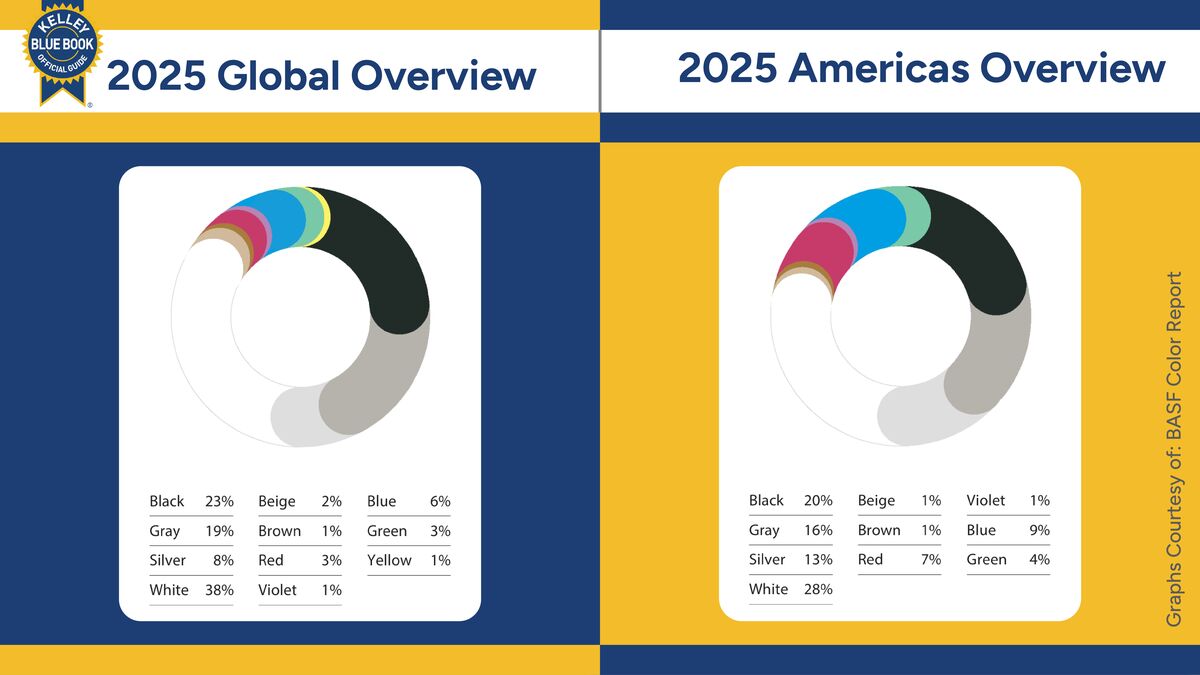
While achromatic colors remain popular, BASF’s 2025 Global Color Report shows that we’re seeing an increase in chromatic colors. Black still holds the top spot with a 23% market share, while gray trails at 19%. White cars have slightly dipped in popularity, while silver has remained unchanged. Among chromatic colors, green has seen the greatest increase in the past year. Beige cars are also increasing, but not as quickly as green ones.
In the Americas, we see a similar story. While reds and blues have historically performed better than other chromatic colors in the Americas, 2025 shows an increase in natural tones. Shades of green and brown have increased popularity in the automotive color palette. This speaks to a shift toward nature-inspired colors that are more expressive, but still not too bright. On the other hand, gray cars have dropped by 4% and white cars by 1%.
| Car Color | Americas Car Market % / Change From Last Year |
| White | 28% / -1% |
| Black | 20% / — |
| Gray | 16% / -4% |
| Silver | 13% / +2% |
| Blue | 9% / — |
| Red | 7% / — |
| Green | 4% / +2% |
| Brown | 1% / +1% |
| Violet | 1% / — |
| Beige | 1% / — |
MORE: A History of Automotive Paint Colors
Car Colors and Resale Value
Like many vehicle features, color plays a role in determining your car’s resale value. Choosing a popular car color today could mean that your vehicle will still be popular with buyers in five years. But as color trends change, there is a chance the color you select today might not remain at the top of the charts.
If you’re looking to retain your car’s value, it’s best to play it safe and choose neutral colors like white, gray, silver, and black. If you find yourself leaning toward something more colorful, remember that bright blues, yellows, and oranges could put you at a disadvantage when selling or trading in your car.
Sometimes choosing the “wrong” color can depreciate your vehicle’s value. How much depreciation will your car see? That will depend on several factors and cultural trends.
Car Colors and Maintenance
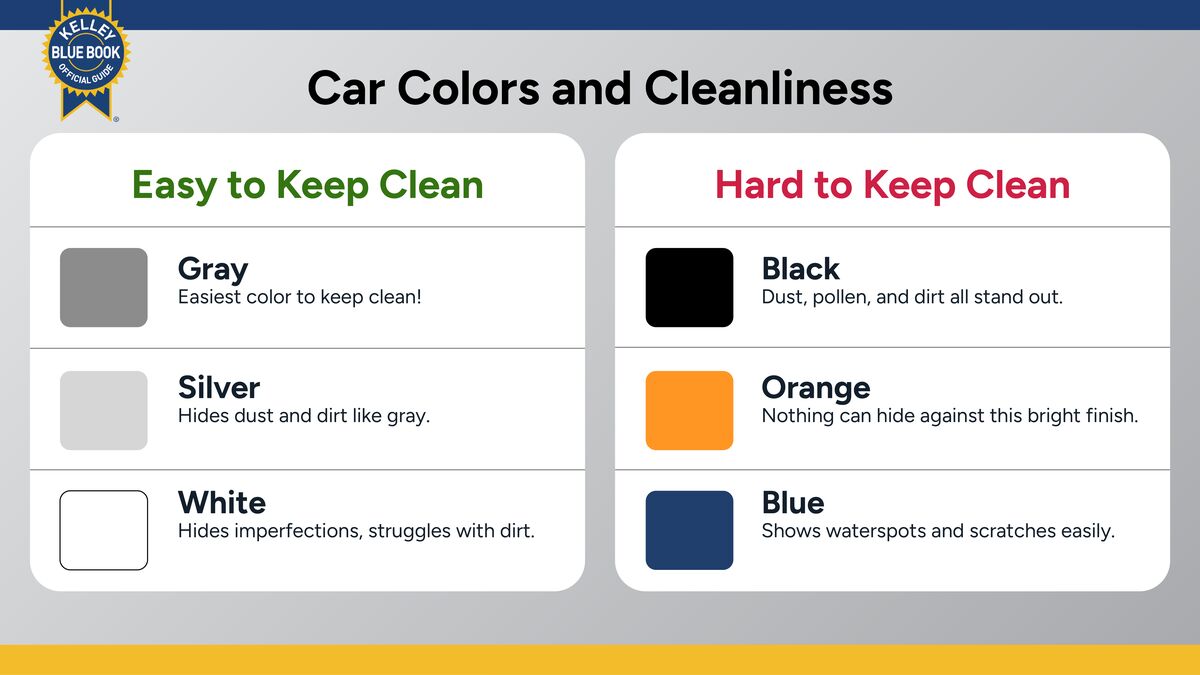
Some car colors will appear dirtier faster than others. Although your vehicle may look amazing in a specific color, it may be harder to maintain its appearance.
- Black: Black looks fantastic on almost any car, but it’s a double-edged sword. Pollen, dirt, and dust will all stand out against a sleek black finish. While it might look sparkling after a car wash, it won’t stay that way for long.
- Gray: This is the easiest color to keep clean. Dirt and dust hide nicely on these surfaces, making it easy to keep your car looking clean.
- Silver: Like gray, silver hides dust and dirt longer. It can also help hide mud buildup near the rocker panels.
- White: White is also in the easy-to-care-for group. However, this color shows mud and splashes more easily than gray and silver. White, however, does hide swirl marks that result from automatic car washes, and this car color tends to look newer for longer.
- Green: Who knew that green is easy to keep so clean? But the color shows imperfections more readily than gray, silver, and white.
- Orange: This bright color commands attention and stands out. However, it’s not as easy to keep clean.
- Yellow: Yellow will help your vehicle stand out on highways and local roads, all while hiding dust and pollen. While it does a great job at this, it will, however, emphasize mud and dirt splashes when driving in the rain.
- Red: This flashy car color hides mud better than other colors, but develops a dull look when dirty.
- Blue: Blues tend to show water spots, scratches, and swirl marks easily.
Safest Car Colors
According to the Monash University Accident Research Center, certain car colors can increase the risk of a car crash. The university is located in Australia, and the data was collected using Australian crash data. While the data may not perfectly translate to American road conditions, it can still provide insight into road safety in general.
White sits at the top when it comes to car safety. In fact, you’re 10% less likely to get into a car crash during daylight hours compared to other car colors if your vehicle is white. Along with white, other high-visibility colors like yellow, orange, and gold also serve as safety features. Low-visibility colors, such as black, blue, gray, green, and silver, have higher crash rates than their brighter counterparts.
According to the National Insurance Crime Bureau, black, silver, white, green, and gold cars are the most stolen. These colors tend to blend into the crowd more, making it harder for the thieves to be caught.
Editor’s Note: We have updated this article since its initial publication.