

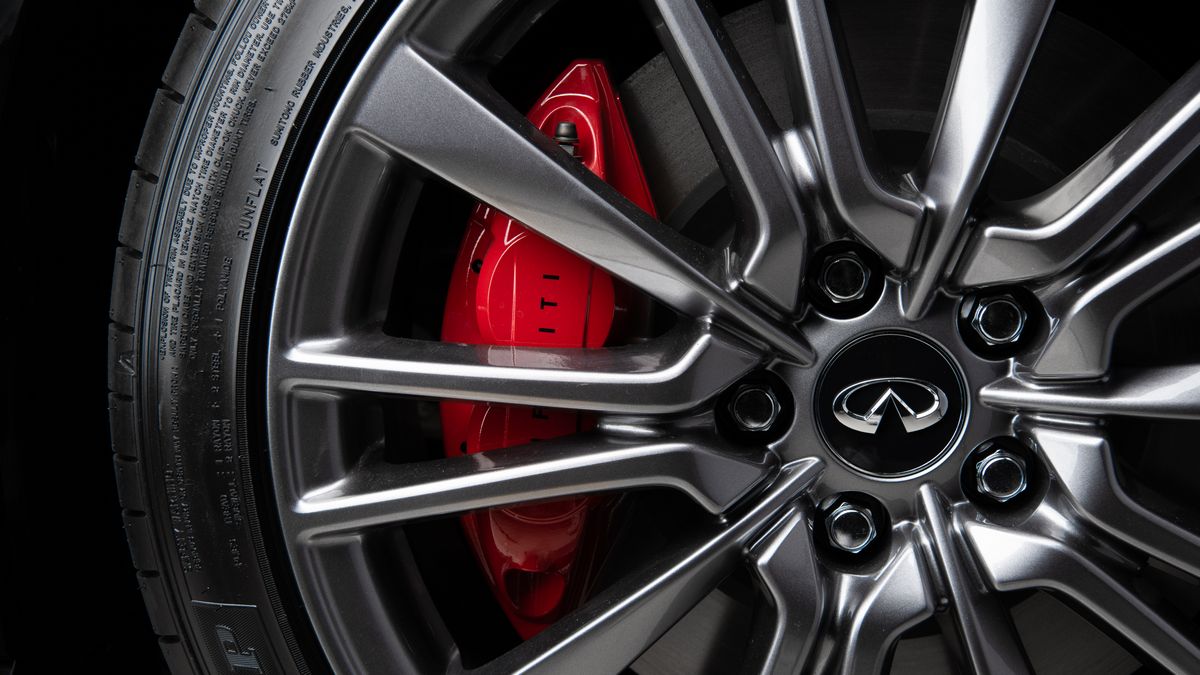
Run-flat tires let you continue driving for a limited distance after certain punctures, reducing the chance that you will be stranded or need to stop beside a busy road. However, they usually cost more, may ride more firmly, and can be harder to repair or replace.
What Are Run-Flat Tires?
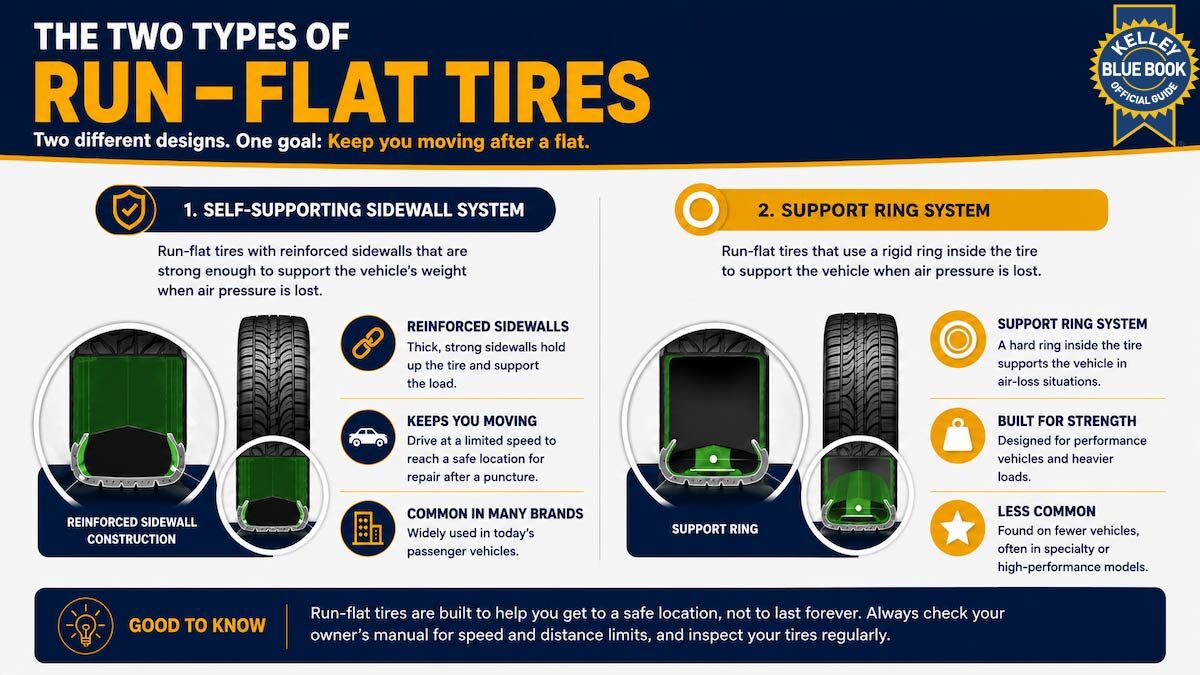
Run-flat tires use reinforced sidewalls or internal supports to hold up a vehicle after air pressure drops.
Most allow you to drive about 50 miles at up to 50 mph, though limits vary. That range is intended only to help you reach a safe place or a tire shop.
Because a damaged run-flat may not look flat, vehicles equipped with them must have a functioning tire pressure monitoring system (TPMS).
Run-Flat Tire Pros
- Temporary mobility: You may be able to reach a safe place or tire shop after a puncture.
- Roadside safety: You can avoid stopping on a narrow shoulder, in bad weather, or near fast-moving traffic.
- No spare needed: Vehicles designed for run-flats often eliminate the spare, freeing cargo space.
- Better control: The reinforced tire retains more of its shape when it loses pressure.
Run-Flat Tire Cons
- Higher cost: Run-flats usually cost more than comparable conventional tires.
- Firmer ride: Their stiff sidewalls can transmit more bumps and vibration.
- Limited availability: Some sizes may need to be ordered.
- Not indestructible: Severe damage can still disable the tire and require a tow.
- Hidden damage: Internal damage may require removal and inspection.
MORE: What Do the Numbers on a Tire Mean?
Repairing or Replacing Run-Flat Tires
Some run-flat tires can be repaired, depending on the puncture, any internal damage, and the manufacturer’s guidelines. Sidewall damage or driving too far without air usually means replacement.
You can often switch to conventional tires, but replace all four and match the vehicle’s required size and ratings. Because the car may not include a spare, plan to carry an inflator kit or rely on roadside assistance.
Run-flats are worth considering if avoiding a roadside stop is your priority. Conventional tires may be better if you value lower cost, a softer ride, and easier replacement.
Visit our Car Maintenance and Repair Information Center for curated articles to help you make smart maintenance decisions with confidence.
Editor’s Note: We have updated this article since its initial publication.