

Quick Facts About Powertrain Warranties
- A powertrain warranty is an agreement that protects your car’s most expensive mechanical components.
- Automakers typically provide coverage of between 5 years/60,000 miles and 10 years/100,000 miles.
- Powertrain warranties exclude wear items such as spark plugs, filters, and fluids.
- Electronics and comfort features are covered under bumper-to-bumper warranties.
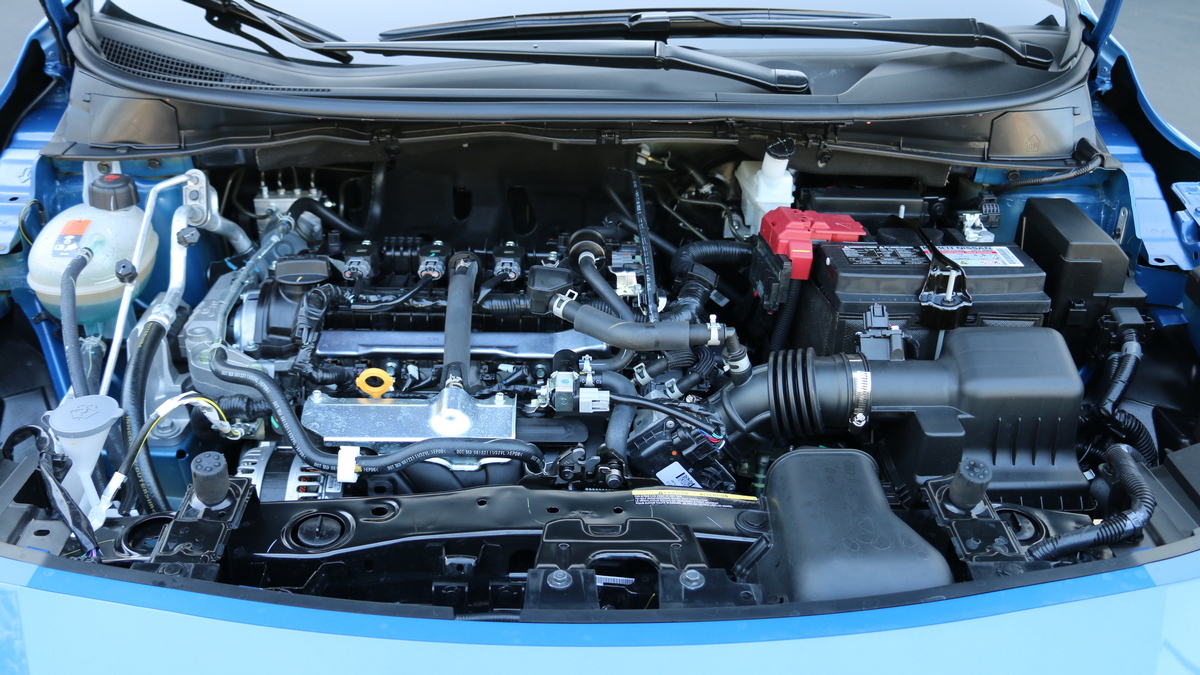
Automakers offer various warranties for new vehicles, but the powertrain warranty is the cornerstone of protection, as it covers the car’s most expensive components, including the engine, transmission, and drivetrain. Read on for a breakdown of what that protection includes, how long it lasts, and how to decide if you need additional coverage for your new or used car.
- What Is a Powertrain Warranty?
- What Does a Powertrain Warranty Cover?
- How Long Does a Powertrain Warranty Last?
- Is a Powertrain Warranty Right for Me?
- Powertrain Warranty vs. Bumper-to-Bumper Coverage
- Lifetime vs. Limited Powertrain Warranties
What Is a Powertrain Warranty?
Think of the powertrain as a straight path:
Engine → Transmission → Driveshaft → Differential → Axles → Wheels
A powertrain warranty covers the components that create and deliver power. Its coverage begins with the engine and ends with the axle.
Automakers typically limit coverage to a set number of years or a specified mileage. If any covered component fails while the powertrain warranty is in effect, the automaker will repair or replace it at no additional charge.
Many brands offer more extended coverage of 10 years or 100,000 miles, whichever comes first. Some luxury brands offer warranties with no mileage limit, which means the warranty ends after a set number of years, regardless of the vehicle’s mileage.
As long as the warranty remains active, the automaker pays to repair or replace covered components — with certiain pre-defined conditions.
What Is Covered Under Powertrain Warranty?
Powertrain coverage begins with the engine and ends with the axle or axles in the case of all-wheel drive (AWD). But let’s get a little more specific.
POWERTRAIN WARRANTY COVERAGE
COVERS
DOESN’T COVER
The Powertrain Warranty Usually Covers:
- Transmission: The second most important component in the powertrain, after the engine, the transmission translates engine output into motion that transfers to the driver shaft. Twenty years ago, we would have described it as a gearbox, but not today. Many of today’s front-wheel-drive (FWD) cars have a continuously variable automatic transmission (CVT), which uses pulleys and belts to accomplish what a traditional transmission does with a clutch and gears.
- Transfer case: For vehicles with AWD or 4WD, the transmission hands off engine torque to a transfer case, which in turn sends that output to the front and rear axles through driveshafts.
- Driveshaft: A rod-like component that transports engine torque from the transmission (or transfer case) to the differential on the drive-wheel axle.
- Differential: This is a gearbox on the rear axle that controls the rotation of the wheels. When making a turn or taking a curve, it’s important that the outside wheel rotates faster than the inside wheel. It’s the job of the differential to ensure that happens. On FWD vehicles, this box sits next to the transmission and is called a transaxle.
- Axle: This is the rod-like component responsible for actually rotating the wheels.
The Engine and Its Parts
Several parts comprise the engine. It’s the most expensive of the powertrain components. Typically, a powertrain warranty covers nearly all the parts of the powertrain. These include:
- Oil pan
- Cylinder block
- Heads
- Valvetrain
- Fuel injectors
- Timing belt
- Flywheel
- Fuel, water, and oil pumps
- Gaskets and seals
- Other internal parts
For the most part, the warranty covers major failures of the powertrain components.
What Powertrain Warranties Don’t Usually Cover
A powertrain warranty doesn’t cover anything not directly involved in propelling the vehicle. For example, the powertrain warranty doesn’t cover the air conditioning system. Nor is the steering system.
Here are other components and instances the carmaker’s powertrain warranty doesn’t cover:
- Wear-and-tear parts like spark plugs, air filters, oil filters, fuel filters, fluids, clutch, brake pads, and CV joints.
- Issues or damage caused by aftermarket components.
- Any alteration specifically prohibited in the warranty.
- Damage caused by an accident or collision.
- Misusing or abusing the vehicle.
- Acts of nature.
- Damage caused by using contaminated or poor-quality fuel.
- Failure to follow the carmaker’s maintenance schedule.
How Long Does a Powertrain Warranty Last?
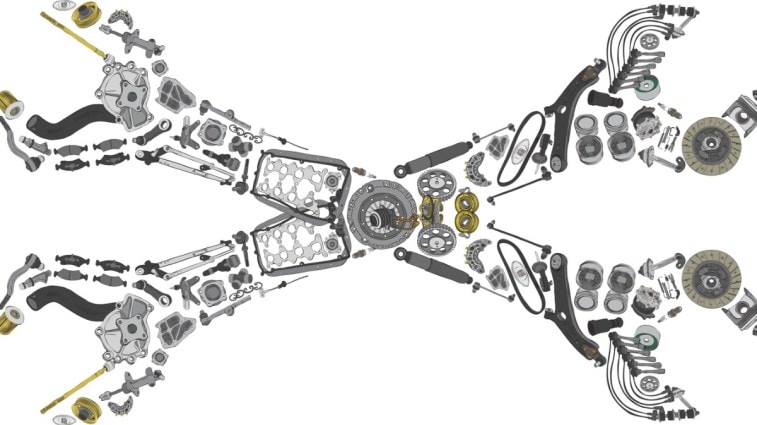
As mentioned, Kia, Hyundai, Mitsubishi, and Genesis are positioned at the top of the powertrain warranty totem with coverage for 10 years or 100,000 miles. Most mainstream brands, including Ford, Chevrolet, Honda, and others, provide a 5-year/60,000-mile powertrain warranty. Toyota extends the typical coverage by another year.
Things become really confusing once we get into the luxury brands, which offer a mishmash of coverage lengths. For example, Mercedes-Benz and BMW cover their powertrain for four years or 50,000 miles as part of their factory bumper-to-bumper warranty. On the other hand, some luxury brands (Acura, Cadillac, Lincoln, and others) provide a 6-year/70,000-mile powertrain warranty.
Electric vehicles are something else entirely. Tesla backs its propulsion components for up to eight years and 150,000 miles, depending on the model.
PRO TIP: Although carmakers rarely update their warranty coverage lengths, they do sporadically. Always double-check the warranty coverage of any new car you consider.
RELATED: How to Take Care of the Car You Drive in This Economy
Is a Powertrain Warranty Right for Me?
When you buy a new car, a powertrain warranty is usually included. What matters more is how long you plan to keep the vehicle — some warranties offer longer protection than others.
The truth about your car’s powertrain is that it will eventually fail. As a vehicle ages and its use increases, the likelihood of a powertrain failure also increases.
Powertrain Warranty for New Cars
If you plan to sell or trade in the car before the new-car warranty expires, you’re covered. If you plan to keep it longer, consider extended powertrain protection.
You can obtain this by purchasing a vehicle with a longer factory powertrain warranty or by adding an extended powertrain warranty — ideally one backed by the automaker. If you shop with third-party providers, read the fine print carefully and check customer reviews.
In most cases, any remaining factory powertrain coverage can be transferred to the next owner when you sell or trade in the vehicle.
Powertrain Warranty for Used Cars
If you’re buying used, many Certified Pre-Owned (CPO) programs include extended powertrain coverage — often the most reliable option.
For non-CPO used cars, third-party companies may offer powertrain warranties based on age and mileage. Proceed with caution: research any provider carefully and read the fine print.
Powertrain Warranties vs. Bumper-to-Bumper Warranties
Powertrain and bumper-to-bumper warranties are the key parts of your vehicle’s protection.
The main differences are what they cover and how long they last. “Bumper-to-bumper” is shorthand for the manufacturer’s comprehensive warranty. It usually doesn’t cover every little thing, and it excludes normal wear items like tires, light bulbs, and fuses. It generally covers almost everything the powertrain warranty doesn’t.
Powertrain coverage almost always lasts longer. For example, Hyundai offers a 10-year/100,000-mile powertrain warranty but a 5-year/60,000-mile bumper-to-bumper warranty. Ford’s bumper-to-bumper warranty is 3 years/36,000 miles, while its powertrain warranty runs 5 years/60,000 miles.
Lifetime vs. Limited Powertrain Warranties
Lifetime Powertrain Warranties
Lifetime powertrain coverage sounds ideal, but it comes with strings attached. This coverage is separate from the manufacturer’s warranty and is provided by the dealer, who must perform any covered repairs.
To keep the warranty valid, you may need to follow a stricter maintenance schedule than the automaker recommends, and usage can be limited (for example, no towing).
Lifetime or “unlimited” warranties also typically exclude items like seals, gaskets, and similar components. The upside: you usually don’t need to worry about the terms of a lifetime warranty until the manufacturer’s limited powertrain warranty ends.
Limited Powertrain Warranties
Limited powertrain warranties last for a set time or mileage, such as Toyota’s 5-year/60,000-mile coverage. Their boundaries are clearly defined, and while they may exclude items like CV joints, they often cover a broader range of components than so-called unlimited or lifetime warranties.
Quick Fix: Answers to Powertrain Warranty Questions
What’s the difference between insurance and a warranty?
Insurance protects you from accidents, natural disasters, and theft. Warranties protect you from mechanical failures that may occur during everyday use.
What’s a drivetrain warranty?
A drivetrain warranty covers everything in the powertrain except the engine.
Are powertrain warranties worth it?
Yes, if you keep a car for many years or buy a used vehicle without insurance coverage. One major repair can cost more than the combined value of several years of warranty protection.
Editor’s Note: We have updated this article since its initial publication. Tawana Campbell contributed to the report.