
The term “miles per gallon,” commonly abbreviated as mpg, is the distance a vehicle can travel on one gallon of fuel. Understanding your vehicle’s fuel efficiency can help you budget for fuel costs, plan road trips, and identify potential maintenance issues. Fortunately, calculating your car’s mpg is straightforward.
Why Does MPG Matter?
Knowing your car’s mpg gives you a better understanding of the vehicle’s efficiency and range. A higher mpg means you can travel farther on one tank of gas, meaning fewer stops to refuel. Lower-than-normal fuel efficiency can indicate issues such as improper tire pressure, inefficient driving habits, or a maintenance problem. While manufacturers typically include mileage estimates in the vehicle’s specs, these ratings don’t always reflect real-world driving conditions, which is why it’s important to calculate your own.
There are several ways to measure your vehicle’s fuel efficiency, but we recommend using the full-tank method to determine mpg.
Step 1: Fill Up Your Tank Completely
Filling your gas tank completely gives you a consistent starting point for your calculations. It’s much easier to begin with a full tank than to estimate how many gallons you already have.
Step 2: Take Note of Your Current Mileage
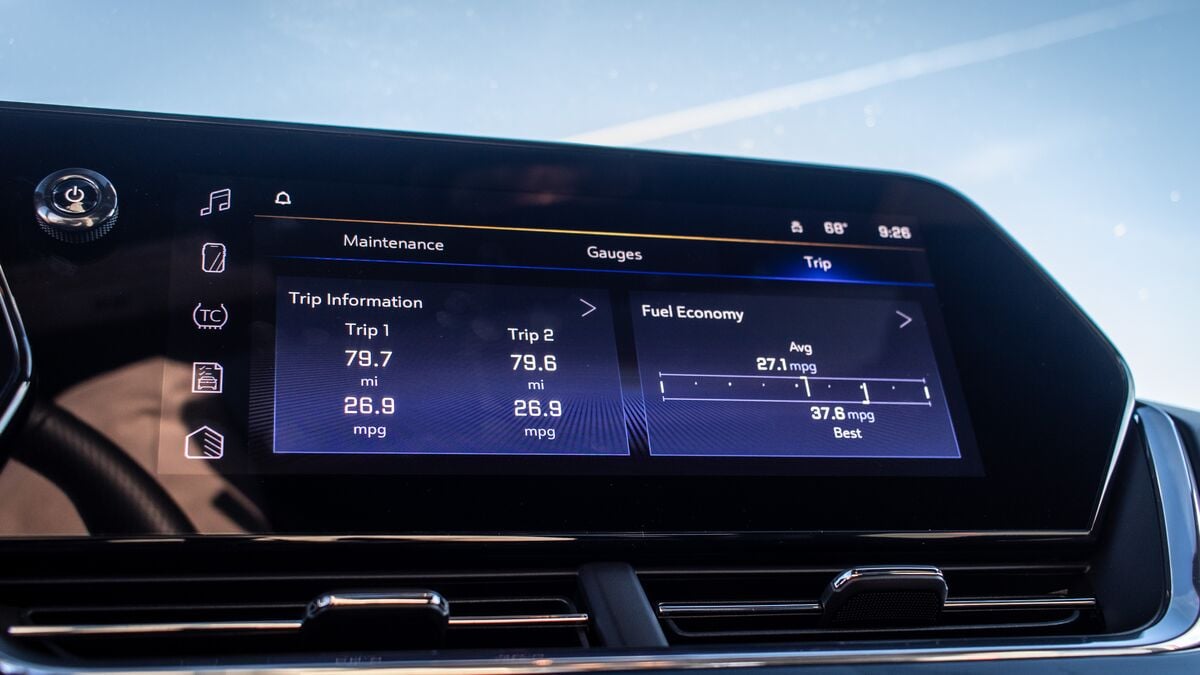
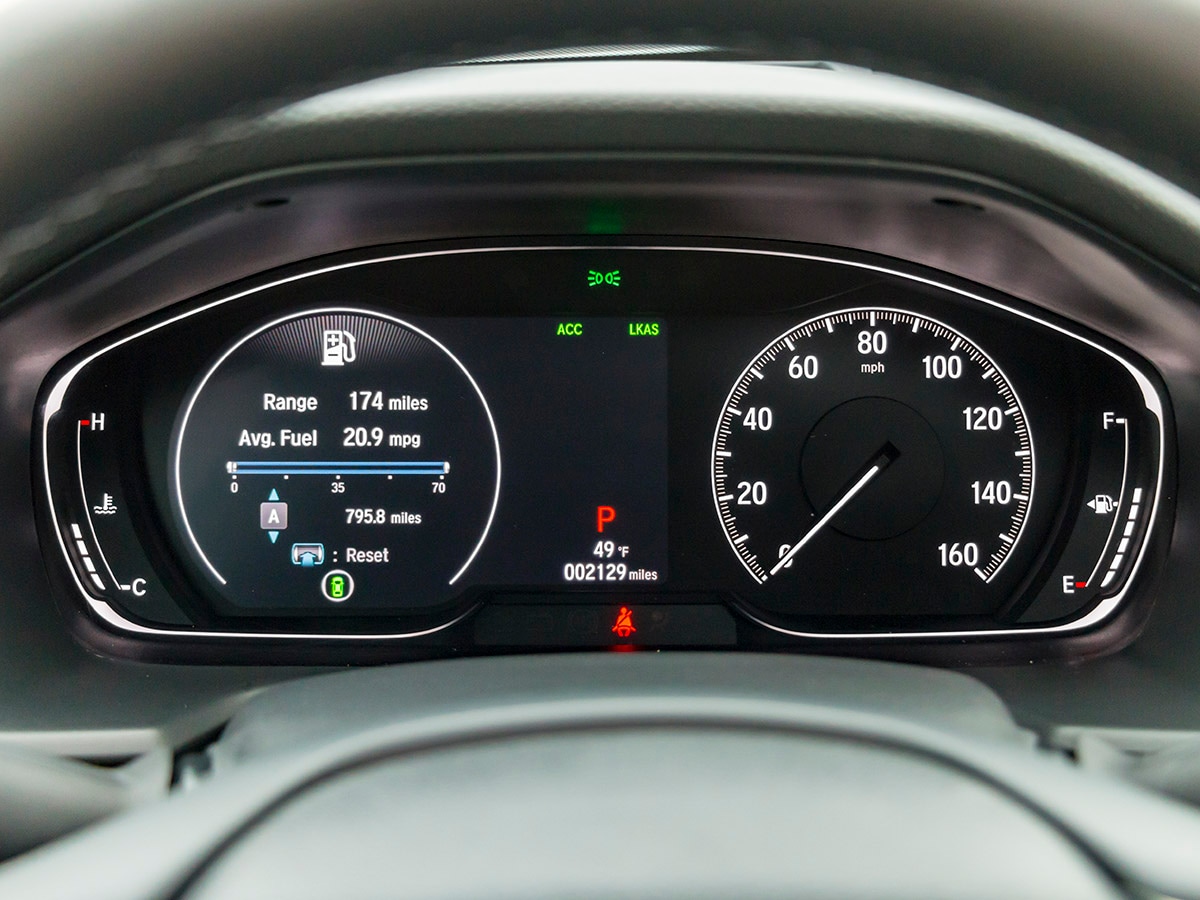
Many cars have a trip odometer separate from the vehicle’s overall mileage. We recommend using this feature if it’s available, since it will save you an extra step later. If you own an older car that does not have this feature, you can simply note your car’s mileage when you fill up. If you drive a newer car, its instrument cluster might have a fuel economy indicator that displays mpg in real time.
Step 3: Drive Normally
Follow your usual routine. In general, the more you drive, the more accurate your mpg calculation will be.
Step 4: Refill the Tank
The next time you’re at the gas station, fill up completely once again. Take note of the exact amount of gas needed to refill the tank.
Step 5: Record Your Updated Mileage
Check the odometer to see how many miles you’ve driven since this process started. If your vehicle has a trip odometer, you won’t need to manually calculate your miles. If not, subtract the original mileage from the current mileage. This will tell you how many miles you traveled.
Step 6: Calculate Your MPG
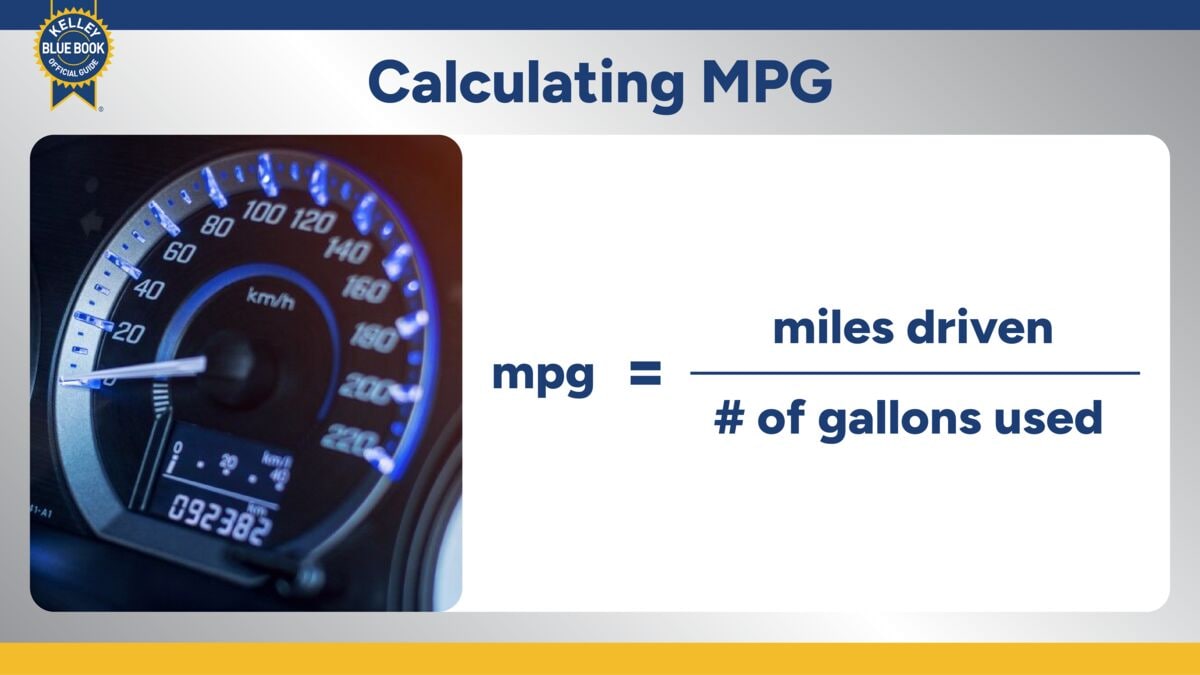
To get the mpg figure, divide the miles driven by the number of gallons used. For example, let’s say you drove 250 miles since the last fill-up, and the car used exactly 10 gallons. You would divide 250 by 10, which would equal 25 mpg.
Final Notes
Calculate your fuel economy regularly to get a sense of your average mpg and be aware of fluctuations that might offer a clue to a mechanical issue. Keep a log and track measurements for local versus highway driving, driving conditions, or seasonal changes.