

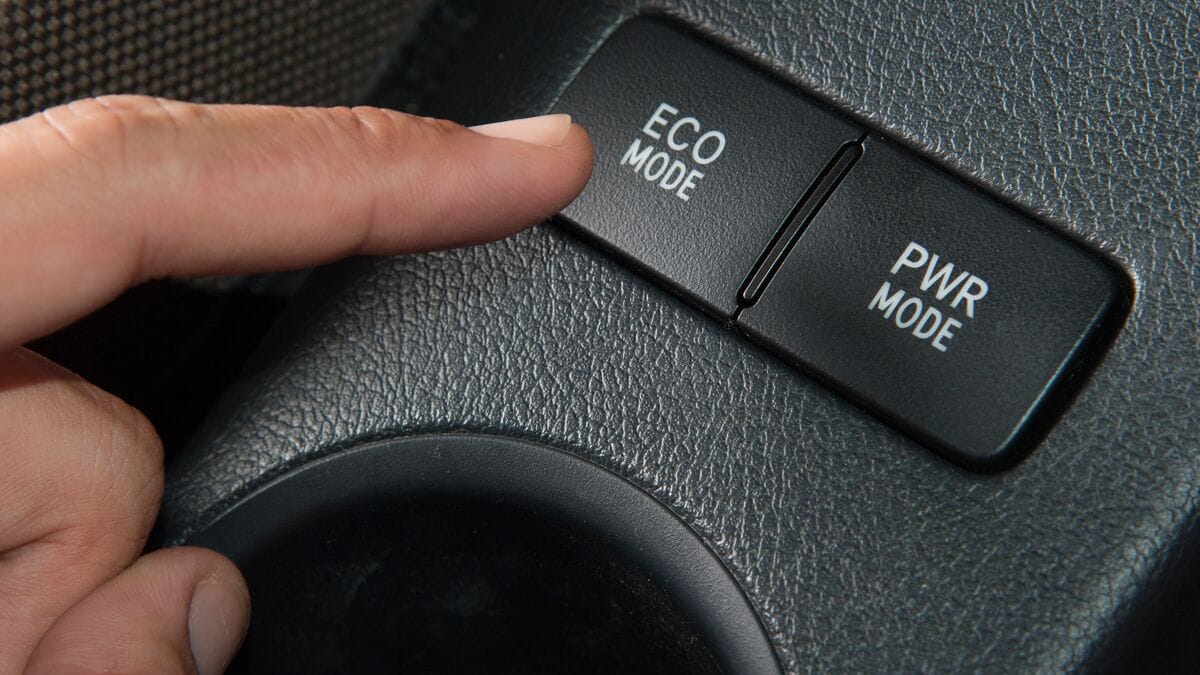
Ever wondered if that little green “eco” light on your dash is actually translating to dollars saved? The short answer is yes, eco mode does save some fuel. The longer answer is that your eco mode fuel savings will vary based on factors like where you’re driving, how you’re driving, and what kind of car you’re driving.
What Is Eco Mode?
Depending on who you ask, the “eco” in eco mode stands for either “economy” or “economical.” Whichever term you (or your car’s manufacturer) prefer, the gist is savings. Eco mode is generally activated by the driver via a button or switch, though some cars will automatically show that you’re in eco mode when you’re driving efficiently. When it’s on, the car’s computer adjusts settings and controls to improve fuel economy.
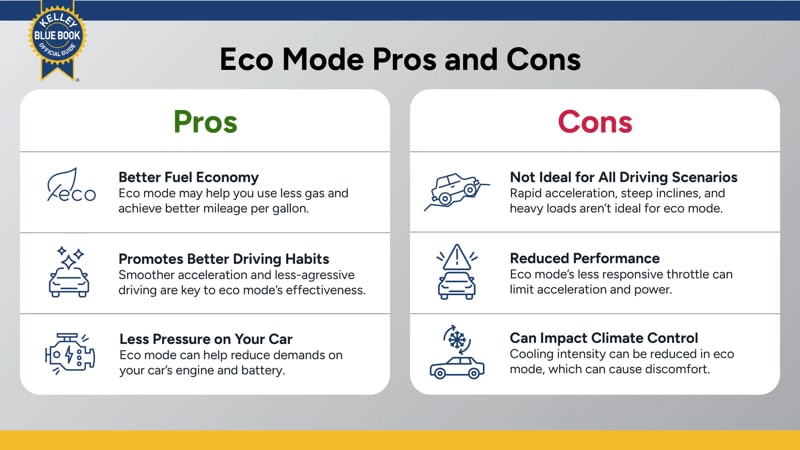
Exactly which settings get adjusted depends on the specific vehicle and can include transmission shift timing, throttle response, air conditioning, and lights. You may notice that acceleration is more gradual, earlier shifting to high gears to keep engine speed lower, or reduced cooling intensity from your air conditioning.
How Much Fuel Does Eco Mode Save?
Some manufacturers boast eco mode savings up to 12% for some vehicles under controlled conditions. Recent testing by Consumer Reports estimated the true fuel savings from eco mode more conservatively, coming in at about 2 to 3 mpg. It doesn’t seem like much, but when gas prices rise, every bit of savings can help keep your money in your pocket rather than in the gas tank.
Factors that can impact the efficacy of eco mode include:
- Vehicle type: If your car has a smaller engine, eco mode can make your drive feel more sluggish. If you’re running casual errands close to home, you might not even notice it, but on longer drives you likely will. More throttle input to accelerate to highway speeds can actually waste fuel in these scenarios.
- Road and traffic conditions: Eco mode works best on highways at steady speeds. It’s also good for city driving, helping reduce pressure on your engine and transmission from frequent starts and stops. If you’re driving through steep or hilly terrain, hauling a packed car, or just need a little extra pep to merge onto a highway or pass another car, it’s not going to be efficient, and you are better off using sport mode (if your car has it).
- Driving habits: If you have a lead foot, frequently ride your brakes, or drive aggressively, you may cancel eco mode’s benefits. Eco mode shines with gentler driving techniques like slow, steady acceleration.
Final Thoughts About Eco Mode
If your car has eco mode, using it is a good way to improve your fuel economy — a bit. If you’re heading out on a longer trip with tougher or more unpredictable road conditions, eco mode might not ultimately benefit you all that much, but for regular, daily driving, it’s worthwhile to use. You likely won’t notice any major impact to your car’s performance, and you can feel good about making the ecological, economical choice.