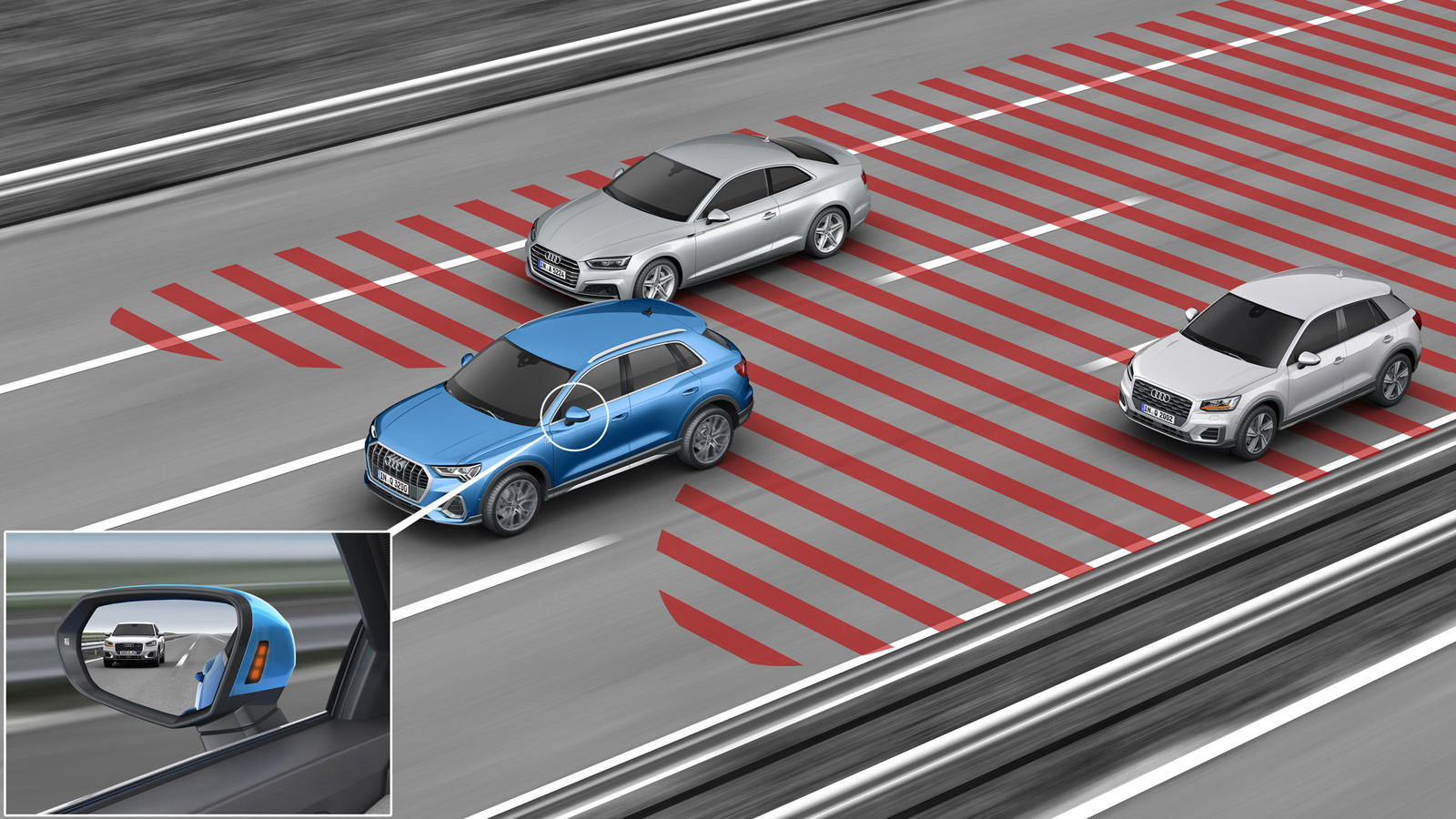
Although the terms all-wheel drive (AWD) and 4-wheel drive (4WD) are sometimes used interchangeably, they are not the same. AWD is the way to go for those looking for extra peace of mind when driving in inclement weather. Four-wheel drive provides enhanced towing capability and excels on slippery, loose, and rugged surfaces. Read on to help decide which drivetrain best fits your needs.
What Is the Difference Between AWD and 4WD?
All-Wheel Drive Defined
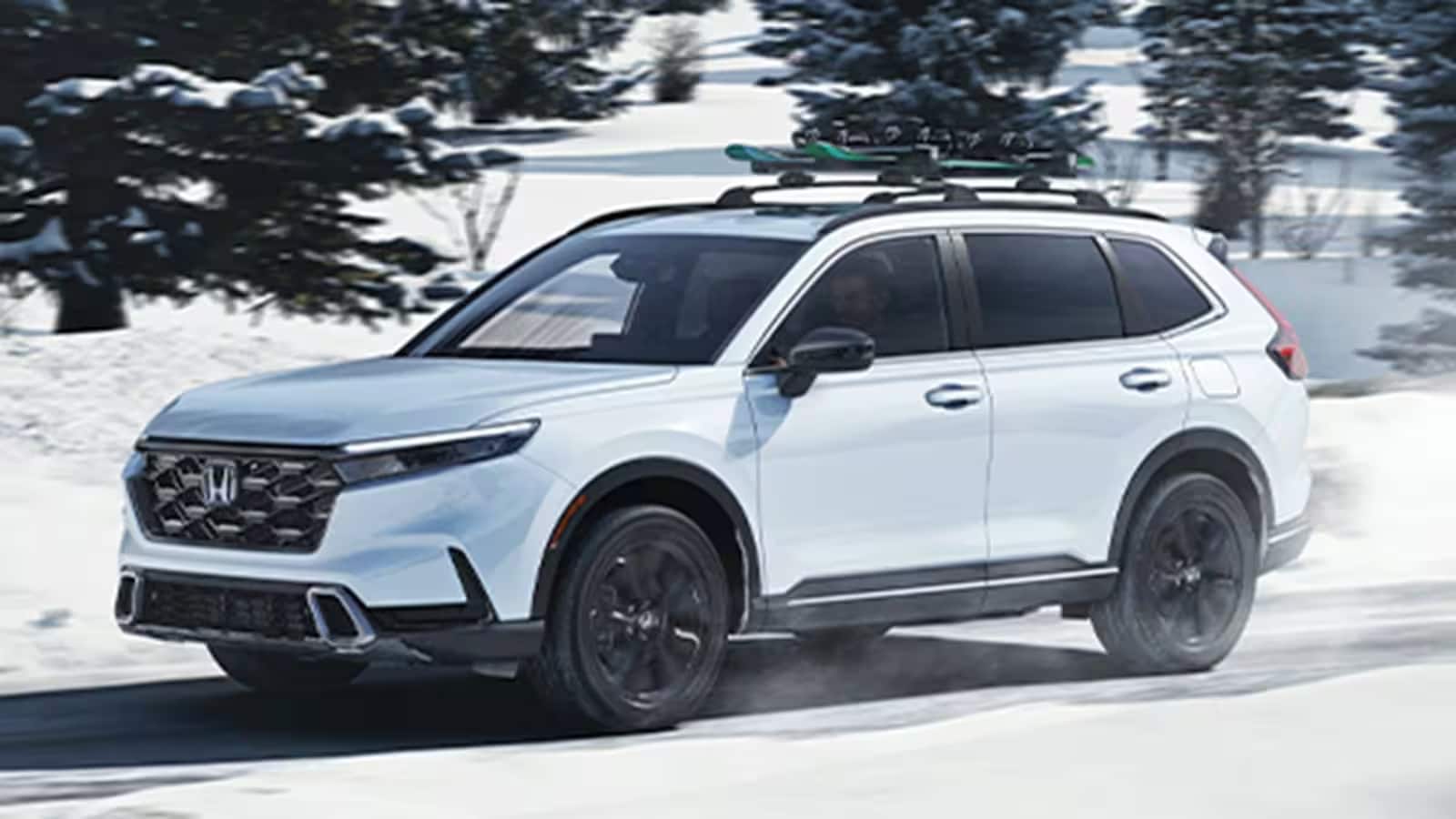
AWD is a system primarily engineered for on-road use. In its purest form, it sends engine torque to all four wheels simultaneously. However, it isn’t a one-size-fits-all system. There are actually two types of AWD.
Full-Time AWD
Full-time AWD sends engine torque to both axles at all times. The system monitors wheel grip to determine how much power goes to each set of wheels. When the rear wheels lose grip, the system sends more torque to the front wheels. If the front wheels lose grip, the rear wheels get more power. Under normal conditions, both sets of wheels receive some percentage of torque.
On-Demand AWD
Part-time, automatic, on-demand AWD sends all the engine torque to one axle (often the front) under normal driving conditions, diverting a percentage to the rear wheels when the drive wheels lose traction. When the system senses slippage in the primary drive wheels, it transfers some engine power to the other axle.
Both AWD systems work automatically and do not require any action from the driver.
AWD Pros
- Added traction in bad weather
- Operates automatically and seamlessly
- System reaction is quicker than human response
- More fuel-efficient than 4WD
- Added value if you sell
AWD Cons
- Not engineered for more extreme situations
4-Wheel Drive Defined
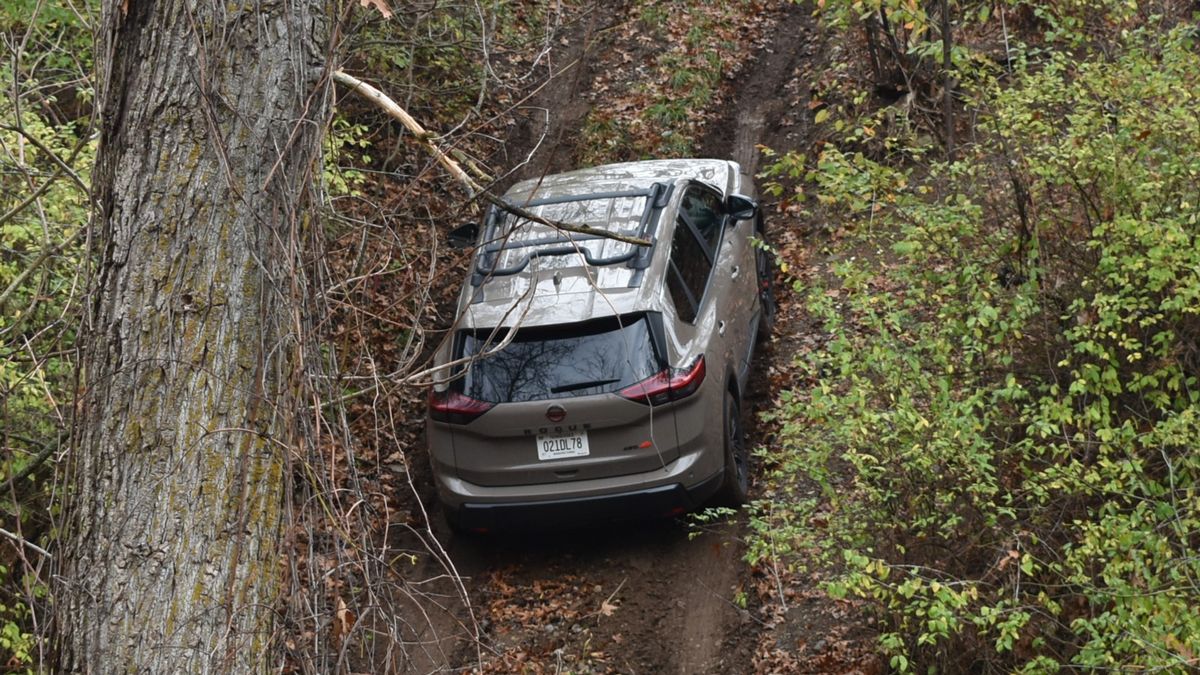
Traditional/part-time 4WD is built for low-traction and off-road use. In most cases, the driver must engage the system by using a button, dial, or shift lever.
It’s not wise to engage 4WD on anything but slippery, loose, or rugged surfaces. A part-time 4WD system (locked 4HI/4LO) should never be engaged on dry pavement. Because both axles lock together, all four wheels rotate at exactly the same speed. This creates a situation where the wheels on one side of the vehicle may be at odds with those on the other. This can put significant stress on the system when used improperly.
4WD Pros
- Off-roading capability
- Improved towing capability over AWD
- Driver can control settings like high- and low-range
4WD Cons
- Poor fuel economy
- Unsuitable for dry pavement
- Additional weight increases stopping distances
Which Is Better, 4WD or AWD?
Depending on what you need the system to do, either can be better.
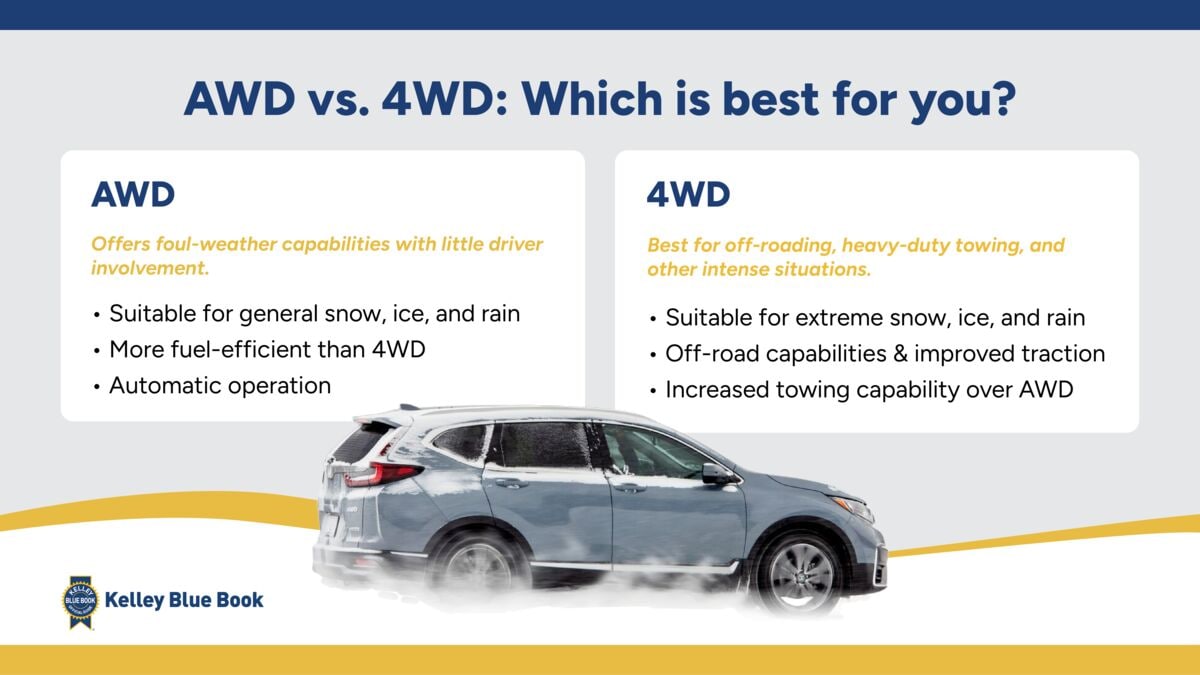
All-wheel drive boasts the advantage of being an automatic system, creating a seamless driving experience. Many AWD systems add minimal weight to the vehicle and, on average, have a negligible impact on fuel economy. If all you are looking for is extra peace of mind to get moving in weather like ice, snow, sleet, and rain, AWD is the way to go.
Four-wheel drive is the best choice for those looking to go off-road. Moreover, 4WD vehicles often offer more towing capacity and traction than AWD vehicles; however, you pay for this extra capability at the gas pump. If you deal with severe snow and ice, a 4WD vehicle paired with proper tires might be the better choice.
Editor’s Note: We have updated this article since its initial publication. Russ Heaps contributed to the report.