
Some people forget, or simply look past, the nomenclature of vehicles and the history behind their nameplates. Some name origins are more obvious than others, but when the Kia Telluride entered the scene, there was no confusion. I moved to Colorado shortly after the Telluride originally debuted in 2019, and it ashamedly took me seven years to visit the town itself. The impetus for this visit? The Kia Telluride had just been fully redesigned for 2027, ushering in its second generation, and Kia offered me the keys. It seemed like the perfect carriage to take my family to the town of its namesake.
An X-Pro in Its Natural Habitat
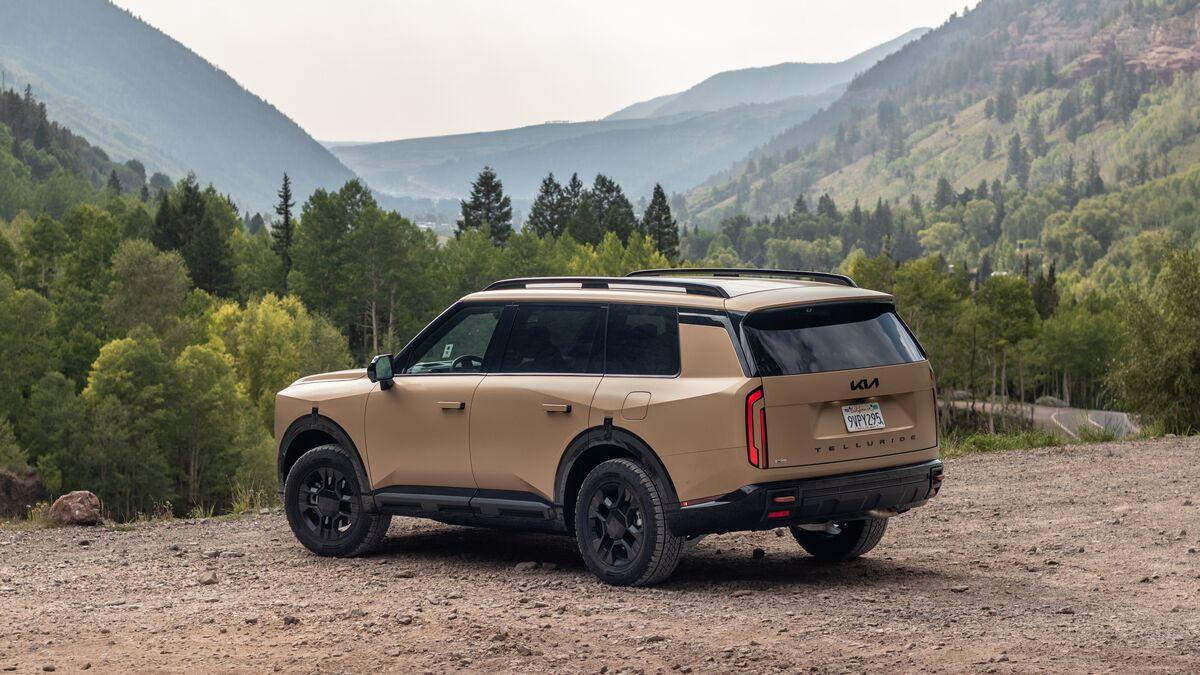
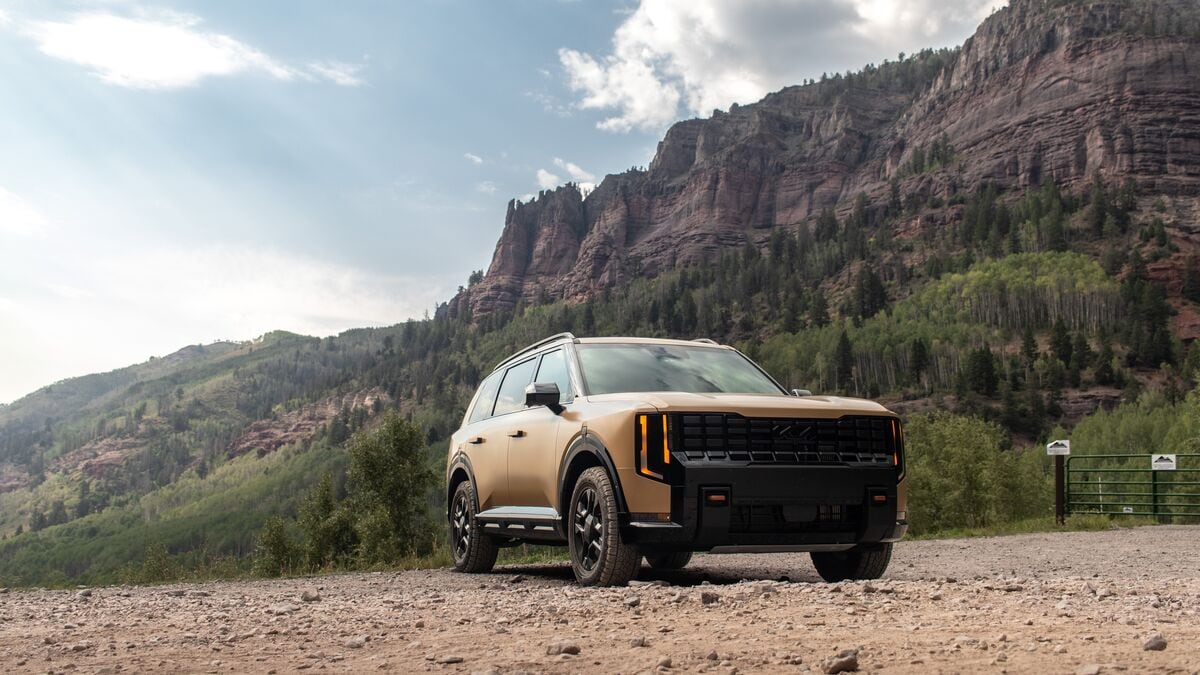
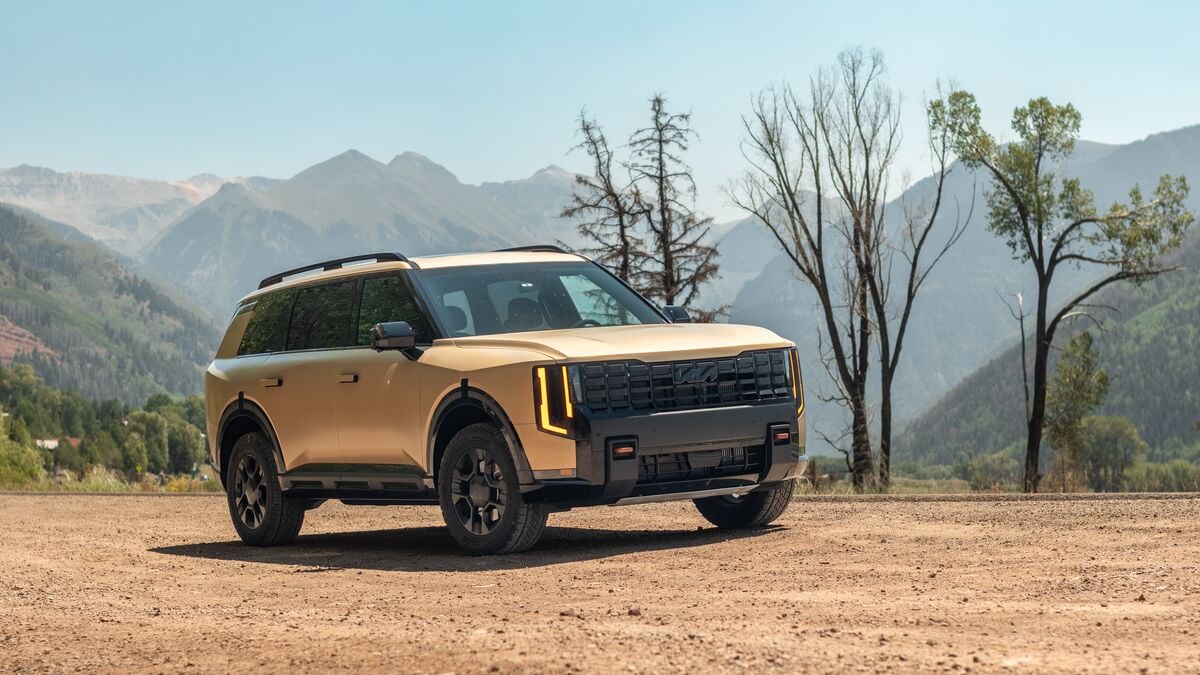
My tester was the X-Pro SX Prestige version, a long name to describe the premium off-road spec, if you will. I might even dare to call it the Colorado spec, given the sheer number of overlanding, rock-crawling, and soft-roading rigs roaming the Centennial State. It was finished in Terrain Brown Matte paint and priced at just over $60,000. If that sounds steep, don’t worry, the Telluride has a reasonable base price of $40,735.
It might’ve been the paint, but likely the full exterior redesign that inspired onlookers. Any time I stepped out, comments flooded in. I was asked multiple times if it was the new Range Rover. Then people noticed the giant “TELLURIDE” lettering stretched across the liftgate and realized it was indeed a Telluride, and that it looked more premium than they expected. It’s a welcome evolution of an already excellent-looking vehicle. Overall dimensions and wheelbase grew by a couple of inches, pairing nicely with a more angular, aggressive, boxy design. All these generational changes combine to create an impressive road presence.

The Road to Telluride
Of course, the trip wasn’t just about arriving in Telluride. It was also about getting there. The 330-mile route from Denver throws just about everything at a vehicle: long interstate stretches, mountain passes above 10,000 feet, rough pavement, construction zones, summer heat, and the occasional dirt road. If there was ever a way to find out whether the second-generation Telluride truly improved on the first, this was it.
Beyond the surface, the powertrain was also changed and was being put to the test. The previous 3.8-liter V6 was replaced by a turbocharged 2.5-liter 4-cylinder. I was very curious to see how aggressive the altitude would challenge the new numbers on paper, with horsepower dropping to 274 and torque increasing to 311 lb-ft.
Consider me pleasantly surprised. I expected to notice the reduction in cylinders, but I didn’t miss them in the slightest. In fact, the move to forced induction makes a compelling case for itself in Colorado. As elevations climb and thin air begins stealing power from naturally aspirated engines, the Telluride’s turbocharged engine feels right at home. Passing slower traffic on uphill grades and merging into fast-moving mountain traffic never felt like an exercise in patience. Though when called upon under heavy load, you can tell it’s working hard, and at that point, it’s prone to a bit of drone. This extra effort is likely amplified when towing or carrying a full complement of people and gear.
The X-Pro package also began making more sense the farther we drove. Its smaller 18-inch wheels wear taller all-terrain tires, which slightly soften steering responses compared to some of the more road-focused trims. The trade-off is a ride quality that feels tailor-made for Colorado roads. Broken pavement, expansion joints, gravel parking lots, and washboard roads were all dispatched without complaint. A few unpaved detours around Telluride gave the X-Pro a chance to justify its badge, soaking up mild rocky ruts without drama. For buyers who spend weekends chasing trailheads, ski slopes, campsites, or simply surviving another pothole-riddled spring, I’d consider this the Telluride to get.
Comfort at Altitude
Crossing the hot valleys in Colorado’s summer made my family and me really appreciate the ventilated seats on all four captain’s chairs in the first and second rows. Adding to the comfort is an electric shade that shields the panoramic glass roof during the midday heat. The Ergo Motion driver’s seat also deserves recognition. Sadly, only the driver benefits from the massage function. Extending it to at least the passenger would’ve been a cherry on top.
Space was mostly excellent, but we did find the Telluride’s limit. Four adults and two sizable dog crates quickly consumed much of the cargo area behind the third row. Add hiking gear and luggage for a five-day trip, and some of our bags ended up riding in another vehicle traveling with our group. To be fair, a rooftop cargo box would’ve solved the problem, as would packing a little lighter. But it served as a good reminder that seating six people and packing for six people are two very different challenges, depending on the trip length and the gear needed. That said, the redesigned Telluride is on the roomier side of midsize 3-row SUVs with 32.1 inches of third-row legroom (same as the Hyundai Palisade and Chevy Traverse) and 22.3 cubic feet of cargo room behind the third row (slightly less than the cavernous Traverse).
Choosing a Worthy Chariot
A common trade-off for smaller engines is better fuel economy, but that’s not entirely the story here. It’s comparable, and even slightly worse at times, than the previous V6 models. Those who are cost- or environmentally conscious should rest assured that the hybrid performs noticeably better. On the trims where the hybrid powertrain is available, it costs an extra $2,700 compared to the same nonhybrid trim.
Unfortunately, you have to choose between the off-road-minded X-Pro trim or the hybrid’s efficiency benefits. There’s no way to have your cake and eat it too. Given my outdoors-minded lifestyle, I’d lean toward the X-Pro. But for buyers drawn to the hybrid, an X-Line may prove the sweet spot, offering some adventurous character without sacrificing efficiency.
All in all, it was one of the best vehicle choices for a trip to Telluride. Etymology aside, highway comfort was sublime, driver assistance was a great help on roads with clear lanes and mild curves, and the technology, soft-road capability, and tremendous looks punched above its price tag. More importantly, the second-generation Telluride doesn’t feel like it reinvented a winning formula. Instead, it refined it. The turbocharged engine feels better suited to mountain living, the X-Pro trim proved its worth from tarmac to trail, and the interior remains a genuinely pleasant place to spend a full day on the road. Fittingly, a trip to the town that inspired its name only reinforced why the Telluride remains such an easy recommendation.
Tune in next time, when I hopefully take the Hyundai Palisade to … Palisade.