
There’s a lot of debate about how to define a sports car. Do four doors dilute the formula? Does a manual transmission clear up the confusion? I’m not here to solve that argument.
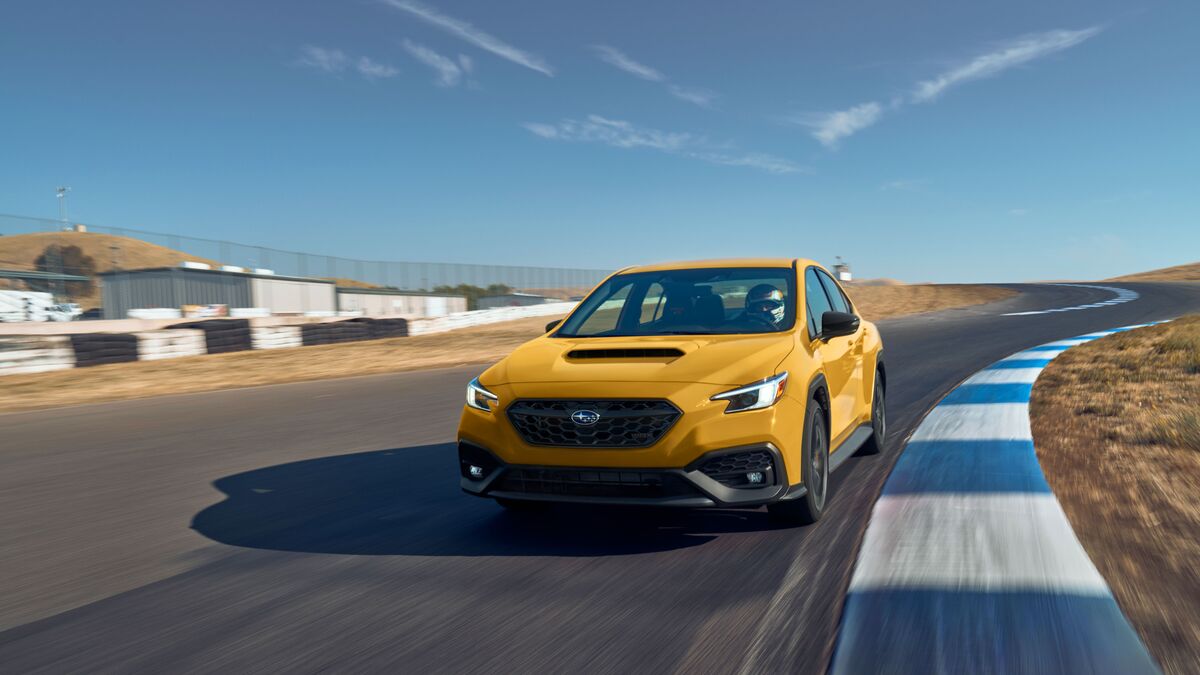
What I can say is that the Subaru WRX is absolutely an enthusiast car, and Subaru handed me the keys to a 2026 WRX tS.
The “tS” stands for “Tuned by STI,” and that distinction is both the car’s greatest strength and biggest source of frustration. Still, I’m glad it exists.
Which Trim Level
The WRX tS sits atop the WRX lineup and serves as the closest thing Subaru currently offers to a modern STI. There’s also the similarly equipped and same-priced GT trim, which is the only WRX to come standard with Subaru’s continuously variable automatic transmission (CVT).
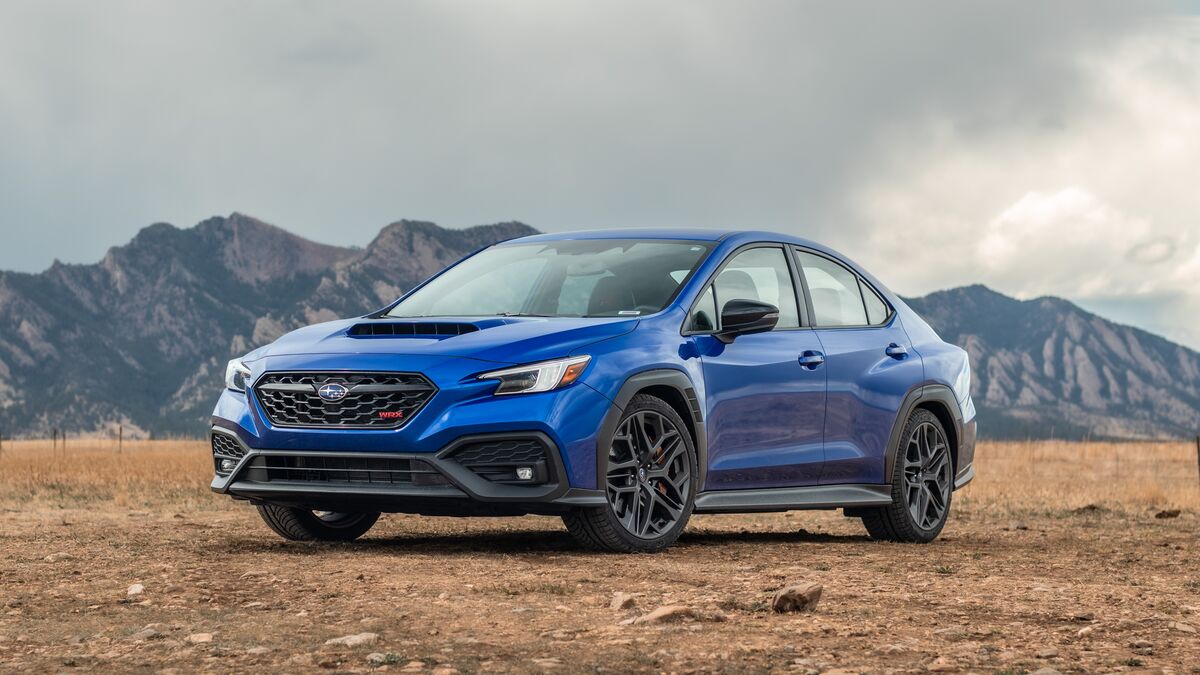
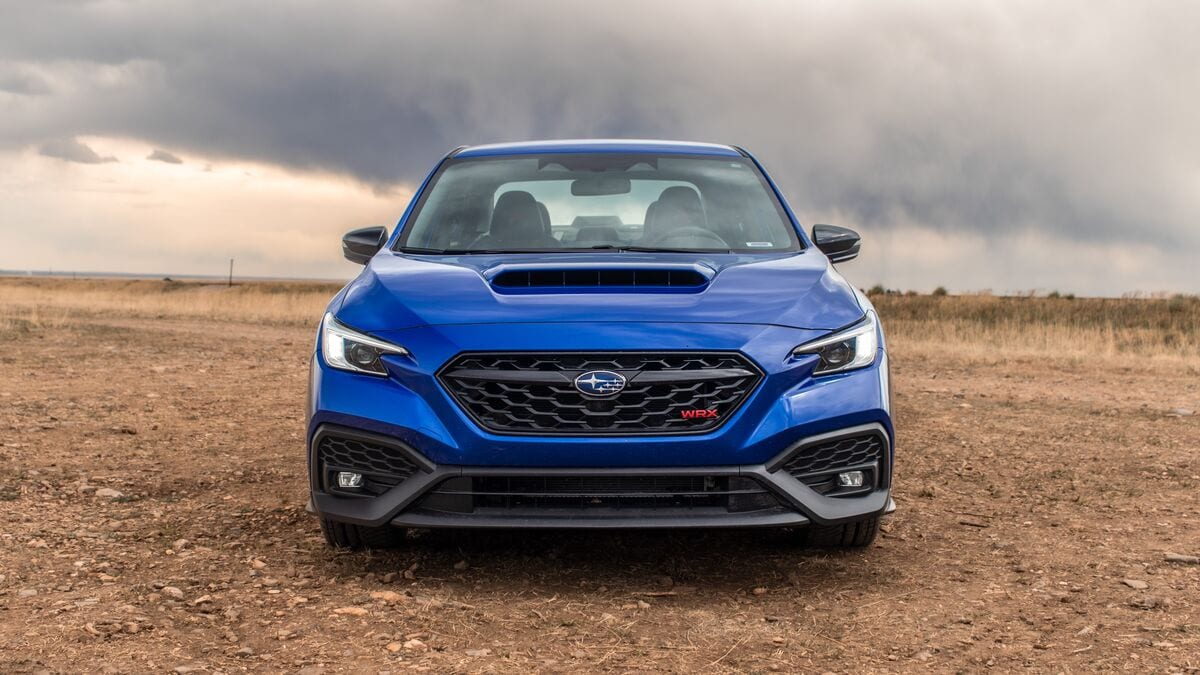
In addition to a mandatory 6-speed manual transmission, the tS gets upgrades enthusiasts care about: Brembo brakes, Recaro seats, STI-tuned adaptive dampers, and upgraded wheels and tires. My tester also wore the classic WR Blue paint, which contrasts nicely with the red badges scattered throughout the exterior.
At roughly $45,000, it is not inexpensive. The good news is that most of the upgrades are meaningful rather than cosmetic, but with every trim getting the same engine, not everyone will value the additions.
New 2026 Subaru WRX Prices
|
Retail Price
|
Fair Purchase Price (92620)
|
|||
|---|---|---|---|---|
$33,690 |
$31,900 |
Favorite Feature
In the WRX tS, the adaptive suspension genuinely transforms the car. In its softer settings, the tS is remarkably comfortable and capable for daily driving. It settles over broken pavement nicely and never feels punishing.
Switch into Sport+, and everything tightens up. Body motions shrink, responses sharpen, and the car feels far more alert.
Few performance cars manage to balance daily-driver comfort and genuine handling capability this well, especially at this price. The tS does, and it might be the one feature the previous STI wishes it had.
What It’s Like to Drive
Power comes from a turbocharged 2.4-liter 4-cylinder engine producing 271 horsepower and 258 lb-ft of torque. Those numbers are respectable, but they also fall short of the old WRX STI.
The resulting feel is decently quick, but not especially fast. A zero-to-60 mph time of roughly 5.5 seconds is perfectly respectable, but it is not going to pin anyone into the seat. There were many moments where I found myself wishing for another 40 or 50 hp. The chassis longs for more, as it can certainly handle it.
The 6-speed manual transmission remains a major selling point. It’s not quite the top-tier feel of Honda and Mazda manuals, but Subaru’s gearbox feels strong and mechanical. It is satisfyingly notchy, and after a few days, I felt completely at home with it. There is no automatic rev-matching, but that never bothered me.
Grip is abundant, with a symphony comprised of the AWD system, brake-based torque vectoring, and suspension tuning working together to create a car that corners exceptionally well. The handling feels significantly closer to what people associate with an STI than a standard WRX, while the Brembo brakes inspire confidence every time you lean on them.
Which leads to a funny observation: I’m not entirely convinced the engine produces enough power to fully justify how capable the chassis feels. With all-wheel drive (AWD) and a weight of less than 3,500 pounds, the WRX tS is very much a momentum car. It has more than enough brakes, grip, and suspension tuning, which is a better balance than too much power for all of those facets to handle.
Steering was slightly less communicative than I hoped, but that may be one of the tradeoffs required to support features like lane-centering driver assistance. For a car balancing daily usability with enthusiast appeal, it feels like a fair compromise.
Interior Comfort and Technology
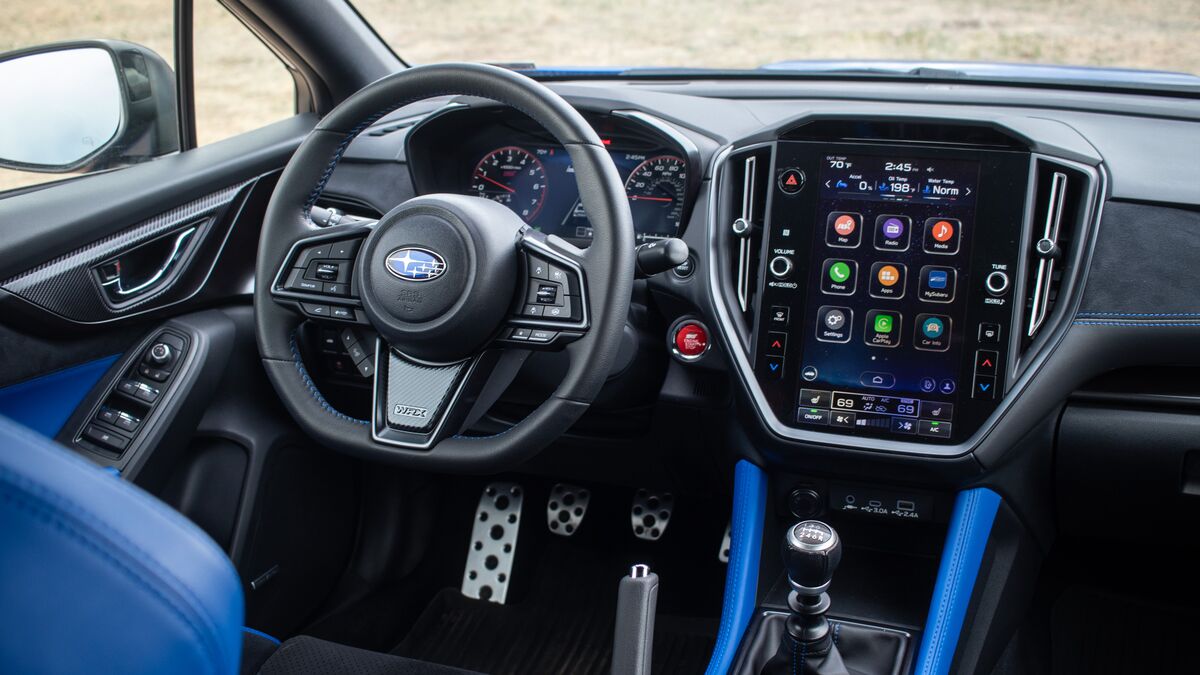
The first thing you notice is blue. A lot of mandatory blue. The WR Blue theme continues inside, regardless of exterior color. If blue isn’t a favorite color, the tS trim may not be right for you.
The Recaro seats are heavily bolstered, but thankfully they remain comfortable enough for everyday use. They feel equally suited to commuting and spirited driving, which is exactly what you want from a car like this.
Rear-seat space lands firmly in sports-sedan territory. Families can make it work, but nobody is mistaking the WRX for a family hauler first and an enthusiast car second.
The digital gauge cluster remains a mixed bag for me. I still miss physical gauges in an otherwise engaging car, but it works well functionally. It can display boost pressure, temperatures, navigation information, and a variety of useful performance data.
The infotainment system is modern enough, but it remains slower and laggier than I would like. Subaru’s newest systems have spoiled me, and this setup is literally a generation behind.
One feature worth highlighting is lane-centering assistance in a manual-transmission car. That makes highway driving easier without sacrificing the engagement of rowing your own gears. The upgraded audio system is also excellent and worth the extra cost.
Limitations
The biggest limitation isn’t the powertrain, but rather the tech stack.
The aforementioned infotainment system is slower than it should be, and the lack of a 360-degree camera feels like a surprising omission given the price. Ventilated seats would also be nice at this point. But those features would inevitably introduce a creeping increase of both price and weight.
However, the driving experience is engaging enough that the tech shortcomings fade into the background. You spend far more time enjoying the manual transmission and impressive chassis balance than you do staring at menus. For an enthusiast car, that is arguably the right priority.
Key Considerations
Many enthusiasts describe the WRX tS as getting about 80% of the way to an STI, so the question remains whether that’s enough to reach beyond the prior niche audience.
The tS feels like the version of the WRX that the chassis always wanted to be. It’s comfortable enough to live with every day, capable enough to satisfy enthusiastic drivers, and unique enough to stand out in an increasingly homogenized performance-car landscape.
If your priority is maximum straight-line performance per dollar, a lower-trim WRX may make more sense. After all, the same engine lives throughout the lineup. But if you want the factory performance enhancements to squeeze even more out of your experiences, the tS earns its place.
More importantly, it reminds us that AWD manual sports sedans still exist. And I’m very glad they do.