
Pickup trucks have gradually shifted in their place in society, from their origins as unadulterated workhorses to the wild variety of trucks today. We now see Venn diagrams of utility, performance, and rolling luxury lounges, with models aimed at reaching as many customer types as possible. The Toyota Tundra TRD Pro opts to lean hard into its rugged roots over superficial luxury.

New 2026 Toyota Tundra i-FORCE MAX CrewMax Prices
|
Retail Price
|
Fair Purchase Price (92620)
|
|||
|---|---|---|---|---|
$60,655 |
$57,900 |
|||
$72,700 |
$69,400 |
|||
$73,400 |
$70,000 |
|||
$74,660 |
$73,500 |
|||
$82,895 |
$79,100 |
Hybrid Power Without the Hybrid Efficiency
Under the hood of the Tundra TRD Pro lies the i-Force Max twin-turbo V6 hybrid powertrain. While a hybrid wearing a Toyota badge might bring to mind Prius-level frugality, performance is the priority here. Pushing out an impressive 437 horsepower and 583 lb-ft of torque, it boasts a towing capacity of over 11,000 pounds. While officially rated at 18 mpg city and 20 mpg highway, I actually managed to approach the mid-20s (averaging around 23 mpg) while cruising in Eco mode, which was a pleasant surprise for road trips. It’s a far cry from the Prius, but in truck land, it’s above-average efficiency in this class.
The powertrain also provides the soundtrack. You get turbo and induction noise up front, paired with a throaty exhaust note out back, thanks to the TRD Performance Package’s dual-exit cat-back exhaust. I found myself wishing the exhaust were actively actuated so I could leave the rumble behind when activating Eco mode, as there’s a resonance at around 2,000 RPM while cruising. Additionally, Toyota includes a subtle Engine Sound Enhancement (fake engine noise) that cannot be turned off. I also noticed a decent amount of road noise, but for a dedicated off-road vehicle riding on all-terrain rubber, it’s understandable — even forgivable.
Long Live Physical Controls
The interior strikes a great balance, looking properly rugged while offering a bit of elevation through SofTex synthetic leather-trimmed seats and contrast stitching. The technical camo pattern is subtly stamped onto the seats, alongside TRD Pro branding and red stitching throughout. The ultra-cool IsoDynamic Performance seats we first saw in the Tacoma are now an option on the Tundra, though sadly they weren’t equipped on my tester.
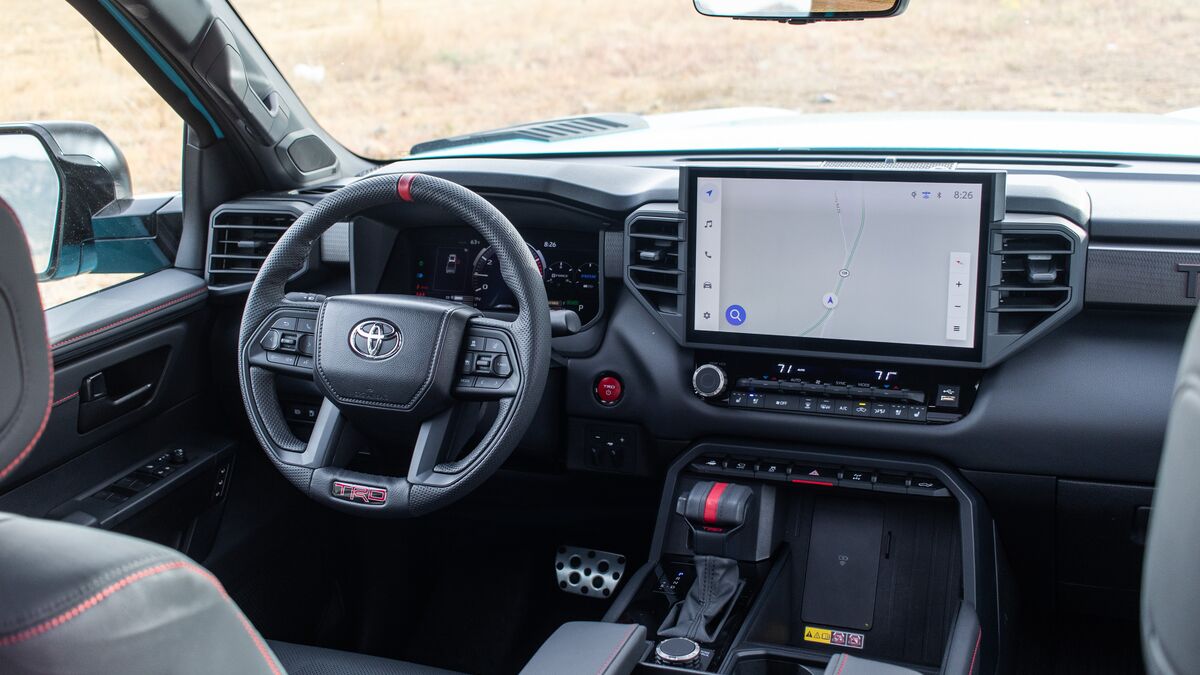
On the tech front, the massive touchscreen beautifully displays Apple CarPlay and Android Auto, which is bound to be its most common use case since the native software running beneath it is fine at best. Surprisingly for a 2026 model, the truck still offers a USB-A port for wired phone connectivity, a sadly dated choice, but wireless CarPlay/Android Auto exist as the likely default. Another minor gripe is the inclusion of piano-black plastic near the shifter and climate controls; it feels like an afterthought in an era when most buyers wish that material were gone altogether. Especially on something prone to picking up extra dust inside.
Thankfully, all the physical climate controls remain, which is a massive win beneath such a large screen. If you like your music loud, the JBL sound system has nice fidelity, though the bass is wildly overwhelming even with the low end rolled off, and it even produced some cabin rattles.
Attention-Grabbing Functionality
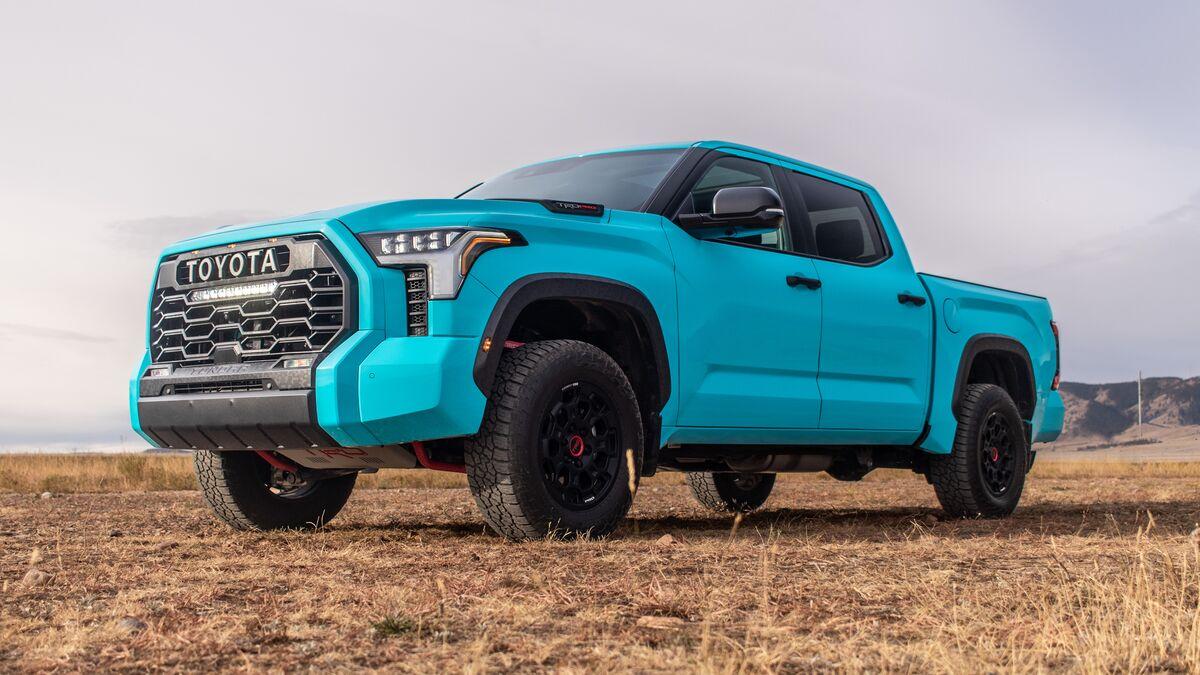
If you want to blend in, do not opt for the $695 Wave Maker Blue paint. It makes this truck impossible to miss in a parking lot and instantly turns it into one of the visually loudest vehicles on the road. The exterior styling is muscular and unique, featuring the heritage “TOYOTA” front grille with an integrated LED light bar and amber marker lights, TRD hood inserts, and “TRD Pro” proudly stamped across the tailgate.
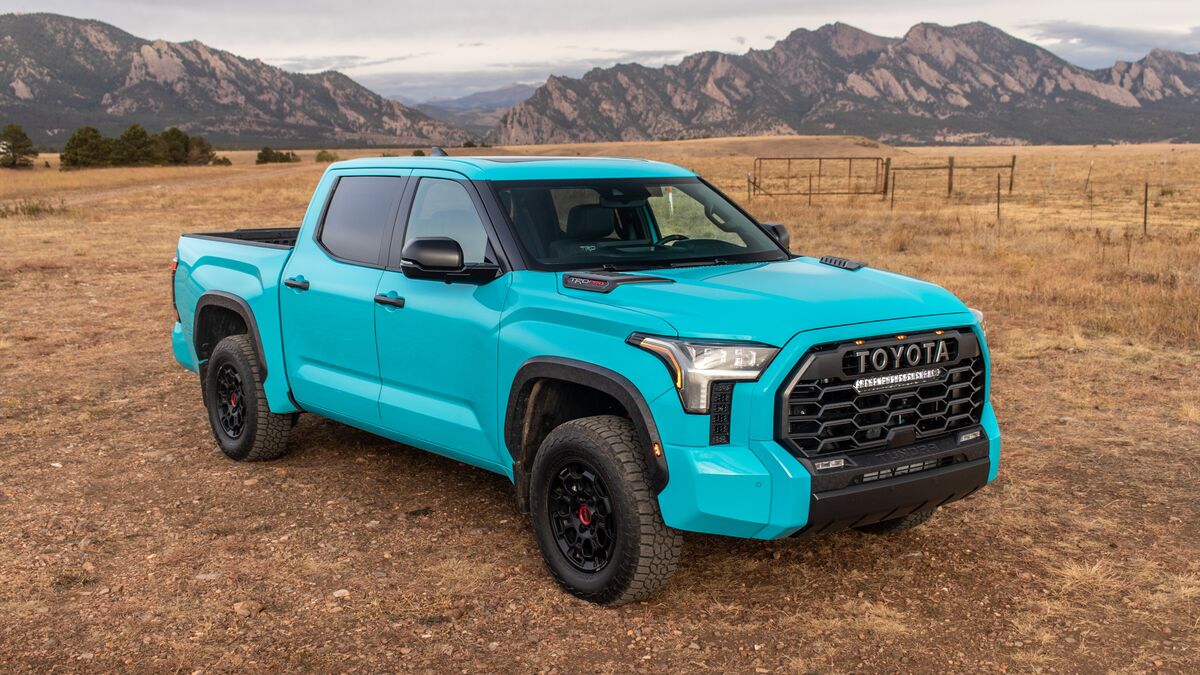
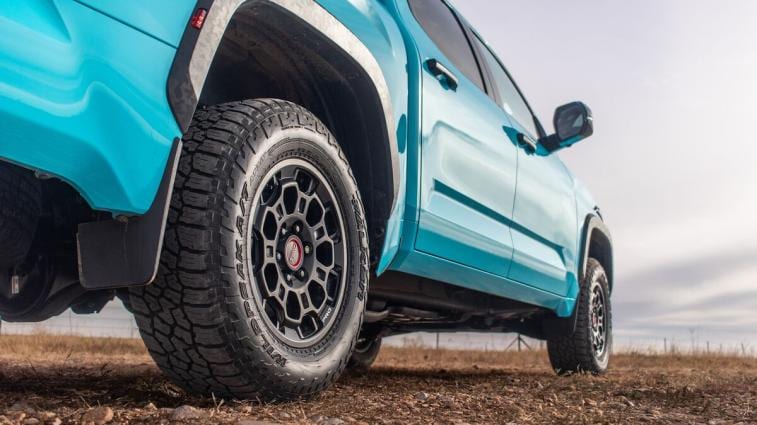
The TRD Pro backs up its looks with hardware. It rides on 18-inch forged BBS wheels wrapped in Falken Wildpeak A/T tires, suspended by 2.5-inch FOX Internal Bypass shocks with piggyback remote reservoirs that provide just over an inch of factory lift. Underneath, a heavy-duty aluminum TRD skid plate and a red TRD front stabilizer bar keep things protected and composed. When the pavement ends, you have an electronic locking rear differential, Crawl Control, and Multi-Terrain Select at your disposal.
On the highway, however, that off-road geometry shows its limits. The lane-centering adaptive cruise control feels pretty wobbly, making it useful only on the absolute straightest of highways. There are definitely better highway assist systems in other trucks, but realistically, the TRD Pro buyer may not have that at the top of the priority list.
Paying for Performance Over Pampering
All of this hardware and style comes at a steep price of $78,847, as tested. Trucks are undeniably expensive right now, but buying a TRD Pro means you are making a very specific trade-off: paying top dollar for factory-warrantied off-road hardware and the aggressive styling to prove it.
In exchange, Toyota leaves out the luxury touches you might expect at the $80,000 mark, features you’d easily find on a similarly-priced Capstone trim. The interior lacks massage seats, heated or ventilated rear seats, a head-up display, and a power tilt/telescoping steering column. There are no power running boards to help you get into this lifted rig, no fancy semi-aniline leather or open-pore wood trim, and no adaptive or air suspension.
It begs the question: Are you willing to trade luxury niceties for overland capability? Would you opt for a blinding blue paint job over subdued grayscale hues? For the right buyer, the answer is an absolute yes.