
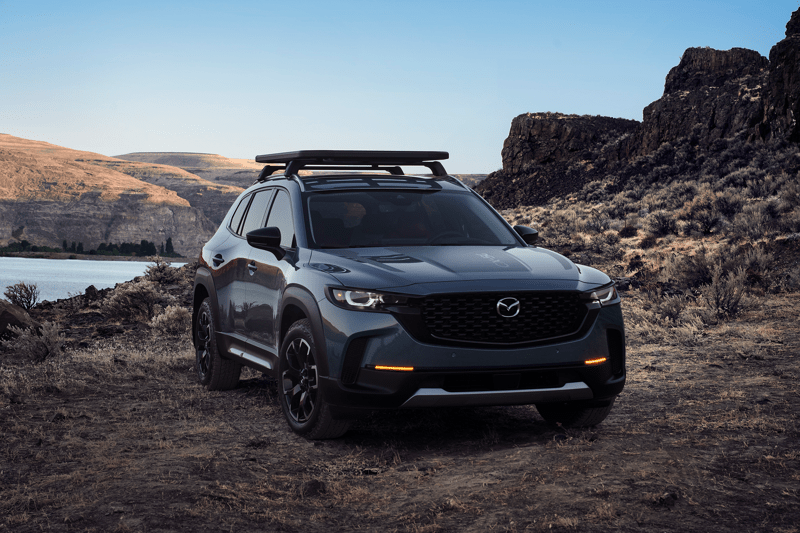
The Mazda CX-50 is known for balancing practicality and adventure. It offers off-road capability while remaining a safe, 5-passenger SUV. While a hybrid option is available, the gas-powered version of the CX-50 has two engine choices.
The 2.5 S, offering a 2.5-liter normally aspirated engine is available for four trim levels, including the newly added Meridian Edition. This non-turbo base engine is a 4-cylinder engine that produces 187 horsepower. The 2.5 S models start at around $31,000.
The 2.5 Turbo, featuring a turbocharged version of the same 2.5-liter 4-cylinder engine, is available for three trim levels, offering up to 256 hp with premium fuel. Pricing for the Turbo models of the CX-50 starts around $39,000.
Here’s how to know which one is right for you.
What’s the Price Difference?
Non-turbo models start at around $31,000 to $36,000. This price range includes the 2.5 S Select, Preferred, Meridian Edition, and Premium models. All come with Sport and Off-Road modes, a 2,000-lb towing capacity, Mazda Connect infotainment system, and an array of safety tech.
The prices of turbo engine trims (Turbo, Meridian Edition, and Premium Plus) range from about $39,000 to $44,000. With the turbocharger and the increase in price comes more horsepower and towing capability. The towing capacity for turbo trims is 3,500 pounds. Other luxuries include Bose audio, access to SiriusXM, and paddle shifters.
Which Is More Efficient?
The EPA reports estimates of 24 mpg city, 30 mpg highway, and 26 mpg combined for all non-turbocharged CX-50 SUVs. The turbocharged models earn an estimated 23 mpg city, 29 mpg highway, and 25 mpg combined. That amounts to an annual fuel cost difference of about $50 between the two engines.
Which Is Faster?
The turbo models pack a more powerful punch. These CX-50 models are capable of 227 hp and go up to 256 hp on 93-octane fuel.
The base engine adapts well, delivering smooth and consistent performance on both highways and city streets, with a maximum power output of 187 hp.
The Mazda CX-50 competes with other compact SUVs, including the Honda CR-V, Hyundai Tucson, and Nissan Rogue. All CX-50 trim levels come standard with a 6-speed automatic transmission and i-ACTIV AWD. This predictive system uses over 27 sensors to monitor road conditions and proactively adjust torque distribution for better handling, grip, and fuel efficiency. The CX-50’s main competitors offer AWD at an added cost.
Which Mazda CX-50 Engine Is Better?
Now with even more trim levels for both the base and turbo engines, there’s an option for almost everyone.
The $3,000 price difference between a premium non-turbo and a basic turbo model could be worth it if you plan on spending a lot of time in your car for recreational driving and outdoor activities. The interior luxuries, combined with the vehicle’s serious towing and speed capabilities, make the CX-50 turbo an easy choice for enthusiasts.
If you enjoy the great outdoors on a smaller scale, the base engine models may be suitable for you. They can still tow kayaks, paddleboards, or bikes, and can handle light off-roading and sporty driving, though not to the same level as with the turbo engine.