
- Volkswagen CEO Kjell Gruner confirmed plans for hybrid versions of the Atlas 3-row SUV and Tiguan compact SUV.
- The Tiguan is one of the few compact SUVs without a hybrid option.
- The Atlas Hybrid likely won’t arrive until the 2030 model year.
Volkswagen will again bring hybrid powertrains to the U.S.
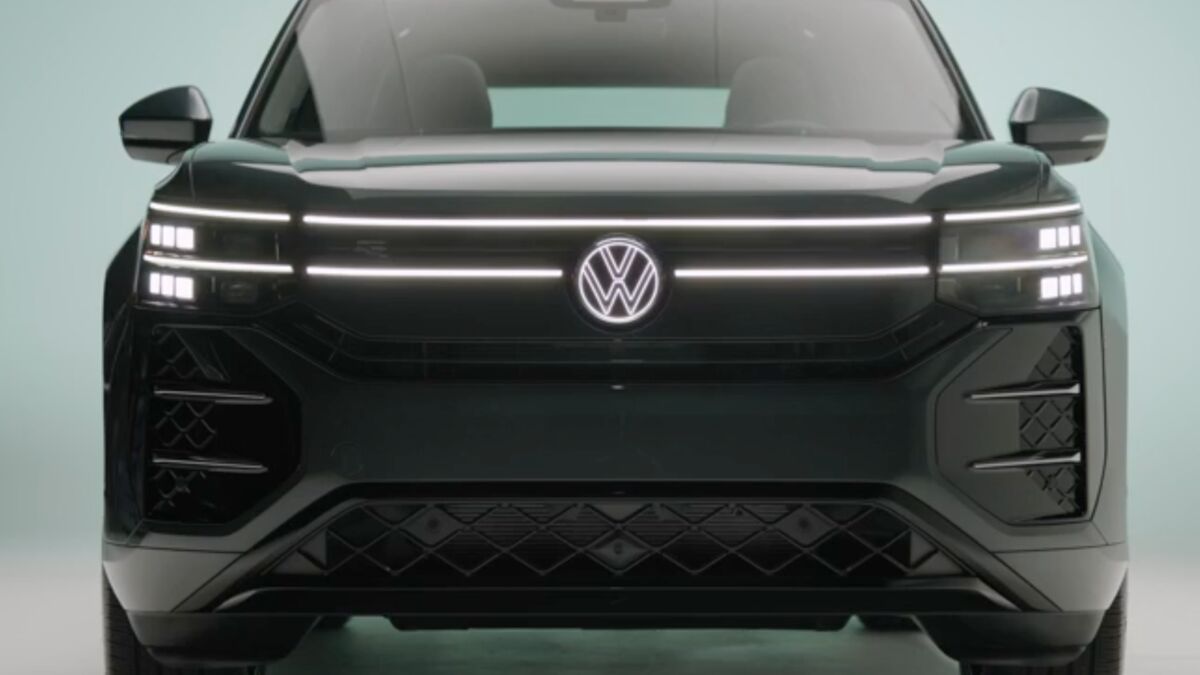
At Wednesday’s unveiling of the redesigned 2027 Volkswagen Atlas at the New York International Auto Show, VW confirmed that a hybrid version of the 3-row SUV will arrive in the next couple of years.
“A hybrid variant is planned to arrive with the midcycle refresh,” the press materials of the second-generation Atlas announced.
Launched for the 2018 model year, the popular first-gen Atlas ran longer than the industry average product cycle of five years. The mid-cycle refresh of the new Atlas will likely be for the 2029 or 2030 model year. The lone powertrain offered in the big 3-row SUV is a turbocharged 2.0-liter 4-cylinder engine, now making 282 horsepower, up from the 269 hp of its predecessor.
A Tiguan hybrid is also planned, Volkswagen CEO Kjell Gruner confirmed to other media outlets. It’s likely that the Atlas Cross Sport, a 2-row version of the Atlas, will also get a hybrid option.
That will make three full hybrid vehicles in VW’s stable in the next few years, up from zero right now, Car and Driver reported. Years ago, Volkswagen sold hybrid versions of its Jetta sedan and Touareg SUV.
VW’s bestseller, the Tiguan compact SUV, could use a hybrid option to better compete with rivals. The redesigned 2026 Toyota RAV4 and relaunched 2026 Jeep Cherokee come standard with a hybrid powertrain, while nearly every other automaker has a hybrid option in the cutthroat compact SUV class. The Honda CR-V Hybrid now accounts for more than half of all CR-V sales, the Hyundai Tucson and Kia Sportage offer both hybrid and plug-in hybrid options, and even the Subaru Forester and Mazda CX-50 have hybrid options. Nissan will be selling the 2027 Rogue as a hybrid as well.
The Volkswagen Tiguan was redesigned in 2025 to usher in its third generation. If VW sticks with introducing hybrid powertrains in a mid-cycle cadence, than the Tiguan Hybrid could arrive for the 2028 model year.
This is pure speculation about the world’s second largest automaker. Unlike Toyota, VW has shied away from hybrids while launching an aggressive electric vehicle portfolio that has recently been curtailed. VW offers plug-in hybrid (PHEV) versions of the Tiguan and Atlas analogs to the Atlas in Europe, where PHEVs are more popular.
Gruner confirmed that the hybrids planned for the U.S. will be traditional and not need to be plugged in.