
- The concept coupe heralds a distinct design language for BMW’s new sub-brand.
- Despite a relationship dating back 60 years, BMW Alpina debuts its first model next year.
- BMW Alpina “fills a gap” between BMW’s M performance line and Rolls-Royce.
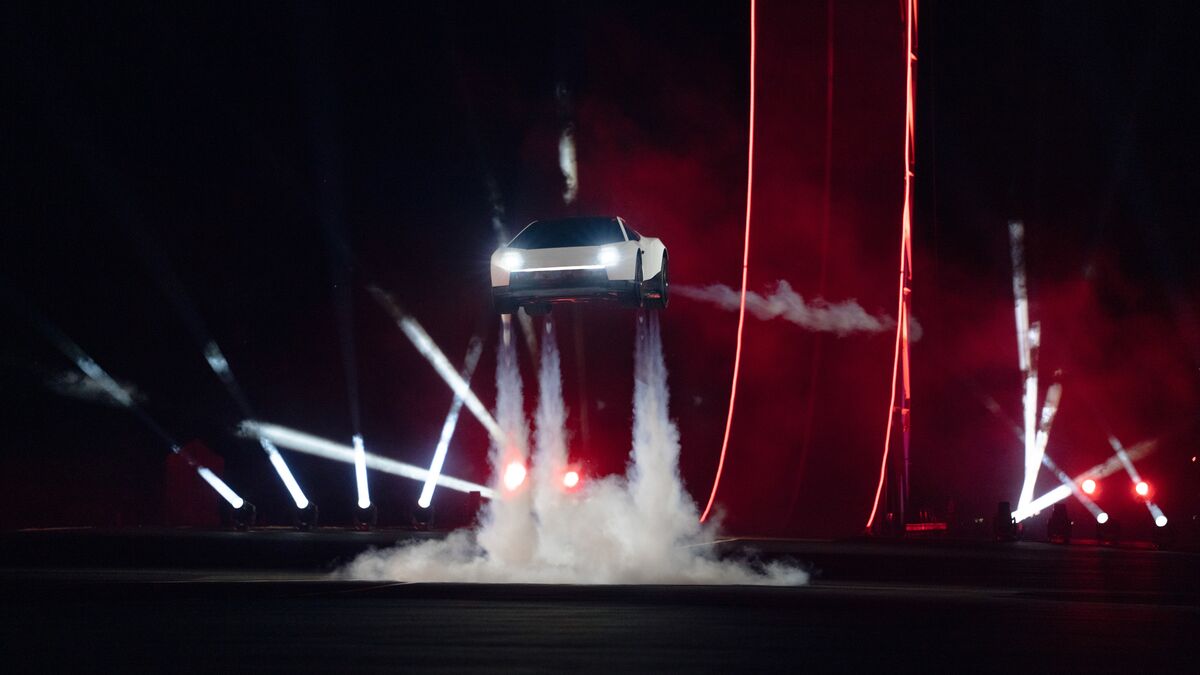
BMW Alpina has arrived. The new brand introduced a stunning concept coupe today that not only defines its future design direction but also previews the first production model coming next year.
“BMW Alpina fills a gap in our portfolio between BMW and Rolls-Royce as we see even more potential in the high-end segment,” Oliver Viellechner, head of BMW Alpina, said in a statement before the unveiling at the 2026 Concorso d’Eleganza Villa d’Este in Lake Como, Italy.
Despite a partnership dating back nearly 60 years, the two German brands became one at the start of this year.
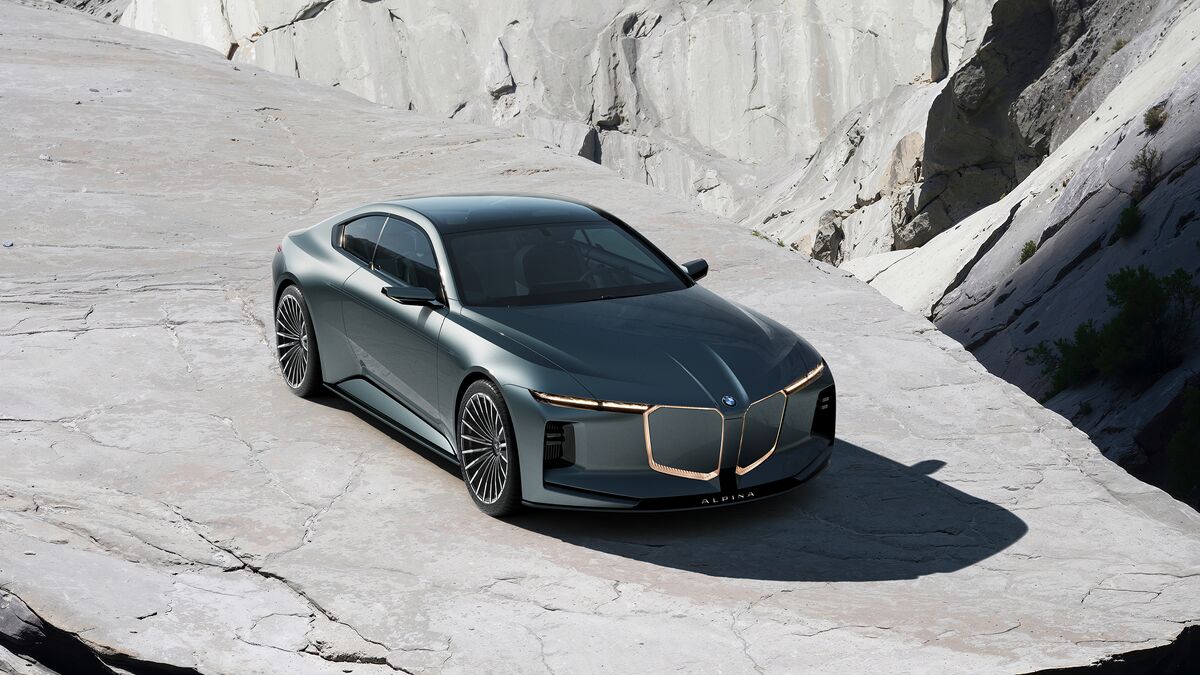
The Vision BMW Alpina is a long performance coupe with seating for four adults — in comfort, BMW Alpina says. Measuring 204.7 inches, the design study is longer than BMW’s M5 Touring wagon but not quite as long as the BMW 7 Series flagship sedan. The sharp design starts with a shark nose that comes to a point in the top center of the grille and leans ahead of the rest of the car, like a boat’s prow. Or a shark’s nose.
Popular nearly a century ago, the design faded in the years leading up to Alpina’s founding in Bavaria in 1965.
BMW’s kidney grille appears as the shark’s nostrils ringed in subtle running lights, inspired by the Bavarian Alps, we’re told. Another set of thin running lights shoot out and bend around the corners. Wide vertical intakes at the bottom break out into a lower “speed feature line” that rises in six degrees over the 22-inch front and 23-inch rear wheels of the otherwise smooth coupe. Alpina has used the 20-spoke wheel design since 1971. At the baby-got-back rear end, quad exhaust pipes suggest what’s under the hood.
It’s a V8, of course, and based on other Alpina applications in BMW’s family, it is likely a hand-built twin-turbo 4.4-liter V8 like the kind powering the BMW Alpina XB7 offered in limited numbers in North America.
What Is BMW Alpina?
If BMW Alpina already sells cars, how does the Vision concept presage what’s coming as the alleged first model next year?
Alpina started by tuning existing BMW engines for more performance in endurance racing and eventually road cars. BMW certified the cars tuned by Alpina and kept those cars under factory warranty, allowing owners the best of both worlds: high-performance tunes backed by warranty.
Alpina hand-builds the engine in Buchloe, Germany, then ships it to BMW’s plant where the engine and body of the vehicle are assembled, then it’s shipped back to Alpina for bespoke interior upgrades, custom exterior details, transmission tuning, and, perhaps most famously, the application of Alpina’s Switch-Tronic button shifters on the steering wheel spoke. These buttons were the first attempt at shifting a manual transmission without using a clutch pedal, like an automatic but with a shifter and shift gate to row your own gears. Perhaps gimmicky now, it was the precursor to paddle shifters, among many other manual-automatic innovations along the way.
There have been many BMW Alpina models, always in low numbers and high prices due to the hand-built customizations. Alpina specializes in touring cars, balancing performance with comfort.
Until the start of this year, Alpina was a customization shop, working independently from BMW, both separate and distinct from BMW’s own M performance line. In 2022, BMW bought Alpina, and the terms of that deal let Alpina do its own thing until the end of 2025.
Thus, the Vision BMW Alpina is the first look at what Alpina models may look like fully nested in the BMW family.

How Is BMW Alpina Any Different Now?
“With Alpina we have a strong legacy and a global community, which we want to build on, while preserving the essence of what the brand stands for — speed, comfort and sophistication,“ Viellechner explained.
It sounds like there will be more customization options that fall short of the full Rolls-Royce bespoke experience in the BMW family. Since BMW bought Rolls-Royce in 2003, the ultra-luxe British brand experienced sevenfold sales growth, from under 800 units in 2005 to its peak of more than 6,000 units in 2023.
Popularity could be bad for the bespoken, as exclusivity defines the ultra-lux class. But million-dollar customizations, or commissions made by owners for singular one-off models, also increased dramatically in line with the booming millionaire and billionaire classes.
BMW might see an opportunity in applying that customizable growth strategy to performance cars.
Vision BMW Alpina Interior
The influence of Rolls-Royce can be found inside the Vision, as well as in the language in the press release. “Architectural volumes define the layout,” we’re told, while we’re reassured that “craft details are restrained but well considered.”
BMW’s parallelogram of screens tops the low dash, while the instrument cluster moves to a curving Panoramic iDrive display spanning the base of the steeply raked windshield. It’s a spartan setup, embellished by “clear-cut crystal” controls, Deco accent lines, and rich leather upholstery “sourced from producers across the Alpine region.”
If that didn’t bespook you, the two rear passengers could enjoy beverages from a glass water bottle beside two crystal glasses that rise out of the center console. They’re held in place by concealed magnets, and illuminated from below.
Lavishness aside, the cabin looks light, airy, and gorgeous. In pictures at least.
We’ll wait with bespoken dreams to see how all of this manifests in production form next year.