
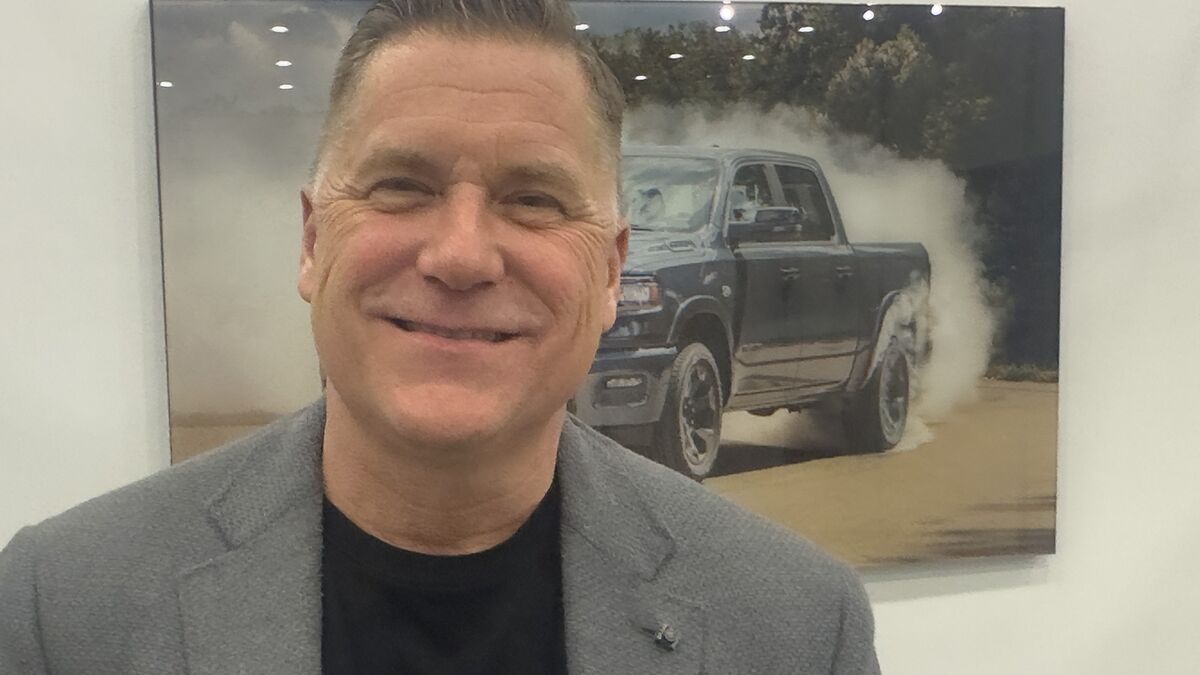
I sat down for a brief conversation with Tim Kuniskis, head of American bands and North America marketing and retail strategy for Stellantis, during the recent 2026 Detroit Auto Show. Kuniskis, who also serves as CEO of the Ram brand and is heading up the return of the SRT (Street and Racing Technology) division, reports directly to Antonio Filosa, the Stellantis CEO and chief operating officer, North America and American brands. These gentlemen must wield supersized business cards.
In North America, Stellantis markets multiple brands, including Chrysler, Dodge, Jeep, Ram, Alfa Romeo, Fiat, and Maserati. The global portfolio adds additional nameplates, including Abarth, Citroen, DS Automobiles, Lancia, Opel, Vauxhall, and maybe a few more. It’s hard to keep track.
Kuniskis began his journey with the former Chrysler Corporation in 1992, moving up the ladder in business operations and marketing. He was a member of Fiat Chrysler America’s Group Executive Council, and later served in leadership positions with Dodge, SRT, Fiat, Jeep, Maserati, Alfa Romeo, and Ram. After a brief departure from Stellantis in June 2024, He roared back to the company in July 2025, in his current position(s).
Kuniskis is an energetic, fit figure, with a tight haircut, a ready smile, and piercing eyes. He answered my questions without hesitation and showed minor wear despite a grueling schedule of one-on-one interviews with journalists.
We talked for about 15 minutes. I recorded our conversation with Kuniskis’ permission, and what follows is an edited version of some of the highlights, shortened for brevity and clarity.
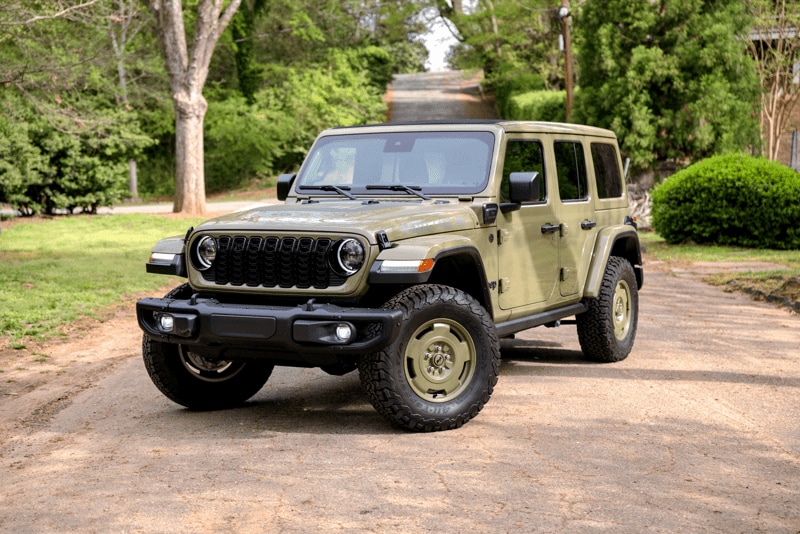
Jason Fogelson: My team is most curious about the suspension of the 4xe plug-in hybrid models, because it’s probably your most recent news. I don’t know if you’re going to bring those back. Can you talk a little bit about that?
Tim Kuniskis: Yeah, it’s not so much that we don’t like the technology. The technology was great. People that drove them enjoyed them, liked them. It did very well in the marketplace — extremely well, actually, especially on the Jeeps. 4xe and plug-in hybrids were a very good enabler for us for compliance.
There’s always here’s what a customer’s willing to pay [indicating waist level] and here’s the cost of the technology [indicating chin level]. And in the case of the battery electric, here’s what a customer’s willing to pay [chest level], here’s the cost [chin level], right? You’ve got a challenge of: Do I lose money? Do I make very little money? What do I do? And that’s why you see everybody in the industry now, they have these huge write-offs because we invested in battery plants, and we have these storage facilities for the batteries, and you know the story, on and on and on.
It’s not because battery electric cars aren’t great, it’s because we were trying to build to a demand that was artificially inflated, versus the customer pull. And then add to that, there was a delta between what they were willing to pay and what the cost was. And the larger that delta, the easier it is to make the decision. That’s why you see people very quickly doing these write-offs.
PHEV (Plug-in hybrid electric vehicle) was not as huge of a gap, but it was still a gap. Customers like them, they work very well, they’re willing to pay for them because they see them as an added value, but they weren’t willing to pay as much as was required to recoup the investment and the cost.
On our [Jeep] Cherokee, the biggest segment in the world, we decided to go fully hybrid electric vehicle (HEV). That doesn’t mean that we won’t add ICE (internal combustion engine) later someday, maybe, I don’t know, but we decided to go HEV because the gap between what the customer was willing to pay and the cost of the technology was the closest. Battery electric is way out of whack, PHEV was out of whack, and HEV was… okay, pretty good there.
So that’s all it was. It was a prioritization of what can we recoup in the marketplace. Because at the end of the day, the customer’s willing to pay what the customer’s willing to pay, and it’s either going to come out of our margin or lower sales.
JF: Is the gap between HEV and PHEV a function of battery size?
TK: Yes. Battery size drives everything. And that’s why I fully believe that in the future, as we get into new technology, new batteries, lower weight batteries, and lower cost per kilowatt hour, that’s going to be a massive game changer.
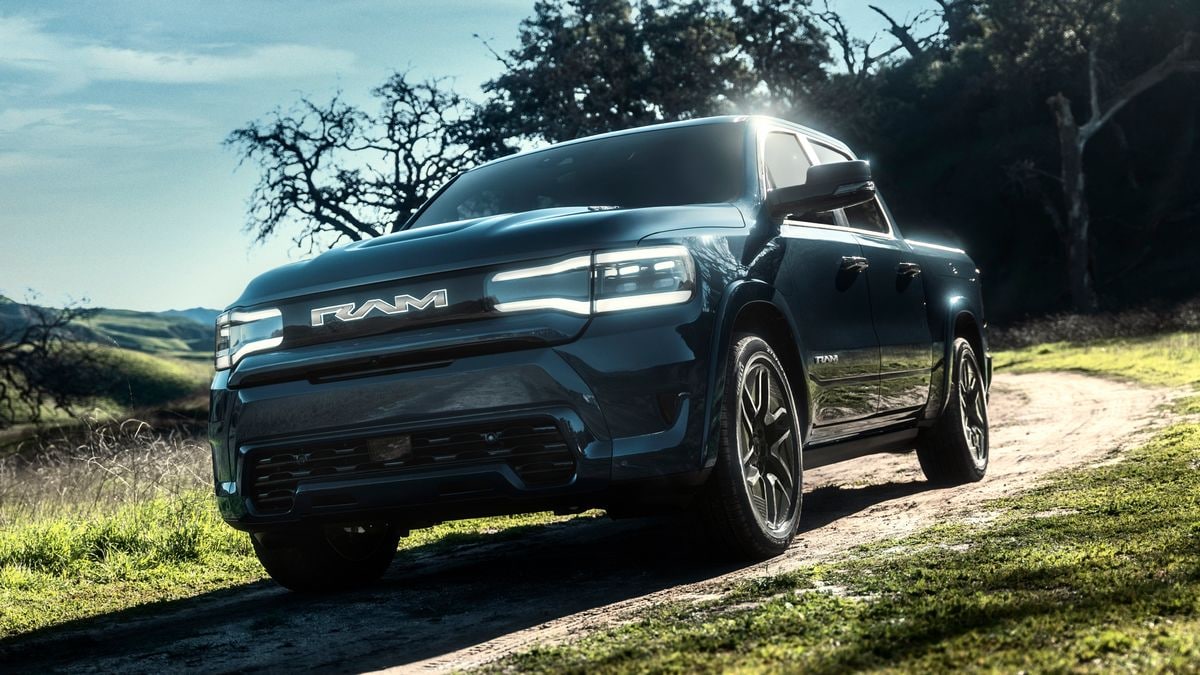
JF: You’ve got an extended-range electric vehicle (EREV), the Ram 1500 Rev, slated to come out this year.
TK: You look at a fully battery electric truck and then you do the range-extended one over here. And you go, wait a minute. On the fully electric, I’ve got EDMs (electric drive modules), I’ve got a battery; on the extended-range, I’ve got EDMs, I’ve got a battery. But oh, this one [the extended-range truck] has got an engine and a generator. It must be way more expensive.
Actually, no. This one’s way less expensive. How can that be? Well, I take a big vehicle like a truck or a big SUV. In the case of the truck, it was a 168- and a 229-kilowatt-hour battery. So, let’s say your cost per kW hour is $100. It’s not, it’s more than that, but let’s just say it is. I’ve got a $22,000 battery in this car. Now, I go to this car — since I have the range-extended option — now, I can put in a 92-kilowatt-hour battery. I just saved $11,000 in cost.
Game changer. I get all the advantages; I get none of the customer disadvantages. I don’t have to worry about infrastructure, I don’t have to worry about range, I don’t have to worry about towing, I don’t have to worry about temperature, and I’ve got a lower cost for us, so I can be more price competitive. Very few things in this industry are win-win: great for us and great for the customer. Very few things.