
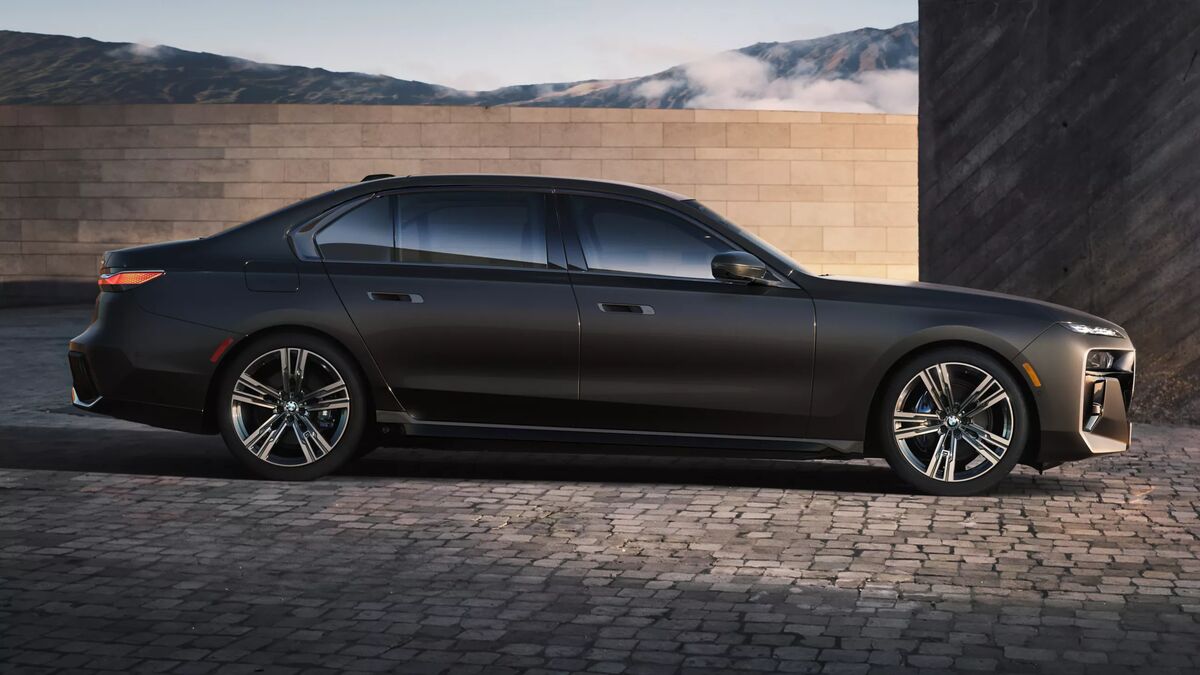
According to a new report, BMW cited cost and “limited real-world applicability” as reasons for equipping its flagship sedan with a Level 2 driver assistance system based on the automaker’s Neue Klasse technology platform instead of a Level 3 “eyes-off” system.
The report comes from the European unit of industry publication Automotive News.
The move will reportedly affect the latest 7 Series.
What Is Self-Driving?
Simply put, a self-driving car is one that operates without human input. Yet it really isn’t that straightforward. There are five levels of automation that SAE International, a worldwide association of engineers and technical experts, developed to categorize driver-supported features versus completely autonomous systems.
Automakers, including BMW, offer a variety of driver assistance systems, such as adaptive cruise control and lane-keeping assist. These, along with other software and sensors, aid drivers and help keep them safe. Level 0 through Level 2 offer driver support features. Levels 3 through 5 offer autonomous capabilities.
The majority of today’s most sophisticated systems are Level 2. Mercedes-Benz was the first to launch a Level 3 system, albeit on a highly limited basis.
Also see: Self-Driving Cars — Everything You Need to Know
Self-Driving Retreat
Due to the intricacy of these self-driving systems, including lidar sensors and software, maintenance and monitoring become cost-prohibitive. In the case of the 7 Series, the Level 2 system is priced around $5,300 less than the Level 3 system would have been, according to the Automotive News report. Still, BMW’s upgraded Level 2 system allows for hands-off driving on freeways, with automatic lane changes confirmed by eye movement.
Just last year, Stellantis, the parent company of Jeep, Dodge, Ram, and other brands, shelved its self-driving project.