
- Honda averages 31 mpg across its lineup, according to the EPA
- Tesla is the most efficient “Large Manufacturer” at 117.1 mpg
- Honda is the most fuel-efficient automaker that produces gas powertrains
The data is in: Honda ranks as the most efficient automaker that produces gasoline powertrains, according to the EPA’s annual Automotive Trends report released last week. There’s a caveat, of course. The most efficient large automaker, which the EPA classifies as selling at least 170,000 vehicles annually, is Tesla.
An American automaker of only electric vehicles (EVs), Tesla averaged 117.1 mpg across its product line, which includes the best-selling Tesla Model Y electric SUV. Since mpg stands for “miles per gallon,” and Teslas are fueled by electrons, not gas, the EPA uses an equivalent MPGe rating to calculate an EV’s efficiency relative to gas-powered cars. Other American automakers of electric vehicles, such as Rivian and Lucid, would also rank high in terms of efficiency, but they don’t sell enough models annually to be included in the index.
Among major automakers that sell a mix of powertrains, Honda outpaced Toyota as the most efficient in the 2024 model year, the last year of complete data. Honda’s average fuel economy across its lineup of cars, SUVs, and a pickup was 31 mpg. The industry average was 27.2 mpg.
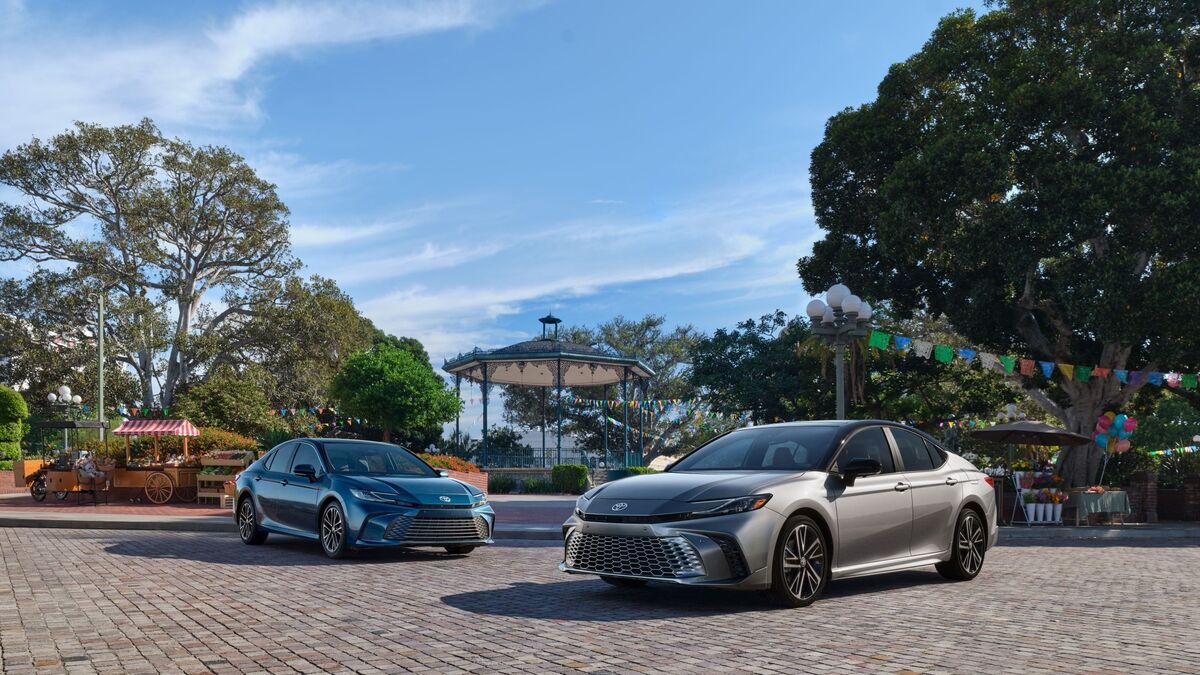
Toyota ranked fifth behind Hyundai and Kia with a 29 mpg average. As the top seller of hybrid powertrains, Toyota boasts a much broader and more diversified lineup of vehicles than Honda. It sells at least 21 distinct models, from the GR86 sports coupe to the Toyota Tundra full-size truck, and a vast range of powertrain types, including three EVs and the Toyota Mirai fuel-cell electric vehicle (FCEV). The hybrid leader continues to make its hybrid powertrains standard, and not just in the Prius. The redesigned 2026 Toyota RAV4, the best-selling vehicle in America that is not a truck, is now a standard hybrid rated at 44 mpg combined. The Camry sedan comes only as a hybrid (51 mpg combined), and the same goes for the Toyota Sienna minivan (36 mpg combined).
This broader rollout of hybrid powertrains helped Toyota experience the greatest growth in efficiency of any mixed-propulsion automaker from 2019 to 2024 at 3.2 mpg. Tesla’s average actually decreased in that period due to the introduction of its largest vehicle to date, the Tesla Cybertruck, and increased sales of heavier SUVs.
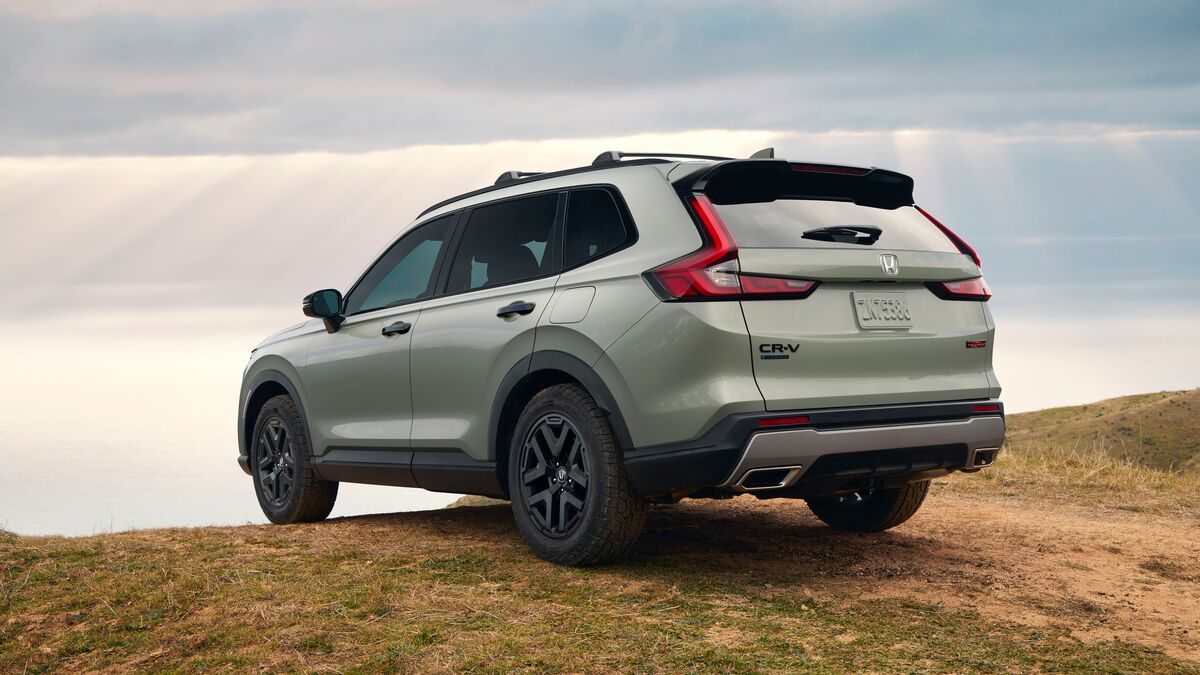
Honda has a much smaller lineup and a narrower powertrain scope than Toyota, which boosts the brand’s average fuel economy. Honda sells 10 models, including the Prologue EV, Ridgeline midsize pickup truck, and Odyssey minivan. But with hybrid versions of its most popular models, the CR-V, Accord, and Civic, now overtaking sales of their gas versions, Honda claims it has sold more than 400,000 hybrids and EVs in 2025.
Stellantis had the lowest average at 22.8 mpg, preceded by GM at 22.9 mpg and Ford at 23.4 mpg. The formerly known Big Three are the biggest producers of trucks in the U.S.
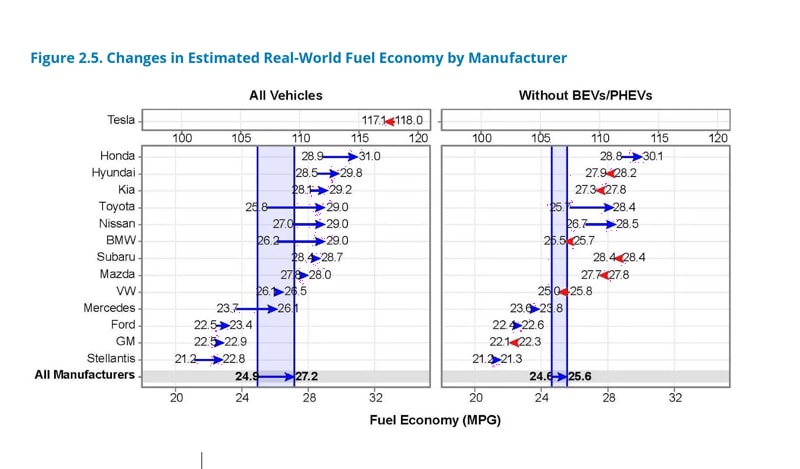
On the whole, real-world fuel economy across the industry increased from 24.9 mpg in 2019 to 27.2 mpg in 2024, spurred by increased sales of EVs. Excluding fully electric models and plug-in hybrids (PHEVs), average fuel economy increased just 1 mpg over that time frame, from 24.6 to 25.6 mpg.
Efficiency gains across the automotive industry could stall as EV subsidies have been canceled and the EPA relaxed fuel economy targets under the Trump administration. The report noted the following: “In February 2026, the EPA finalized a rulemaking that eliminated greenhouse gas standards for light-, medium-, and heavy-duty vehicles and engines. Due to this action, the EPA is not publishing the portion of this report that previously focused on manufacturer greenhouse gas regulatory compliance.”