
- The Supreme Court today struck down many of President Trump’s signature tariffs.
- The decision does not impact most tariffs on new cars.
The Supreme Court today struck down many of President Trump’s signature tariffs. The court ruled that the law the White House cited to enact them does not empower the president to impose tariffs.
The move, however, leaves intact levies on new cars. The White House imposed those based on a different authority not considered in today’s ruling.
Why the Ruling Doesn’t Affect New Car Tariffs
Industry publication Automotive News explains, “The 6-3 decision pertains only to tariffs issued by Trump under the International Emergency Economic Powers Act of 1977,” or IEEPA. Those include tariffs on all goods from specific countries (what the White House calls “reciprocal tariffs”) and duties on goods from Canada, Mexico, and China that the president says were a response to illegal fentanyl trafficking.
In a statement, Kelley Blue Book parent company Cox Automotive notes that, while the decision may over time reduce some tariff-driven inflationary pressure on the overall U.S. economy, it “impacts only IEEPA-based tariffs, which are NOT the tariff authority directly driving auto costs.”
Tariffs on automotive imports are based on a different law, Section 232 of the Trade Expansion Act of 1962. That authority, Cox Automotive explains, “is where the real impact sits, particularly around steel, aluminum, and imported vehicles.”
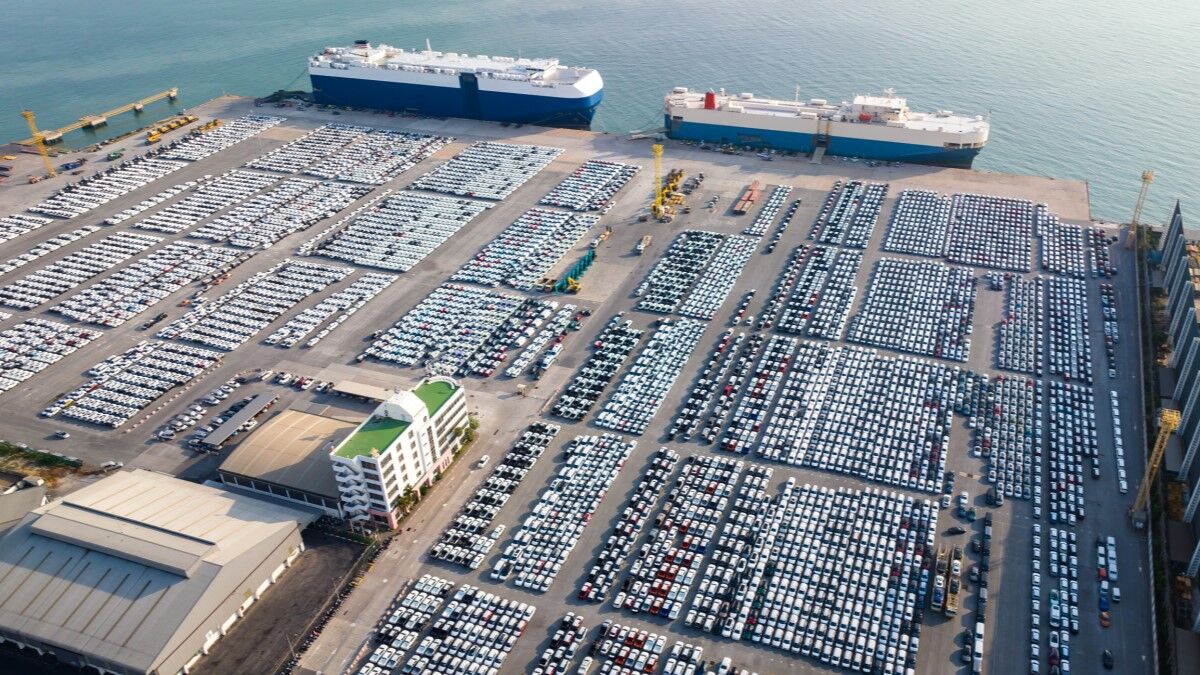
Those duties, which are now 15% on cars built in Europe, South Korea, and Japan, remain in force.
Some legal observers speculate that the White House will attempt to re-enact the tariffs struck down today using Section 232 authority.
Why 15% Tariffs Haven’t Meant 15% Price Increases
Automakers have passed part of that tariff burden on to buyers, but have managed to keep the full impact from window stickers in most cases.
Maneuvers to mitigate the full impact on buyers have included reducing their own profit margins, negotiating discounts with suppliers, and offering incentives to help shoppers get into new cars despite rising sticker prices.
Most automakers now build cars in multiple countries. That has allowed some to distribute the tariff burden from a model built in, for instance, South Korea, across price increases on other models built in the U.S.
But affordability issues continue to affect new-car shoppers. Cox Automotive research shows that more than 43% of new cars now go to households earning $150,000 or more, up from about one-third before the COVID-19 pandemic.
The sub-$20,000 new car is now largely extinct.
Why This Decision Could Still Impact Car Shopping Eventually
Though today’s decision does not wipe out tariffs on new cars, it may affect the expenses of automakers in other ways.
Automotive News notes, “The auto industry paid about $8.6 billion through October 2025 in duties now deemed unconstitutional, according to an October 20 analysis by PwC. The government has also collected $29 billion on imported industrial and manufacturing goods under the now-illegal tariffs in that time.”
The New York Times adds, “Anticipating the decision, companies have hired lawyers, filed suits, and submitted claims in hopes of securing refunds on tariffs they had paid. It is unclear whether the government will have to pay.”
Any reimbursement could give automakers some flexibility on pricing, though litigation over refunds could itself last years.