
Hyundai Motor Group Metaplant America (HMGMA), the company’s third U.S. production hub, began full production in Ellabell, Georgia, in October 2024. The 2,900-acre factory currently produces Hyundai’s Ioniq 5 and Ioniq 9 electric SUVs, with plans to expand to Kia and Genesis models in the future.
Hyundai is committed to investing in America — both in cars and in people. HMGMA plans to add 8,500 on-site jobs, making it the state’s largest economic development project to date. At present, the site employs 1,623 Meta Pros (the term used for workers at the metaplant). Eight-five percent of those workers are from Georgia, and 65% are from the greater Savannah area, Hyundai says.
In addition to its workforce impact on the Georgia economy, Hyundai plans to continue investing heavily in U.S. manufacturing. HMGMA has the capacity to produce up to 300,000 vehicles each year, but can scale up to 500,000 when the plant reaches its goal of 8,500 Meta Pros.
I toured the metaplant with Hyundai, gaining a behind-the-scenes look at what happens at the facility every day.

Touring the Metaplant
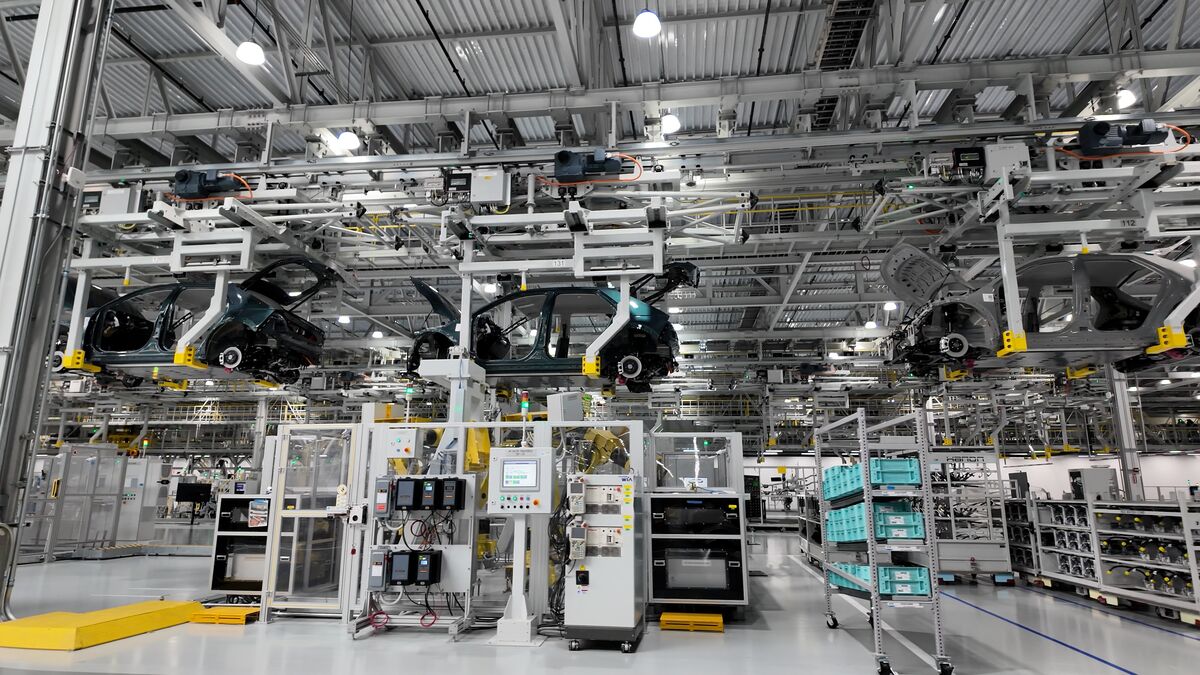
Hyundai invited journalists to tour the production facilities to see various stages of the car-building process. The buildings themselves were massive, meticulously organized, and impeccably clean, with humans and robots working side by side in a streamlined operation that kept everything moving quickly and efficiently.
Because we see cars so often, it’s easy to forget “how the sausage gets made.” This tour offered a clear glimpse into that process for cars. It’s quite eye-opening to realize every vehicle begins as thousands of individual parts, each passing through countless steps before arriving at dealerships.
Driving the Ioniq 5 on the Test Track
Trained specialists examine every nook and cranny of each car to ensure it meets the highest quality standards. One of the final steps in the car-building process is the drive test, and every car at the Hyundai Metaplant must pass through the test track before continuing in production.
Our guide took us through one lap of the test track to demonstrate everything Hyundai tests at this stage. Then, we took a spin behind the wheel. This experience marked the first time Hyundai allowed media to drive through the test track.
The test track includes driving over various bumps and listening for any unusual noises. We also did “figure 8’s” to assess the steering wheel’s responsiveness, and tested all braking functions on both uphill and downhill inclines.
Additionally, a full-speed brake check is a must in the testing process (no, I did not prepare myself, and yes, my stuff did go flying). The track session also tests the car’s active safety and driver assistance functions, and has us drifting toward the side to make sure the lane-keeping assist feature would pull us back to the center.
Hyundai Mobility Training Center
Before reaching the production line, employees at the Hyundai Metaplant must first complete on-site training at the Quick Start facility. There, trainees receive field-specific training to ensure they are fully prepared for production work.
Walking through this building felt like stepping into a mini university dedicated to car production. We passed classrooms with instructors, and it seemed the trainees had a daily class schedule similar to college courses.
What sets this apart is the hands-on training employees receive that previews the actual production line. Rows of car parts were scattered throughout the building — each at a different station where the trainees cycled through. Stations included general assembly, exterior quality testing, and a disassembly area, among others.
I even gave their S.T.E.P. simulator a try, which features a large touchscreen and tasks to complete while you walk on a slowly moving conveyor belt. I was astounded by the attention to detail the training center provides to fully prepare these individuals for the production line.
This tour reminded me that a car is far more than just something we drive. It’s the final product of thousands of carefully aligned parts, processes, and people. After seeing how much effort goes into each step, I gained a new sense of appreciation for the car sitting in my driveway.