

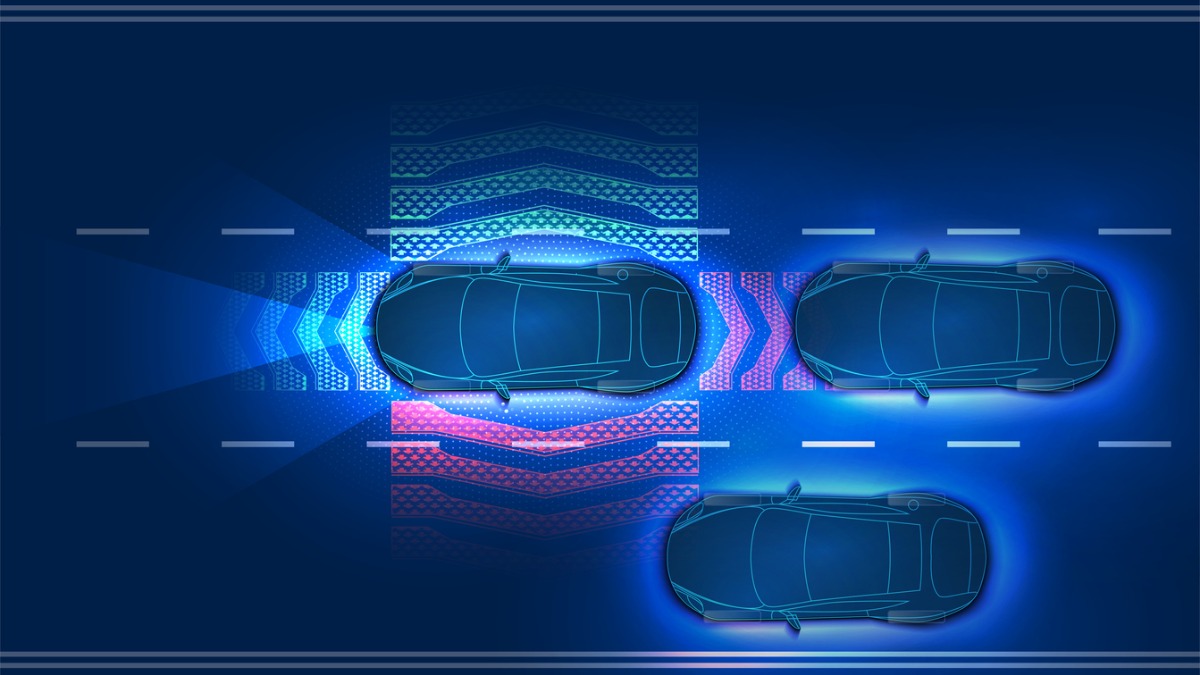
Quick Facts About Automatic Emergency Braking
- Automatic emergency braking is an advanced safety technology that autonomously slows or fully stops a vehicle to prevent an accident if a driver doesn’t react.
- The U.S. government will require automatic emergency braking systems in all new cars beginning in 2029.
- As with other advanced driver-aid technologies, automatic emergency braking isn’t 100% foolproof.
- Automatic emergency braking systems are generally less effective at night.
Automatic emergency braking (AEB) works with forward collision warning, often including a detection system that can include pedestrians, bicycles, and animals. For example, it can detect an object or pedestrian in its path, issue an audible driver alert, and apply the brakes. Automatic emergency braking is, at least, somewhat self-explanatory. Nevertheless, if you’re buying a car with this feature, you might wish to know more about it. Read on, and we will explain what it is, what it does, how it works, and whether it helps.
- What Is Automatic Emergency Braking?
- How Does Automatic Emergency Braking Work?
- Types of Automatic Emergency Braking
- What Is Forward Collision Warning?
- Automatic Emergency Braking Is Often Less Effective in the Dark
- Automatic Emergency Braking False Positives
- Our Take
What Is Automatic Emergency Braking?
Automatic emergency braking is an advanced safety technology that can slow or completely stop a vehicle without driver input. That is, on its own, AEB can apply a vehicle’s brakes if the driver fails to do so. The AEB systems found in most new cars will bring the vehicle to a full and complete stop at slower speeds. A few systems also work at higher speeds.
Moreover, some, but not all, systems can recognize and brake for pedestrians, cyclists, and animals.
AEB first appeared on Volvo, Honda, and Mercedes-Benz models. Despite Honda’s role in mainstreaming this technology, AEB was most often found on high-end models for much of the past 10 years. However, it’s now often standard equipment for even entry-level models as inexpensive as the Nissan Versa.
According to the Insurance Institute for Highway Safety (IIHS), an independent, nonprofit scientific and educational organization, the technology is already slashing crash rates by as much as half for vehicles equipped with it. The U.S. government will require automatic emergency braking systems in all new cars beginning in 2029.
TIP: No advanced safety system is 100% foolproof, including automatic emergency braking. It is the driver’s responsibility to maintain control of their vehicle, no matter the advanced safety technologies it may feature. AEB is a driver’s helpmate, not a driver’s replacement.
How Does Automatic Emergency Braking Work?
Depending on the system’s design, automatic emergency braking relies on cameras, radar, or other sensors. When these technologies identify the potential for a collision with an object in your path, they automatically activate the braking system.
These systems do not guarantee that you’ll avoid a collision. Instead, they will try to stop your vehicle in time under typical situations. At a minimum, they slow your vehicle to reduce the severity of the impact.
Tip: AEB only functions when the camera, radar, or sensors can identify objects. Extremely bright sunlight, heavy rain, caked-on snow, darkness, and other factors affect automatic emergency braking operation.
Types of Automatic Emergency Braking
Detailing the types of available AEB systems is rather simple because there are really only variations on two core types:
- Forward AEB – Forward AEB kicks into action when there is a danger of collision ahead. This can be a vehicle stopped or slowing.
- Reverse AEB – Rear automatic emergency braking functions just like front auto braking, except it does so when the vehicle is in reverse. It will react to objects, such as cars, moving across your path when backing up, as well as to objects in your path.
Both types of systems utilize a combination of radar sensors, cameras, and occasionally infrared technology to detect objects in their path. If the driver fails to react to the potential danger, both systems apply the brakes to avoid or reduce the collision’s severity. Several variations of AEB exist:
- Forward AEB with pedestrian detection is a forward AEB system that recognizes pedestrians, bicycles, and larger animals.
- Low-speed automatic emergency braking is engineered for bumper-to-bumper traffic. It also functions in parking lots and other low-speed situations.
- Intersection AEB, or left-turn AEB, reacts when you are indicating a left turn at an intersection that will put your vehicle directly in the path of oncoming traffic.
- Automakers engineer high-speed AEB to bring a car traveling at highway speeds to a complete stop.
What Is Forward Collision Warning?
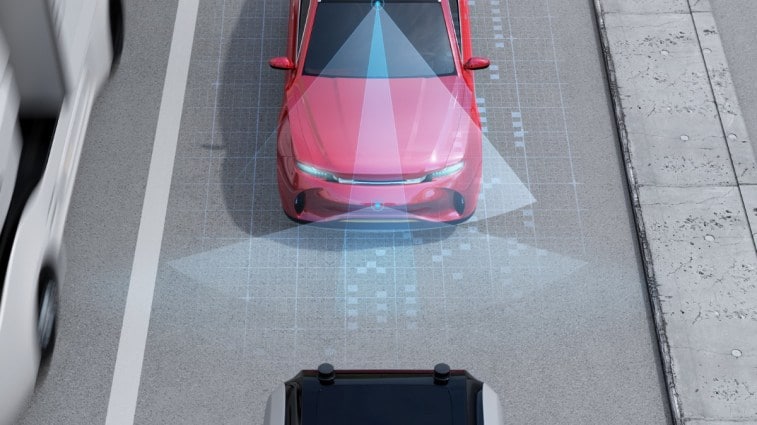
Forward collision warning (FCW) uses sensors to detect objects in the road ahead. It sounds an audible warning (or vibrates the driver’s seat or steering wheel if your car is so equipped) when the system detects a potential crash. In most new cars, FCW works hand in hand with your car’s AEB system. Whether the car in front of you stopped abruptly or you waited too long to step on your brakes, this system will notify you of a potential collision.
MORE: Car Safety Features 101: Everything You Need To Know
Automatic Emergency Braking Is Often Less Effective in the Dark
You will find automatic emergency braking in most new cars for a good reason: The system helps save lives.
However, AEB systems tend to be less effective in the dark. In a 2022 study, the IIHS tested these systems in 23 car models during nighttime conditions. The results show that most of the vehicles’ automatic emergency braking systems perform “poorly” in the dark, particularly when it comes to detecting pedestrians.
Of the 23 models tested, the study found only four vehicles earned a “Superior” rating. Those vehicles are the Ford Mustang Mach-E, Nissan Pathfinder, Toyota Camry, and Toyota Highlander. The Chevrolet Malibu, Honda Pilot, Nissan Altima, and Toyota Tacoma received no credit during vehicle testing.
Still, 19 of the 23 vehicles performed well in similar daytime tests.
In 2019, another IIHS study found a 50% reduction in front-to-rear collisions in vehicles with automatic emergency braking. It also identified a 56% decrease in injuries for this type of collision. Regarding the reverse automatic braking systems, there was a 78% decrease in crashes compared to cars with only a reverse camera.
Automatic Emergency Braking False Positives
Sometimes, this technology will activate when perceived threats are not real. In such cases, sudden braking is usually momentary. However, when this happens, it can rattle a driver’s nerves.
Occasionally, the system falsely identifies a vehicle in an adjoining curved lane as an obstacle and triggers full braking power. Dappled sunlight and reflections from signs can also momentarily trigger activations. We’ve experienced this during our own driving tests. These false positives are usually harmless, but underline the importance of remaining alert behind the wheel.
If you suspect something is amiss with your automatic emergency braking system, see what it will cost using our Service and Repair Pricing Guide. Then, find the closest automobile shops and schedule a visit to have the work done.
Our Take
While imperfect, automatic emergency braking is nevertheless an effective safety feature. Clearly, it doesn’t relieve the driver of the need to remain engaged and alert. However, humans being human, AEB is a valuable driver-assistance technology.
Editor’s Note: We have updated this article since its initial publication. Christian Wardlaw contributed to the report.