
- Ford used this week’s CES consumer electronics show to reveal a suite of technologies it has planned.
- They include self-driving tech that doesn’t require much driver monitoring and a “vehicle brain.” But many rivals are working on the same ideas.
Ford plans to unveil an “eyes-off driving” system, a “vehicle brain,” and other new technologies over the next few years. The company used this week’s CES consumer electronics show in Las Vegas to update the press on its tech progress.
The technologies Ford executives discussed are all impressive, but all similar to projects Ford’s major rivals also have underway.
Ford’s Future Electric Vehicle Platform Will Showcase Them
Most of the technologies will appear first on a new, lower-cost electric vehicle (EV) platform Ford is developing.
What executives have called a “new Model T,” the Ford Universal Electric Vehicle Platform will be a lower-priced vehicle architecture using just three large cast parts rather than the hundreds of separate frame and body pieces used in today’s cars.
The company will use the platform to build a series of vehicles, starting with a midsize pickup with a target price of about $30,000.
It has been designed entirely in-house, at a “skunkworks” facility Ford set up specifically to work outside traditional company engineering practices.
‘Eyes-Off’ in 2028
The company promised “eyes-off driving will be road-ready in 2028.”
Notably, that’s the same date rival GM has announced, using largely the same language. Stellantis, the last of the Detroit Three, has demonstrated a similar system but not announced a launch date.
Automakers use a system of five levels to describe their efforts toward self-driving cars. Ford, like most rivals, currently offers a Level 2 system, which lets drivers take their hands off the wheel but not their eyes off the road under limited conditions.
Called BlueCruise, it has consistently topped Consumer Reports tests of driver assistance systems.
Ford says a version planned for 2028 will achieve Level 3, meaning drivers can look away from the road while it’s working, but must stay ready to take over when prompted.
Today, there is one Level 3 system on limited American roads. Mercedes sells its Drive Pilot system only in Nevada and parts of California. That highlights a hurdle for automakers – today, each state regulates self-driving systems on its own.
‘Vehicle Brain‘
Cars today use hundreds, sometimes thousands, of simple, low-cost, low-power microchips. Most handle a single function, like controlling engine timing or cabin temperature. Access to these chips has proven unstable, sometimes threatening factory shutdowns.
Ford says it has developed its own “vehicle brain” to replace most of them. “A single, powerful module that unifies infotainment, ADAS, audio, and networking,” it is both faster and less expensive than the bevy of chips it replaces.
Startup Rivian pioneered this approach, which many other automakers are also pursuing.
AI Assistant
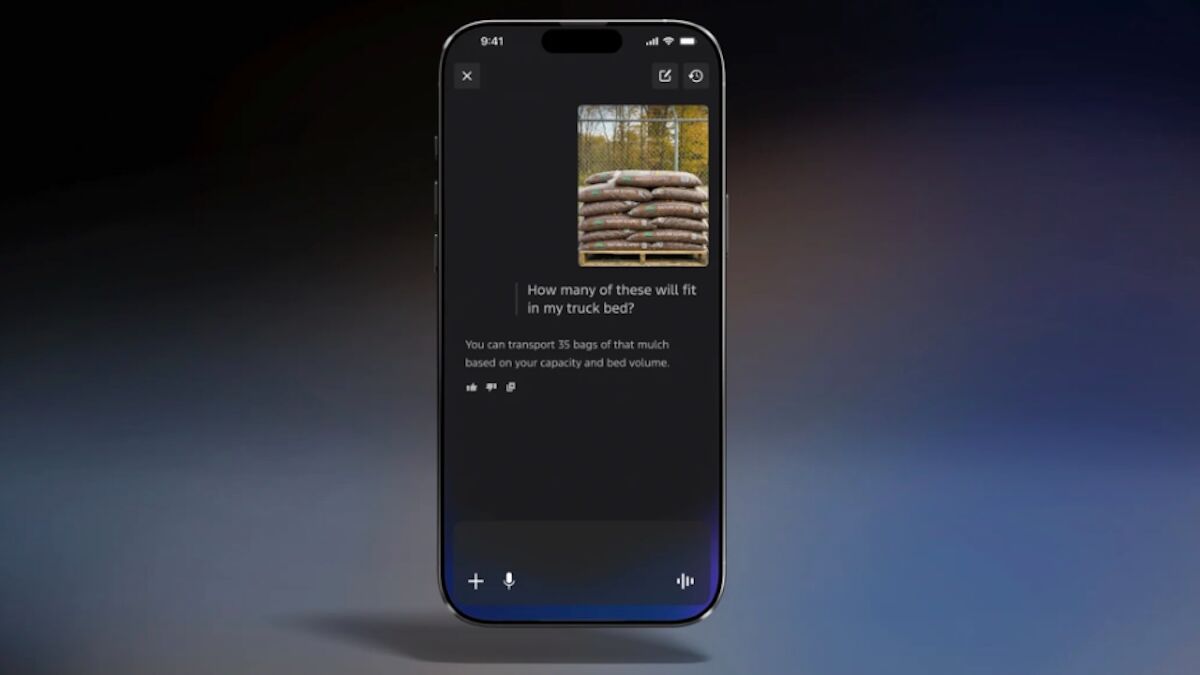
The company also revealed an AI-powered virtual assistant that works through a smartphone but “truly understands your specific vehicle, anticipates your needs, and becomes an intelligent thread woven throughout your Ford experience.”
It uses a large language model-powered chatbot to handle conversational commands, but combines it with detailed knowledge about the vehicle. Ford demonstrated the assistant by photographing a pallet of mulch bags and asking it, “How many of these will fit in my truck bed?”
The assistant then recommended loading 35 bags.
This could be the first of the projects to reach the public.
“Starting in the first half of 2026, the Ford AI assistant will begin arriving in your Ford or Lincoln App and will reach up to 8 million customers,” the company says. By 2027, it “will be integrated into Ford and Lincoln vehicles.”
Several other automakers have revealed chatbot-like in-car personal assistants, including Volkswagen, Mercedes, Rivian, and BMW.