
- Majority of preorders for the Scout Traveler SUV and Terra truck opt for the extended-range electric vehicle (EREV) option that includes a built-in gas-powered generator.
- Other companies are canceling fully electric truck options to opt for EREVs, like Ford with the F-150 Lightning.
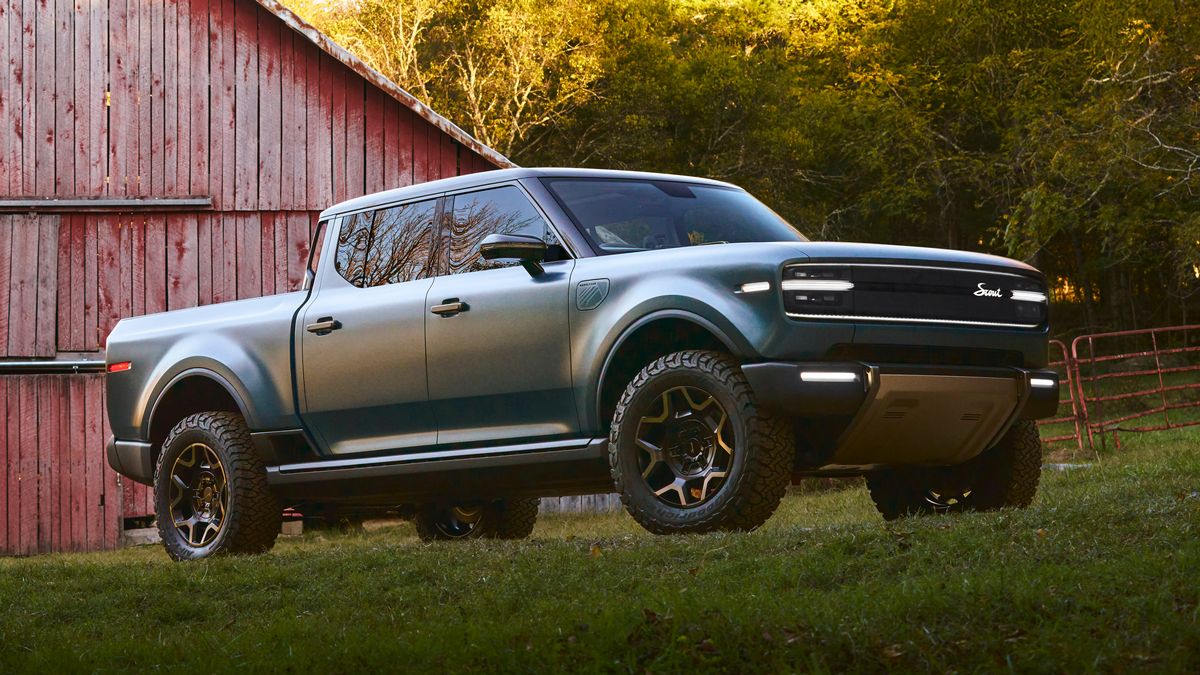
Preorder numbers for the rugged Scout Traveler SUV and Terra truck are solidifying and they just might surprise you. With over 150,000 preorders in, 85% are for the EREV option. Only 15% are for the fully electric vehicle (EV) editions, according to InsideEVs.
Related: All About Scout’s New Debut Vehicles
Let’s Break Down EREVs
EREVs are a relatively new type of powertrain in cars that appeal to those who want electrification in their driving life, but don’t want to take the step into a fully electric vehicle (EV). An EREV combines the best of both worlds: It can drive many miles on battery power alone, but has an onboard generator in the form of a gasoline engine that can recharge the vehicle while underway.
How is this different from a hybrid or plug-in hybrid? In those, the gasoline engine powers the wheels via the drivetrain, as can the electric motor. In an EREV, the engine does not power the wheels through the drivetrain; the battery-fed electric motor or motors do that. Instead, the gas engine acts as a generator, which charges the battery and thus increases the vehicle’s range.
This means you don’t have to choose between a charging station or a gas station. You can use either to fuel your vehicle. This might sound much more appealing to those who often fancy a road trip.
Why EREVs Might Matter to Drivers
We are beginning to see a simultaneous pattern of EREV vehicles dipping into the electric truck market, and full EV trucks slipping out of it. Ford recently announced that its fully electric F-150 Lightning truck will be replaced by an EREV. Ram, meanwhile, canceled its fully electric truck in favor of an EREV back in September.
These preorder percentages for upstart automaker Scout, along with the recent electric truck cancellations, can hint at one point: Maybe the people who wanted a fully electric truck already have them.
There are many qualities of an EREV that might just be the tipping point for some car or truck shoppers.
For one, EREVs will have longer range thanks to the gas-powered generator. To compare, Scout’s pure electric model offers 350 miles of range, while its EREV offers over 500 miles.
Ease of access could play a big part as well. Charging infrastructure is one of the top reasons people don’t purchase a a fully electric car. With the EREV, you can drive electric around the city, where it’s easy to find a charging station. However, for those long road trips where they might become scarcer, you have no reason to worry, because you can stop at any gas station to fuel the generator.
For truck buyers specifically, towing capabilities could play a factor in their EREV choice. All trucks lose nearly half their range when towing, leading to more stops for the driver. For a traditional gas-powered truck, that’s a slight problem with quick stops to fuel up. For an all-electric truck, it’s a much bigger problem with long stops to recharge. This, accompanied by potential fears about finding a charging station, might make the gas-generator option more appealing.
Related: Towing With an EV
We’re interested to see how public knowledge of EREV vehicles expands once Scout’s cars are released. They are slated to go into production by the end of 2027.