


Quick Facts About Driving in Snow, Ice, and Other Winter Weather
- Prepare your vehicle before winter and clear all snow and ice before you drive.
- Slow down, leave extra space, and avoid sudden steering or braking on slick roads.
- If you skid or get stuck, stay calm and use gentle corrections to regain traction.
Winter driving can be dangerous, even for experienced drivers. Snow, ice, slush, and wet winter roads contribute to nearly 500,000 crashes and more than 2,000 deaths each year, according to the AAA Foundation for Traffic Safety.
Use these helpful reminders and 20 tips for safe driving in snow and other winter weather.
RELATED: Best Cars and SUVs for Snow: Features You Need
Prepare Your Car for Winter Driving
A little prep makes a big difference. Handle routine maintenance early. Check out our maintenance and repair pricing tool and Service and Repair Guide to help determine the cost. Focus on these basics:
- Pack a winter survival kit (blanket, flashlight, phone charger, water/snacks, first aid, gloves, etc.).
- Install winter tires if you’re in a colder region.
- Replace wiper blades.
- Top off windshield washer fluid and keep an extra gallon in the car.
- Check tire tread and pressure (cold temperature lowers pressure).
- Keep the gas tank at least half-full at all times to avoid freezing fuel lines.
- Wash your vehicle regularly to avoid salt corrosion.
PRO TIP: Visit the KBB Vehicle Maintenance and Repair Hub for info and articles that will help you keep your car running in tip-top shape, in any season.
How to Drive in Snow: The Basics
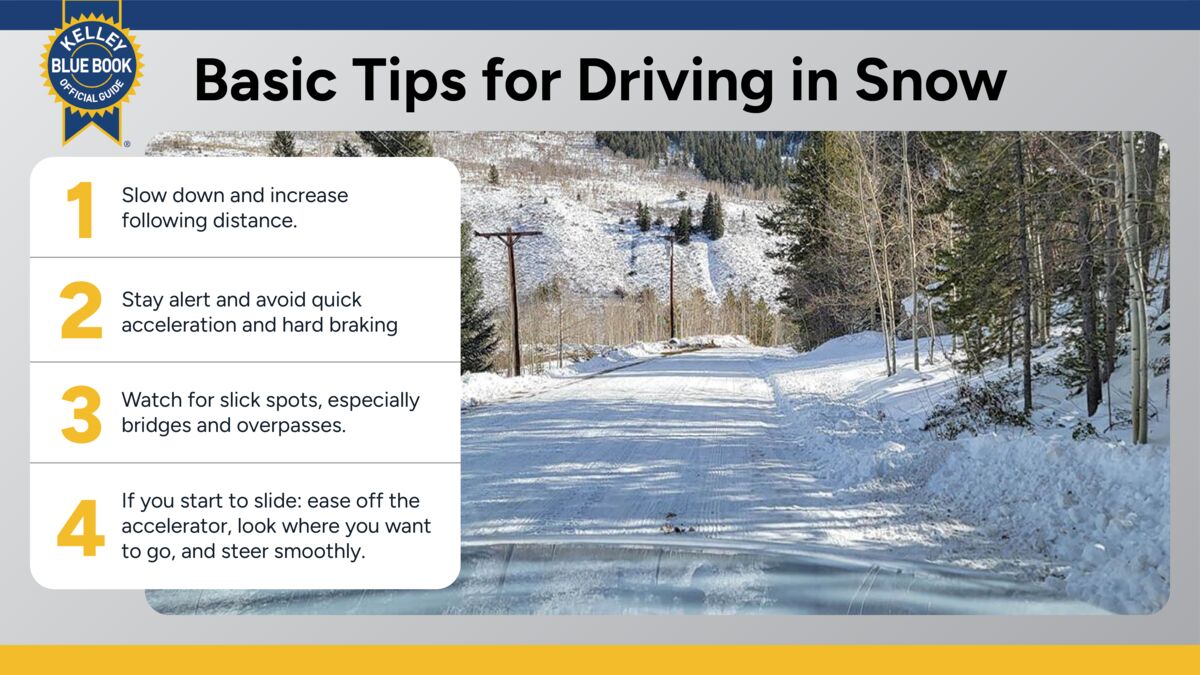
Plan ahead if you must drive in wintry conditions — check the forecast, choose safer routes, and let someone know your travel plan — especially if you’ll be in rural areas with weak cell service.
Clear all snow and ice from the roof, hood, lights, and wheel wells. Snow flying off your car can be dangerous for drivers behind you and, in many states, it can also lead to a ticket.
When driving:
- Slow down and increase following distance.
- Stay alert and avoid sudden inputs (hard braking, sharp steering, rapid acceleration).
- Watch for slick spots, especially bridges and overpasses (they freeze first).
- If you start to slide: ease off the accelerator, look where you want to go, and steer smoothly — don’t panic.
20 Snow Driving Tips for Safe Winter Driving
The safest choice is not to drive when conditions are bad.
Use a brush or scraper to clear your roof, hood, trunk, windows, mirrors, headlights, and taillights. Also check wheel wells for packed snow and ice (some drivers call these “fenderbergs”) that can interfere with steering.
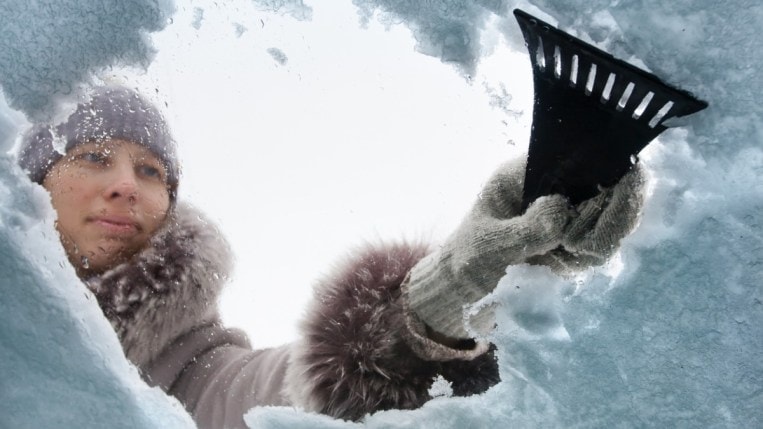
Defrost smart: Start the car, blast defrost (high fan, warm temp), then clear windows. Don’t use hot water on cold glass — it can crack.
Go slower than you think you need to. Winter traction is limited. Drive gently near intersections, turns, and downhill stretches.
Antilock brakes are beneficial, but you should still increase your following distance to leave room for stopping. Keep more side-to-side space when possible.
PRO TIP: Avoid driving through deep snow because it can damage your vehicle’s undercarriage and exhaust system.
Bad weather demands more attention. Put the phone away and keep your focus outside the windshield.
If traction control activates, it’s already reducing wheelspin. Ease off the accelerator to help it work. If ABS engages while braking, keep steady pressure on the brake pedal. The pulsing/noise is normal.
All-wheel drive (AWD) and 4-wheel drive (4WD) can improve traction when accelerating, but they don’t magically improve braking. Tires matter most. Learn the difference between AWD and 4WD.
Good tread and proper inflation are essential. If you’re running summer tires, AWD won’t save you on ice.
Winter storms can mean long delays.
- Gas vehicles: Aim to stay at least half full.
- EVs: Try to stay well-charged. Remember that using the heater can reduce range. Use seat heaters and moderate cabin heat when you need to conserve. Charging may be slower in frigid temps.
RELATED: Winter Electric Car Charging
If you get stuck, place sand or cat litter under the drive wheels. Straighten the wheels, accelerate gently, and avoid spinning tires (it digs you deeper). Rocking the car can help.
MORE: How to Winterize Your Vehicle: A Checklist for Success
A snowy, empty parking lot is a good place to practice controlled braking, gentle steering, and recovering from small skids — with supervision.
RELATED: Best Cars for Teens
Plows may have limited visibility, and blowing snow can suddenly white-out your windshield. Don’t crowd them and avoid passing when you can.
Winter months overlap with peak deer movement in many areas. Stay alert, especially at dawn/dusk and near wooded roads.
Black ice can look like shiny, wet road. Temperature drops in late afternoon/evening often turn meltwater into ice. Slow down and be cautious on bridges, ramps, and shaded areas.
Don’t use cruise control, including adaptive cruise control, when driving in snow, ice, or slush. You need immediate control if traction changes.
Lights can get coated fast with slush and road grime. Wipe them off during stops so you can see — and be seen.
It can weaken the springs and reduce contact with the windshield later. Instead, clear snow with a brush or scraper, or use a cover if needed.
Many newer cars have sealant/compressor kits instead of a spare. The sealant often expires — replace it as recommended.
MORE: Are Winter Tires Worth the Cost?
It can reduce airflow, cause overheating, and lead to expensive engine damage, especially if temperatures rise.
Warming up for a long time wastes fuel and can contribute to wear, leading to costly repairs. Warm the car briefly, then drive gently to bring it up to temperature (unless your vehicle manual says otherwise).
Editor’s note: We have updated this article since its initial publication. Renee Valdes contributed to the report.