


Before you load the cooler, take a few minutes to prep your car, map your route, and plan your fuel or charging stops. These Memorial Day road trip tips can help you avoid breakdowns, manage gas costs, and stay safer during the start of the summer travel season.
You’ll likely have plenty of company. AAA projects that 45 million Americans will travel at least 50 miles from home during the holiday period, with 39.1 million expected to drive and 3.66 million to fly. Driving will account for 87% of Memorial Day travel, even with higher gas prices.
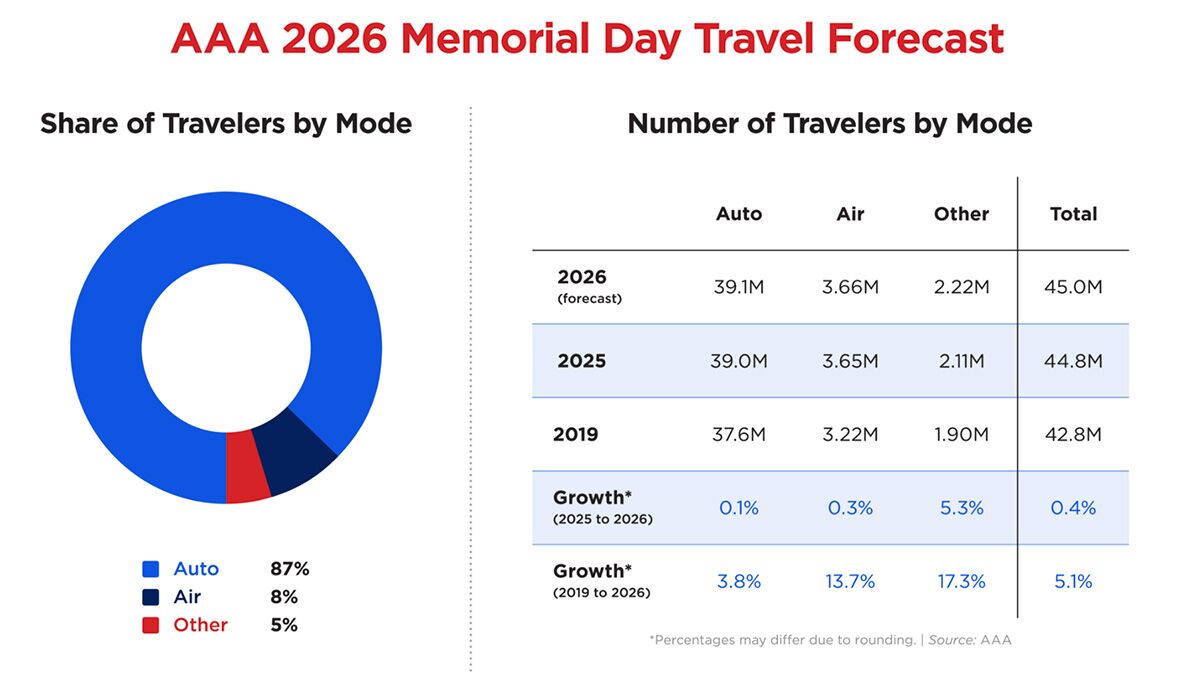
Roads will carry the overwhelming majority of Memorial Day travelers, so expect heavier traffic near major cities, beaches, lakes, parks, and other vacation destinations.
Before You Go
Memorial Day Road Trip Checklist
Before you go, make sure you’ve handled the basics:

- Check the basics: Inspect tire pressure, tread depth, fluids, lights, wipers, brakes, battery, and air conditioning.
- Don’t skip maintenance: If your car is due for an oil change, tire rotation, battery test, or scheduled service, handle it before the trip.
- Watch the heat: Summer temperatures can stress batteries, tires, and cooling systems. If the temperature warning light comes on, pull over safely and shut off the engine.
- Check for recalls: Use your VIN to look up open safety recalls. Recall repairs are free, but dealer appointments can fill up before a holiday weekend.
- Know your car: If you’re renting, take a few minutes to adjust mirrors, pair your phone, locate controls, and understand key safety features before leaving the lot.
- Bring key documents: Carry your license, registration, proof of insurance, roadside assistance details, and rental paperwork if applicable.
MORE: Looking to celebrate a different landmark event this year with a road trip? Our checklist above still applies!
Pack This Summer Road Trip Kit
Keep emergency supplies in the vehicle, especially if you’re traveling with kids, pets, or older adults. Traffic, heat, storms, or a breakdown can leave you waiting longer than expected.
Emergency Supplies to Pack
| Category | What to Pack |
|---|---|
| Power | Phone charger, portable battery |
| Repairs | Jumper cables, tire pressure gauge, jack, basic tools, duct tape |
| Safety | First aid kit, flashlight, emergency reflectors or flares, work gloves |
| Comfort | Drinking water, nonperishable snacks, medications, sunscreen, sunglasses, towels or blankets |
| Navigation | Downloaded maps, printed directions, roadside assistance info |
Protect Kids and Pets
- Use the back seat: Children under 13 should ride in the back seat whenever possible, according to the National Highway Traffic Safety Administration (NHTSA) and American Academy of Pediatrics.
- Check car seats: Make sure each car seat or booster seat fits the child’s age, weight, and height and is installed correctly.
- Never leave kids or pets in a parked car: Interior temperatures can rise quickly, even during a short stop.
- Bring pet supplies: Pack water, a leash, waste bags, food, medication, and vaccination records if needed.
Plan the Drive
- Leave early if possible: Holiday traffic often builds Friday afternoon and again Monday afternoon or evening.
- Build in extra time: Expect slowdowns near beaches, lakes, parks, campgrounds, airports, and major metro areas.
- Check conditions: Look up weather, construction, crashes, and road closures before you leave.
- Download your route: Cell service can be unreliable in rural areas or around crowded destinations.
- Plan breaks: Stop every few hours to stretch, hydrate, use the restroom, and switch drivers if possible.
Drive Safely
- Avoid distractions: Set your route before leaving. Let a passenger handle navigation, music, calls, and messages.
- Watch for fatigue: Limit nighttime driving. If you feel drowsy, switch drivers or stop somewhere safe.
- Share the road: Look for motorcycles, bicycles, pedestrians, roadside workers, and emergency vehicles.
- Move over: Slow down and move over for stopped emergency vehicles, tow trucks, and road crews when required.
- Buckle up: Everyone should wear a seat belt on every trip, even short drives near your destination.
- Plan a sober ride: If alcohol is part of your Memorial Day plans, arrange a designated driver, rideshare, taxi, or overnight stay before drinking.
Save on Gas
Visit Kelley Blue Book’s curated page about Fuel Economy and Gas Prices. With millions of drivers on the road, fuel stops may be crowded, and prices may vary widely by location.
- Compare prices: Use an app to check fuel prices along your route.
- Fill up strategically: Don’t wait until the tank is almost empty, especially in rural areas or near crowded vacation spots.
- Drive smoothly: Avoid hard acceleration and braking.
- Watch your speed: Driving faster burns more fuel.
- Check tire pressure: Proper inflation helps safety and fuel economy.
- Remove excess weight: Remove unnecessary cargo before the trip.
Driving an EV?
Make a charging plan before you leave on a road trip in an electric vehicle (EV).
- Map your stops: Check charger locations, plug type, charging speed, and availability.
- Have a backup: Don’t rely on a single charging station, especially near beaches, parks, mountains, or rural areas.
- Charge earlier than usual: Holiday traffic and crowded charging stations can make waiting until the last minute risky.
Bottom Line
Memorial Day marks the start of summer road trip season. A quick vehicle check, a smarter route plan, and a few safety precautions can help you avoid breakdowns, save money, and make the drive less stressful. Explore our curated articles on our Car Affordability Hub Page to help you make smart, budget-friendly decisions.
Editor’s Note: We have updated this article since its initial publication. Renee Valdes contributed to the report.