
In the year of Kelley Blue Book’s 100th anniversary, we’re reminded of just how much the automotive world has changed in the past century. Each decade has brought new innovations in performance and design. Compare some of the earliest cars to today’s cars, and you’ll discover amazing differences and similarities. To celebrate our anniversary, we’re taking a look back at the most quintessential cars of each decade.
Scratch the surface of any list, and you’ll find reasons to agree or disagree with the choices. We’ll be the first to admit that our quintessential list will provoke debate. It has already prompted heated discussion among the editors and automotive enthusiasts on staff here at KBB. Please join the discussion in the comments section of this article.
Without further preamble, here are the quintessential cars of each decade from the 1920s to the present. Let the debate begin.
1920s: Ford Model T

The Ford Model T earns its spot for revolutionizing transportation and leaving a lasting legacy on American culture. It was first introduced in 1908, when the assembly-line manufacturing method enabled the production of an affordable vehicle for the general public. Today, the Model T is celebrated as the “car that put the world on wheels,” and remains a beloved cultural touchstone. By the end of production in 1927, Ford had sold 15 million units, making the Model T one of the most popular cars in history.
1930s: Ford V8
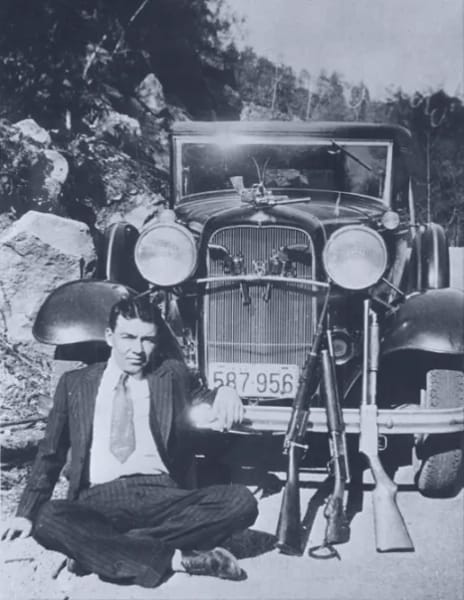
On May 23, 1934, law enforcement ambushed infamous outlaws Bonnie and Clyde in their 1934 Ford V8 Fordor Deluxe Sedan. The high-intensity shootout, combined with the pair’s notoriety, turned the car into an enduring pop icon. Clyde Barrow was a strong fan of the Ford V8 for its powerful engine, which enabled it to reach top speeds for the time. He wrote a letter to Henry Ford praising the vehicles, saying, “While I still have got breath in my lungs I will tell you what a dandy car you make. I have drove Fords exclusively when I could get away with one. “
Bonnie and Clyde’s Ford V8 is now on display at Primm Valley Casino Resorts in Nevada.
1940s: Jaguar XK120
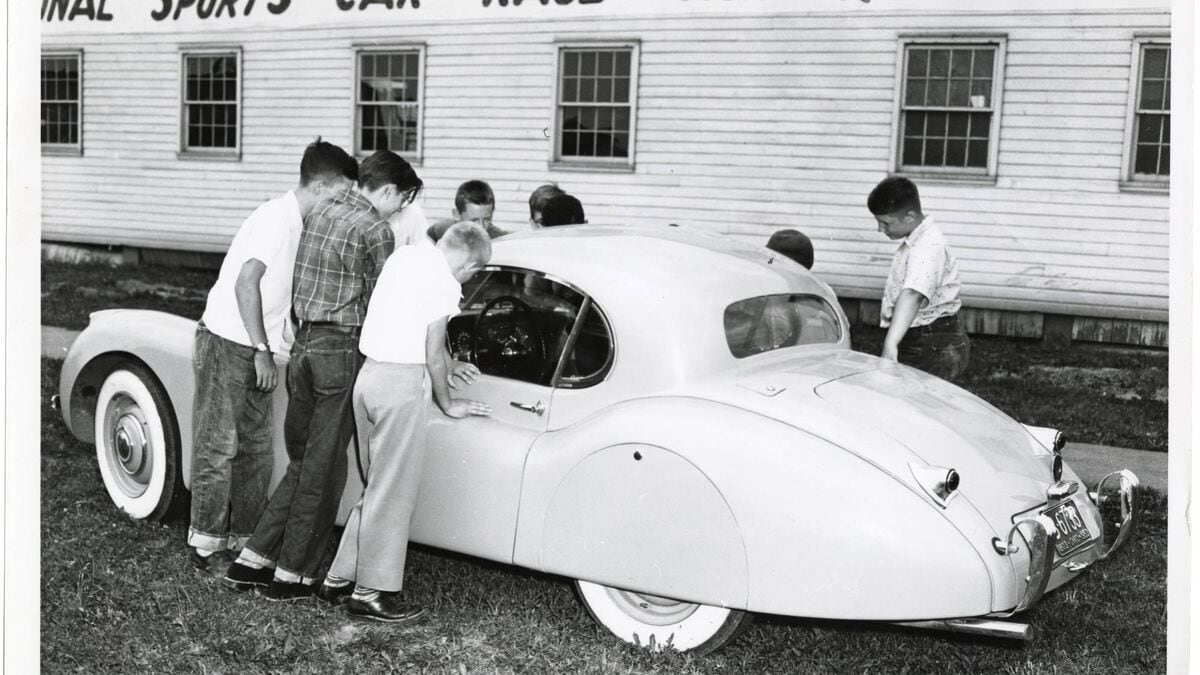
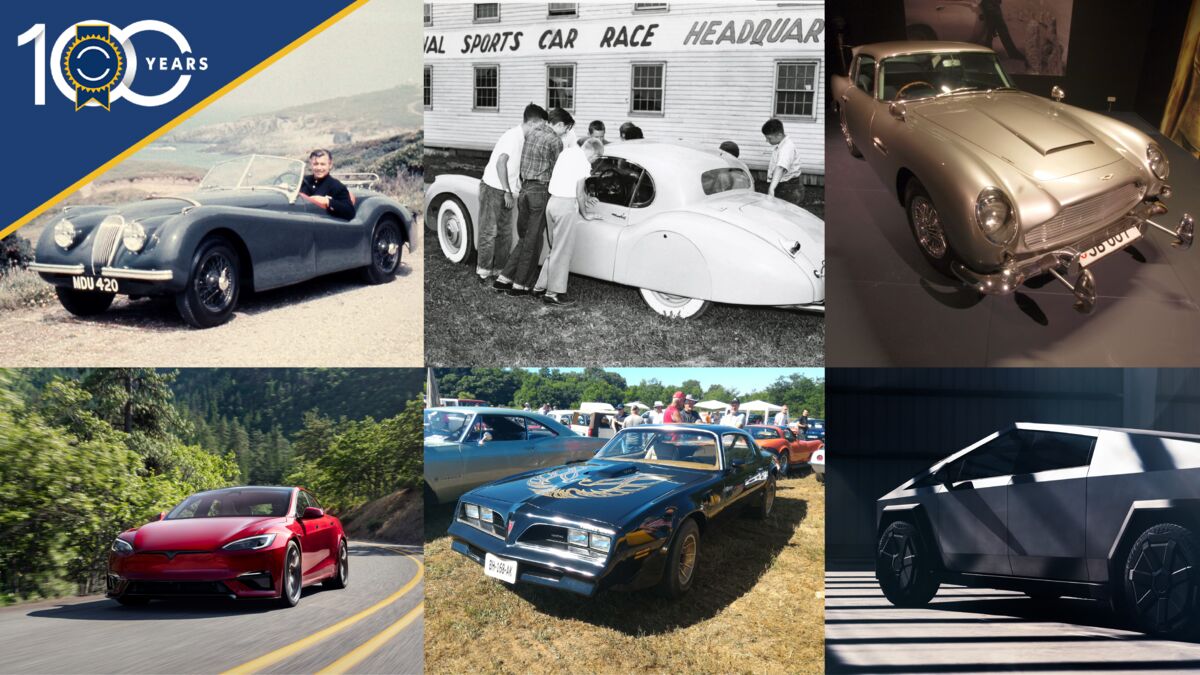
The Jaguar XK120 is cherished as one of the most beautiful and influential sports cars ever built. When it debuted at the 1948 London Motor Show, the Jaguar XK120 stunned with sleek curves and record-breaking speeds. The “120” in the name came from its ability to reach speeds of 120 mph, making it the world’s fastest production car at the time. The vehicle became a pop‑culture staple, playing starring roles in films such as the 1954 film “The Fast and the Furious.” The XK120 graced the garages of American actors Clark Gable, Tyrone Power, and Steve McQueen, among others. Jaguar produced the car from 1949 until 1954.
1950s: 1949 Mercury Series 9CM
James Dean’s 1949 Mercury Series 9CM “shoebox” coupe played a starring role in the 1955 James Dean movie “Rebel Without a Cause,” where it quickly became an expression of rebellion. Mercury originally marketed the 9CM as a family-friendly car, but that quickly changed after its appearance in the film. The vehicle featured customizations that reflected trends in hot‑rod culture, some of which are still evident today.
Other types of media also made references to this vehicle, such as Bruce Springsteen’s song “Cadillac Ranch,” where the Boss sings, “James Dean in that Mercury ’49, Junior Johnson runnin’ through the woods of Caroline.”
Mercury built the 9CM coupe, its first post-WWII design, from 1949 to 1951, but its impact extended throughout the 1950s and beyond. Today, the James Dean Mercury lives at The National Automobile Museum in Reno, Nevada.
1960s: Aston Martin DB5
For anyone who’s a fan of spy films, the 1964 Aston Martin DB5 is one of the most recognizable movie cars in history. The vehicle appeared in the 1964 James Bond film “Goldfinger,” equipped with a plethora of funky spy gadgets, such as ejector seats and tire slashers. The commercial version of the vehicle debuted at the 1963 Frankfurt Motor Show, wowing attendees with its’ elegant design and powerful engine. While the car was beautiful in its own right, its association with 007 cemented it in pop culture history. Over the decades, the DB5 has repeatedly returned to the Bond films, solidifying its place in pop culture. The influential DB5 had a brief production run from 1963 to 1965, and only 1,059 original examples came out of the factory. You can see an example of James Bond’s favorite car today at the International Spy Museum in Washington, D.C. Car thieves snatched the original movie car from a private collection in 1977. Rumor has it living somewhere in the Middle East. Maybe James Bond’s next mission could be to recover his DB5?
1970s: Pontiac Trans Am
The 1977 Pontiac Trans Am burned rubber into its pop culture role in the hit comedy “Smokey and the Bandit.” With its black-and-gold paint scheme and a Firebird “Screaming Chicken” hood decal, the Trans Am stole the screen from action star Burt Reynolds. Filmmakers considered a Chevrolet Corvette or a Dodge Charger, but ultimately chose the Pontiac Trans Am, a high-performance, high-style variant of the Firebird. During filming, the 1977 version of the vehicle was not yet in production for commercial sales. Pontiac provided the production with five customized vehicles, upgrading the 1976 version with 1977 exterior parts.
1980s: DeLorean DMC-12
Few cars have achieved the pop immortality earned by the 1981 DeLorean DMC‑12, thanks to its role as Doctor Emmett Brown’s time machine in the “Back to the Future” film series (1985, 1989, and 1990). In the hands of Doc Brown and Marty McFly, it became a symbol of wacky fun and limitless adventure. While the real DMC‑12 had a brief production run and a checkered backstory (search “John DeLorean and cocaine” to find out more), it achieved exceptional cultural success after the film’s release. The vehicle now lives on in legend, at fan conventions, as replicas, and even in proposed brand revivals. One of the “Back to the Future” DeLorean time machines is in the collection of Los Angeles’ Petersen Automotive Museum.
1990s: Mazda MX-5 Miata
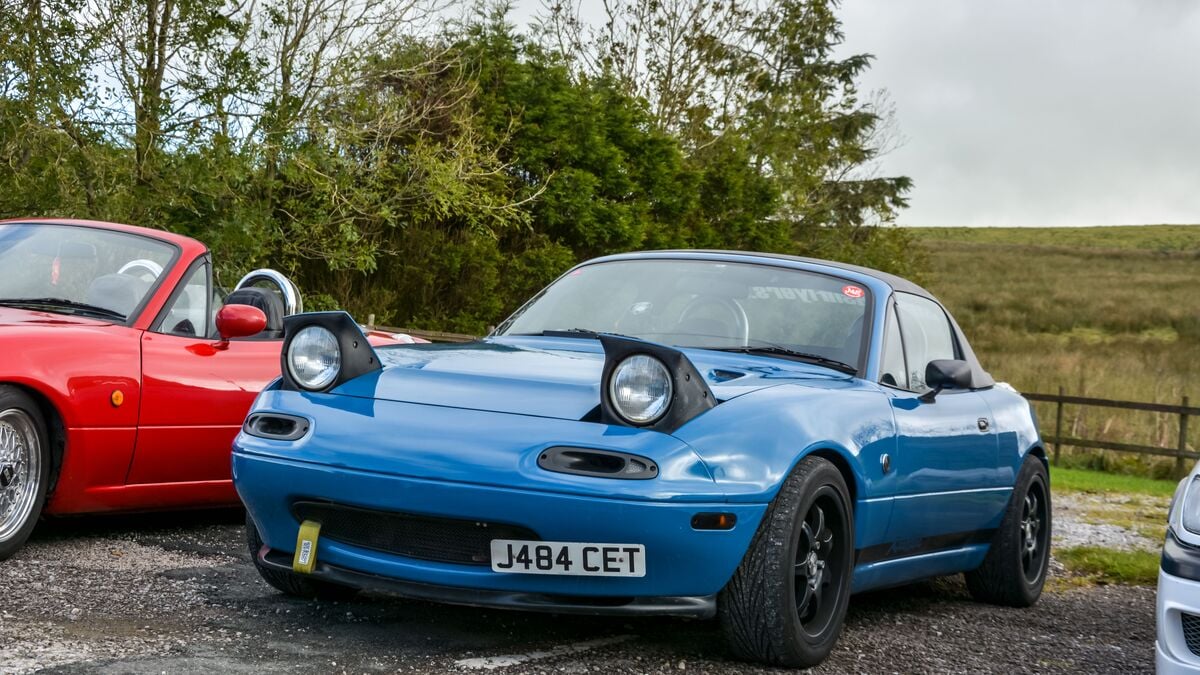
The Mazda MX-5 Miata debuted in 1989, with the first models being sold in the United States as 1990 models. Since this release, this lightweight roadster has skyrocketed into popularity as one of the most-raced cars in the United States. The first generation of the vehicle (dubbed the “NA”) featured quirky pop-up headlights, which made people smile and gave the car a bit of charm. In 2000, the vehicle was recognized by Guinness World Records as the world’s best-selling convertible 2-seater sports car. The Miata remains a popular choice today and is currently in its fourth generation, the ND.
2000s: Bumblebee Chevrolet Camaro Concept
The Chevrolet Camaro Concept owes much of its cultural value to its portrayal as Bumblebee in the “Transformers” film franchise, beginning in 2007. Unlike most movie cars, the Bumblebee Camaro was actually a character, one of the main Autobots sent to Earth to evade the Decepticons. The bright yellow muscle car’s heroic role enabled audiences to connect with it as a youthful symbol of freedom, friendship, and power, not just a machine. The character’s popularity boosted Camaro sales, making the vehicle a commercial and cultural success. Bumblebee even got a Transformers sequel, 2018’s “Bumblebee.”
2010s: Tesla Model S
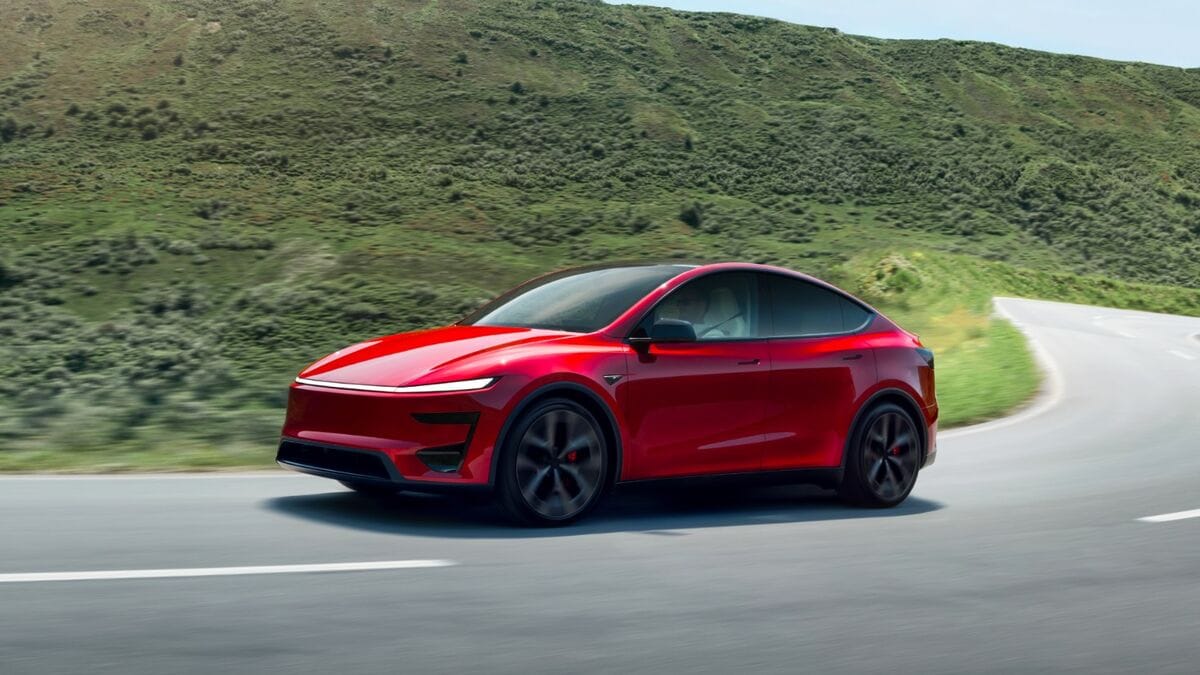
When the Tesla Model S debuted in 2012, it revolutionized the possibilities for fully electric vehicles. It challenged the image of EVs as eco-friendly yet slightly boring cars to one aligned with luxury, comfort, and astonishing acceleration. Tesla’s unique (for the auto industry) update cycle allows incremental improvements and changes to the car during its run, as well as routine over-the-air (OTA) updates, and the brand’s widespread charging infrastructure made EV ownership less of a hassle. The Model S spawned a cult following and has remained popular today. Hollywood celebrities like Ben Affleck, James Cameron, Don Cheadle, Demi Moore, and many others chose the Model S to drive and be seen in. Tesla has announced that it will end Model S production at the end of the second quarter of 2026.
2020s: Tesla Cybertruck
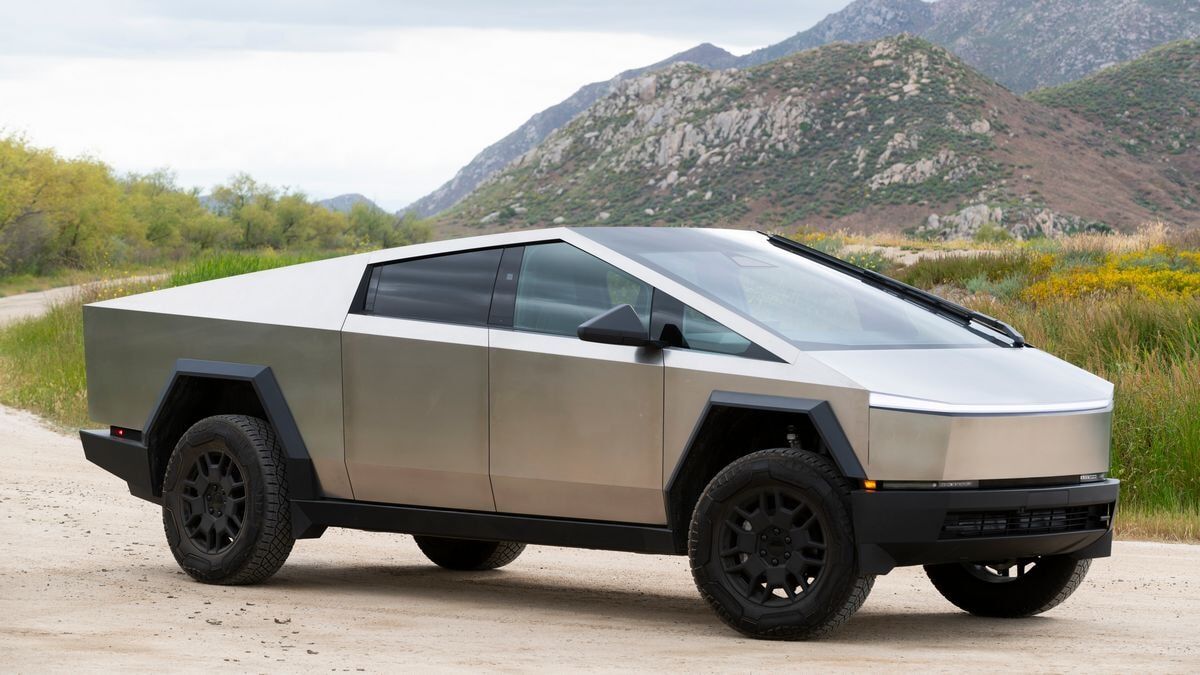
Love it or hate it, the Tesla Cybertruck caused a stir among Americans since its unveiling in 2019 and initial deliveries in 2023. The vehicle boasts a sharp-angled geometric shape and a brushed stainless-steel exterior, like the DeLorean DMC-12 from the 1980s. It doesn’t look like any other pickup truck on the market, or any production vehicle most people have ever seen on their local streets. While the Cybertruck doesn’t fit into the category of a “standard vehicle,” it demonstrates imagination and innovation on a grand scale — for better or for worse.
What Do You Think?
Automotive history encompasses science, engineering, and art. You can look at cars through the lens of data, by the numbers, or with your heart. This list represents a combination of views for a broad look at the past century. What do you thnk? We’d love to know.