
Quick Facts About Dashcams
- A dashcam can be a silent witness in the event of a collision.
- Depending on the system, a dashcam can record video of views in front of and behind the vehicle.
- Aftermarket dashcam systems are relatively simple to install.
Dashboard cameras, or dashcams, are behind thousands of viral videos of accidents, police encounters, and wild weather. Think of it as a silent passenger that remembers everything.
In the event of a collision or traffic violation, it can provide clear video evidence of what really happened. Admittedly, the footage can be entertaining to watch, but it can also be valuable evidence for insurance or legal purposes. For that reason, a dashcam is worth considering.
Read on to learn the benefits of dashcams, how they work, and more.
- What Is a Dashcam?
- Pros and Cons of Using a Dashcam in Cars
- What Should You Look for in a Dashcam?
- Do Cars Have Built-In Dashcams?
- Aftermarket Dashcams
- Our Take: Should You Buy a Dashcam?
What Is a Dashcam?
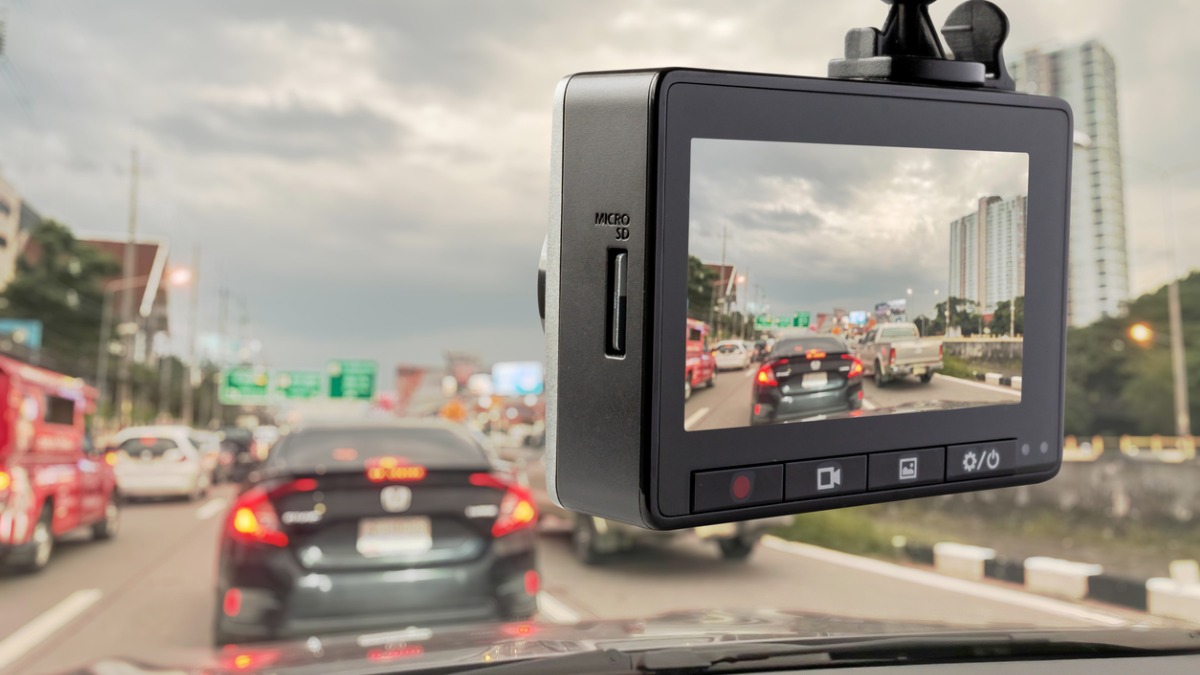
A dashcam is a video camera mounted on the windshield, dashboard, rearview mirror, or rear window that records while you drive. It captures what happens in front of the car, including crashes and close calls. Some systems act as a sentry when parked, using motion and impact sensors to start recording. Certain models can also record the interior.
How Do Dashcams Work?
Dashcams record to a removable SD card, usually storing about one to more than six hours of footage. You can review video by inserting the card into a computer or, on connected models, by using Wi-Fi or Bluetooth to upload clips to the cloud and watch them in a smartphone app.
Some vehicles offer built-in dashcams hardwired to the car’s power. Aftermarket units usually plug into a power port or are hardwired; a few run on internal batteries. Once powered, the dashcam continuously records. Many provide multiple views (front, rear, side, interior), and some add security features that turn the camera on if motion is detected near the vehicle or it’s bumped while parked.
Pros and Cons of Using a Dashcam in Cars
Although we are convinced that the benefits of a dashcam far outweigh the negatives, we offer both sides of the argument so you can decide.
Pros of a Dashcam
- Reliable witness: Video capturing an accident provides evidence that can help your case and capture traffic violations committed by other motorists.
- Fraud protection: Recorded video can aid your insurer in defending you against fraudulent claims, such as staged accidents.
- Young driver monitoring: Many dashcams offer a view of the vehicle’s interior, which can help parents monitor teen driver behavior
- Added security: Some dashcam systems provide a parking mode, which activates the camera when it senses movement around the car or physical contact with the vehicle.
Cons of a Dashcam
- Reliable witness: In the case of an accident in which you are at fault, evidence from recorded dashcam footage can be used against you.
- Privacy: Any recorded video has the potential to invade the privacy of you or others. This is particularly true for any video recorded inside the vehicle.
- Cost: Whether aftermarket or built-in, dashcams can be expensive, especially when they include extras such as night vision or parking mode. Professional installation of an aftermarket unit will further increase the cost.
- Provoke theft: True, many dashcams can recognize and record a break-in of your parked car. However, a dashcam mounted in plain sight is another temptation for thieves.
What Should You Look For in a Dashcam?
As with many emerging automotive technologies, dashcams come in various sizes, offer different features, and cost $50 to $500 or more. Consequently, when shopping for dashcams, it’s not about the types of dashcams but the various features they offer.
Dashcam Features To Consider
- Resolution: We recommend a minimum of HD 1080p for a sharp picture. For evidential purposes, we say the higher the pixel count, the better.
- Channels: Units can have multiple channels, or views. One channel provides a view through the windshield. A second channel may add a view of what’s behind the vehicle or its interior. A third channel will add whichever view the second channel didn’t. The windshield and interior views can usually be captured with the same camera unit, with a second camera capturing the rear view.
- Frame rates: This is the number of image frames per second (fps) the dashcam records. Recording more images per second makes for a smoother video. We believe 30 frames per second (fps) is a good baseline when comparing cameras. As with pixels, more is generally better.
- Field of view: Our advice is about A 150-degree field of view to record more then just the width of the lane ahead.
- Night vision: Most dashcams provide some degree of night vision. We recommend it for all views.
- Image stabilization: Some dashcams offer image stabilization to help steady the video during any incidents.
- SD card capacity: The higher the GB rating (or gigabytes) for an SD card, the more storage it offers. Check the user guide, as some units may have card size limits.
- Looping: Taking away some of the anxiety of running out of memory, “looping” is the ability of the dashcam to overwrite the oldest video on the SD card once it’s reached its storage limit.
- Wi-Fi: Many dashcams offer Wi-Fi and the ability to store video in the cloud. Usually, cameras with Wi-Fi capability will automatically recognize a collision incident and immediately transfer the video to the cloud.
- Bluetooth: This feature enables your dashcam to connect with your smartphone, providing increased control over the camera. Moreover, it allows the camera image to appear on your larger phone screen.
- GPS: Recording the location and speed of your vehicle may have value in a legal dispute. However, we consider it more of a bonus benefit than one you should demand.
- Parking monitor: Keeping watch over your vehicle when parked can prove invaluable when recording instances of vandalism, burglary, or a crash.
Do Cars Have Built-in Dashcams?
Yes, you can find built-in camera recording systems in some higher-end models. Some use AI technology to assist with the dashcam and infotainment system. Typically, such systems repurpose cameras that are already pulling duty in the vehicle. Here are a few examples:
- Tesla: Every new Tesla model has a dashcam function. Its front, rear, and side cameras record video during a collision or when the horn sounds. Sentry Mode silently guards the car when it’s shut down; if someone gets too close, touches it, or another car bumps it, the system records and flashes the exterior lights.
- Mercedes-Benz: Certain new Mercedes-Benz models offer a dashcam system with front and rear views, though only the front view records to a memory stick. The system includes a parking monitor, and the driver can engage recording manually. It’s available on models including the E-Class, CLA, GLA, and GLC.
- BMW: To use the dashcam system offered on some new BMW models, the vehicle must have the surround-view function. When activated in the iDrive menu, it repurposes up to four of these cameras to record incidents. Depending on programming, it can capture up to 30 seconds before and 30 seconds after an impact and up to 40 seconds of driver-triggered recording. BMW models using Operating System 8 add a parking monitor. BMW offers dashcam systems on the 3 Series, 7 Series, X5, X7, and other models.
- Cadillac: Cadillac has flirted with a dashcam system in various models for a few years, but only the XT6 now offers the Surround Vision Recorder. This driver-controlled system records from the front and rear cameras but does not provide automatic recording.
Aftermarket Dashcams
Dashcams are readily available from aftermarket producers. They span the gamut from simple one-channel windshield-view cameras to sophisticated multichannel, 4K systems with night vision, Wi-Fi, parking monitors, and many more features.
How Much Do Dashcams Cost?
You can spend from $50 for a single-channel camera to more than $500 for a multichannel camera system with all the bells and whistles. If you want a seamless experience with a fully operational parking monitor, you’ll need to hardwire your dashcam system into the vehicle’s electric system. If that’s your decision and you aren’t experienced with tinkering with your vehicle’s electronics, we advise using a professional for installation. This could add as much as $250 to the bottom line for installments of multi-channel systems.
Installing a Dashcam in Your Vehicle
Most aftermarket dashcams are easy to install using the supplied mount, power cord, and your vehicle’s 12-volt outlet. A quick setup is simply sticking the camera to the windshield and running the cord down, but for a cleaner look you can hide the cables—often more time-consuming than difficult, with many online videos showing how, including for rear cameras. Note that parking monitor features usually won’t work if the dashcam only gets power from the 12-volt outlet, since it’s off when the ignition is off.
- Front camera placement: Follow state laws about windshield obstruction. Mount the dashcam high on the windshield, ideally near the center and on the passenger side of the rearview mirror. Once positioned, it shouldn’t need adjustment while driving..
- Rear camera placement: If your system includes a rear camera, mount it near the top center of the rear window. Kits typically include a long cable to route through the cabin to the main unit.
Do Dashcams Lower Your Insurance Premiums?
Generally, no, most mainstream insurance companies don’t offer discounts for dashcams. However, many insurance companies will raise your premium if you are found at fault in an accident. A dashcam may prove otherwise, protecting your current premium from increasing.
Our Take: Should You Buy a Dashcam?
Unless you want the device for fun, the odds are that you’ll rarely need the video from a dashcam. However, think of it as a form of insurance. Most of us pay car insurance premiums for years without ever filing a claim. Yet, we would feel somewhat naked without the peace of mind auto insurance provides. Likewise, a dashcam is a novelty until you wish you had one to back up your story in an accident investigation, insurance fraud attempt, or early morning car burglary.
So, should you buy a dashcam? Yep, if you can afford it.