

Quick Facts About Car Shipping Costs
- Vehicle shipping price quotes cover a broad range, and many factors affect the cost, but a rule of thumb is $1 per mile for a typical car shipped to a destination 1,000 miles away.
- Driving is almost always cheaper than transporting an automobile after purchasing from far away or shipping your car as part of a long-distance move.
- Shop around, seek recommendations, and verify the credentials of potential shippers. The lowest quote might not be the best deal, and just because a shipping company has the highest prices doesn’t mean it provides the best service.
Several factors can influence the cost of shipping a car, but you can expect to pay an average of $1,020 or $1.02 per mile to transport a vehicle 1,000 miles.
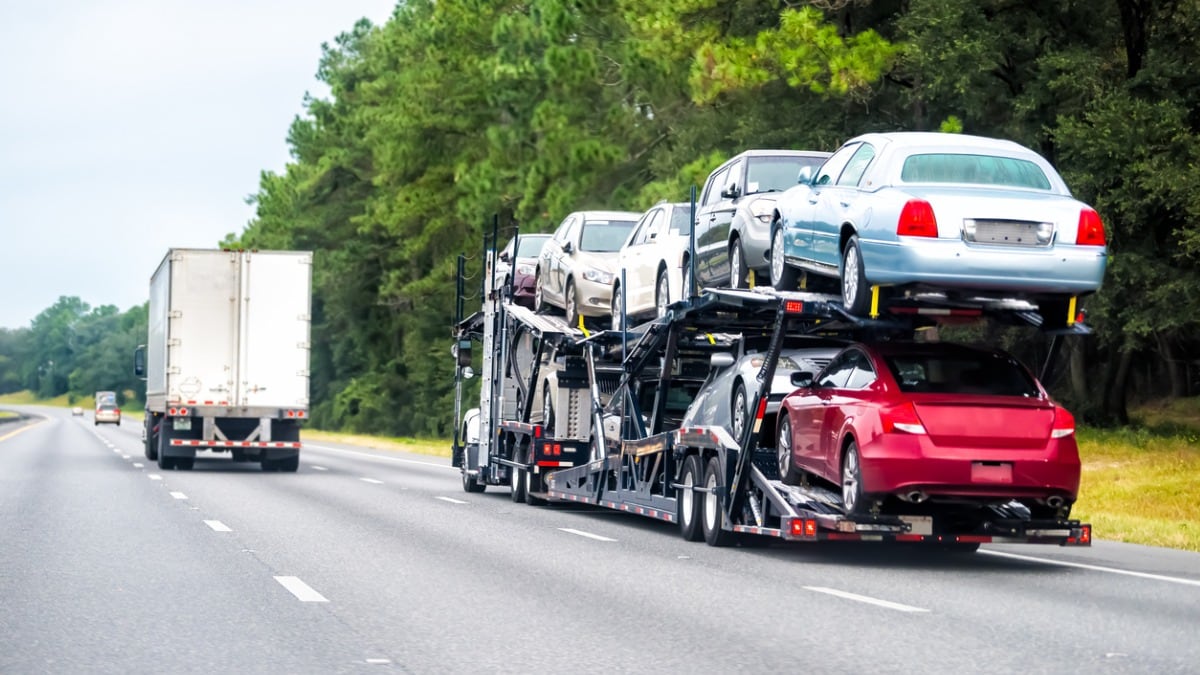
Using car carriers to transport vehicles over long distances is an option for people buying cars from another state or relocating to a new region, as well as for snowbirds escaping cold winters to warmer climates. For many, the cost of shipping a car outweighs the burden of a multi-day drive and vehicle wear and tear.
Continue reading to learn what variables contribute to the overall expense of shipping a car. We’ll provide tips on saving money, offer advice on selecting a long-distance transport company, and outline what to expect during the shipping process.
- Factors Affecting Car Shipping Costs
- Typical Costs
- Is Shipping a Car Worth the Price?
- Tips to Save Money on Car Shipping
- How to Select a Long-Distance Car Transport Company
- What to Expect When Shipping Your Car
Factors Affecting Car Shipping Costs
The cost of shipping a car can vary based on several factors:
Distance. The most significant factor is the distance between the pickup and delivery locations. Greater distances generally cost more, but the cost per mile is less on long hauls than on shorter hauls.
Vehicle size and weight. Larger vehicles, such as full-size trucks, minivans, and SUVs, are more expensive to ship than smaller automobiles because the car carrier must use more fuel to haul the additional weight.
Shipping method:
- Open transport. Transporting cars on an open carrier is the most common and cost-effective vehicle shipping method. It’s suitable for most automobiles, including pickups, SUVs, and minivans.
- Enclosed transport. Owners of luxury, classic, or exotic cars often opt for an enclosed trailer for protection from weather and road debris. This pampered method is more expensive than open transport.
Season. Demand for car shipping services fluctuates throughout the year. Generally, brokers say the busier half of the year is April through September. Prices can be higher during peak periods in the summer when more people relocate.
Pickup and delivery locations. Shipping to or from rural areas not on interstates or major highways can increase costs. Pickups and drop-offs in urban areas often, but not always, have more competitive rates.
Vehicle condition. Undriveable vehicles require special equipment and handling, which increases the cost.
Speed of delivery. Expedited shipping services cost more than flexible delivery times.
Typical Costs
If you finally locate the car you’ve been searching for, but it’s listed with a private seller or dealership hundreds of miles away, be sure to include shipping costs when calculating its affordability.
Vehicle shipping prices vary. Every situation is unique. Still, this chart shows the average cost of shipping a car, based on the rates quoted from eight transport companies. We asked the shippers how much it costs to carry a 2025 Honda Accord from Orlando to Atlanta, New York City, and Los Angeles. Here is the range and average of price quotes we received for shipping the car to those destinations 500 miles, 1,200 miles, and 2,000 miles away.
Enclosed transport can add 50% or more to the cost of shipping a car.
Shipping a Car to Hawaii
My friend moved to Hawaii from Los Angeles last year and shipped two vehicles. The small coupe and midsize pickup cost about $5,000 to transport and took nearly three weeks to arrive. That transit time includes a week from the Long Beach port to Honolulu, several days to get the cars off the ship, a week of waiting for a scheduled sailing to a neighboring island, and a day to unload that ship.
MORE: How To Buy a Car From Out of State
Is Shipping a Car Worth the Price?
People choose to ship cars for various reasons, and the process has pros and cons. Sometimes, shipping is necessary, but it can also be a convenience with a substantial price tag. Some drivers jump at the chance to take a road trip, while others don’t want to spend more than an hour in a car.
One thing is certain. Driving is almost always less expensive. Still, you should evaluate those costs when deciding between shipping vs. driving. Consider the expenses of driving our Accord example on a 1,000-mile relocation trip.
Gasoline. At 32 mpg combined, the 2025 Accord would use about 31 gallons of gas to drive 1,000 miles. That much fuel costs about $87 at today’s nationwide average price of $2.82 per gallon.
Tolls. In some regions, you’ll need to pay to drive on turnpikes, utilize express lanes, cross bridges, or pass through tunnels. Set aside $25 for those expenses.
Lodging. Planning for one night at a budget motel at a highway or interstate exit can easily add $100 to the trip cost.
Food and drink. You’ll be away from your kitchen, so budget for meals, snacks, and beverages.
Wear and tear. It’s impossible to put a dollar amount on the wear caused by driving 1,000 miles. But it gets you 1,000 miles closer to an oil change and takes that many miles of tread off your tires.
Mileage. Another potential expense adds to the bottom line if leasing the car: Excess mileage. Suppose the lease allows 10,000 annual miles. This two-day drive will account for 10% of the annual mileage allowance. Assuming there’s a 20-cent per mile penalty at the end of the lease, excess lease miles for this trip would cost $200. If buying, the additional miles from a lengthy trip may impact the car’s Kelley Blue Book value a tiny bit.
Time. How much is your time worth? Will you need to use vacation time or unpaid time away from work to drive your car instead of shipping it?
Travel. If you buy a car from a distant seller, how will you get to the car to then drive it home?
The tally of these expenses is roughly $500, about half the average cost of shipping a car 1,000 miles, but the costs can vary based on these factors.
MORE: Car Maintenance Guide: Everything You Need to Know
Tips to Save Money on Car Shipping
Compare quotes. Remember that the least expensive quote doesn’t mean it’s the best. Get quotes from multiple companies to ensure you’re getting the best deal.
Book in advance. Planning and booking your car shipment ahead of time will help with scheduling and might help you secure better rates.
Be flexible with dates. Flexibility with your pickup and delivery dates can allow you to take advantage of lower rates if the carrier needs to fill space on a truck.
Choose open transport. If your car doesn’t require special protection, selecting an open carrier will save a significant amount of money.
Avoid peak periods. If possible, avoid shipping during high-demand times such as the summer months when more people relocate.
Terminal-to-terminal shipping: If you’re willing to drop off and pick up your car at the shipping terminals, you can save money compared to door-to-door service.
Rail Transport
A lower-cost alternative for people transporting cars from near Washington, D.C., to the Orlando area is Amtrak’s Auto Train. Amtrak will load your car onto the Auto Train at the Lorton, Virginia, station for $285 (vehicles longer than 216 inches cost $295) plus the cost of your train ticket. After 800 miles and about 17 hours of cozy rail travel, the train arrives at the Sanford station in Florida.
How to Select a Long-Distance Transport Company
Choosing the right company to ship your car is necessary for a stress-free shipping experience. Here’s how to select a reputable long-distance transport company:
Research companies. Look for companies with high Better Business Bureau ratings and positive online reviews.
Ask for recommendations. Local car dealerships and people who recently moved to your neighborhood might have experience with shipping cars across state lines.
Verify credentials. Ensure the carrier is registered with the Department of Transportation (DOT) and has a valid Motor Carrier (MC) number.
Check insurance coverage. Ask for and verify the company’s insurance coverage for your vehicle during transport.
Request quotes. Get detailed quotes from multiple companies. Pay attention to what is included in the price and ask about any potential additional fees.
Read the contract. Carefully review the contract before signing. Ensure you understand the terms and conditions, including the cancellation policy and delivery window.
Customer service. Choose a company that offers responsive and helpful customer service. Good communication is essential throughout the shipping process.
Don’t pay upfront. Reputable automobile transport companies will not ask you for payment, a deposit, or your credit card number when making a reservation to ship your car. In some instances, customers pay a portion when the car gets onto the truck. Other companies collect the entire payment at the final destination.
MORE: VIN Decoder: The Essentials Explained
What to Expect When Shipping Your Car
Understanding the car shipping process can help you prepare and ensure a smooth experience. Here’s what to expect:
Getting quotes. To receive a quote, provide details about your car, the pickup and delivery locations, and your preferred shipping dates.
Booking the shipment. After reviewing quotes and selecting a company, you’ll book the shipment and schedule the pickup date and delivery window.
Preparing your car. Your carrier will give you specific instructions. In general, you will leave the vehicle with a quarter tank of fuel, secure loose parts, deactivate the security alarm, and ensure the car is in good working condition. Take a photograph of the vehicle to document its current condition.
Bring two car keys. Give the spare to the transport company to load and unload your vehicle. Keep the original key with you just in case.
Pickup. The carrier will inspect your car, document its condition, and load it onto the truck. You’ll receive a bill of lading, which protects you and the shipping company from damage and fraudulent insurance claims.
Transport. The carrier will transport the vehicle to the destination, and they might provide updates along the way.
Delivery. Upon arrival, the carrier will inspect the car again and document its condition. You’ll sign the bill of lading and pay any remaining balance. Shippers we spoke to said tipping the driver is optional.
Final Inspection. Thoroughly inspect your car to ensure it has arrived in the same condition as when the shipping company picked it up. Report any damage immediately.
Shipping a car for the first time can be stressful because of the unknown, but it can be a hassle-free experience if you’re well-informed and prepared. By understanding the costs involved, taking steps to save money, carefully selecting a transport company, and knowing what to expect, you can ensure your vehicle arrives at its long-distance destination with no additional miles on the odometer.
Editor’s Note: We have updated this article since its initial publication. Tawana Campbell contributed to the report.