

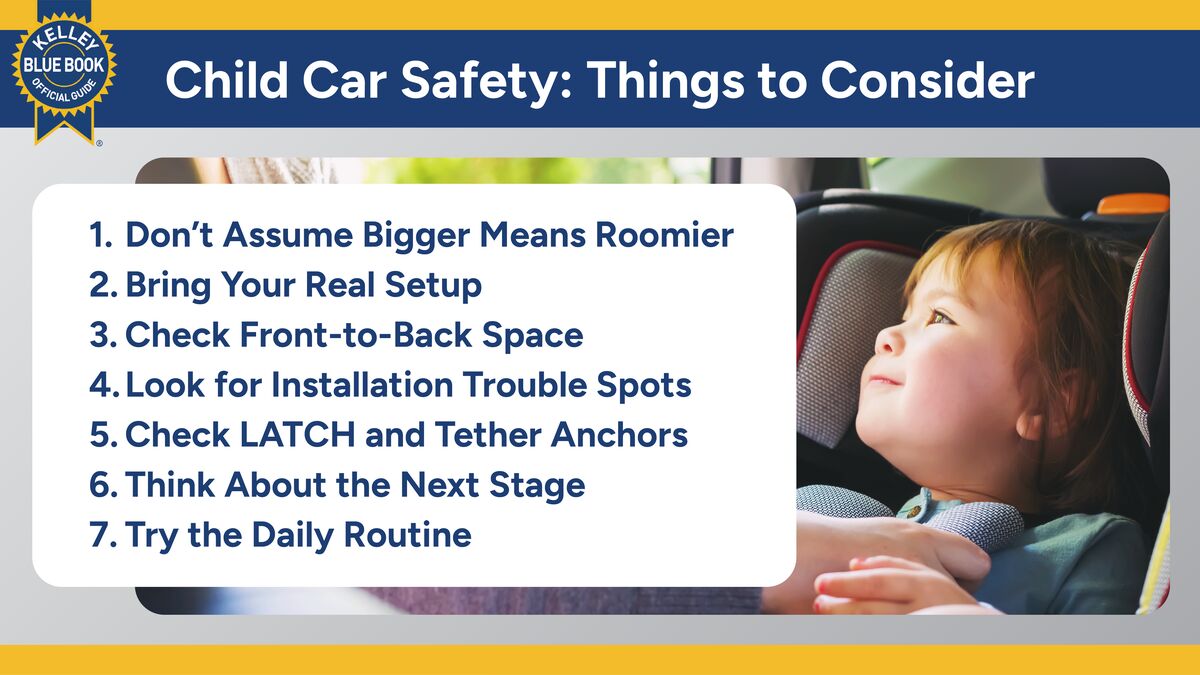
A new family car likely has plenty of cupholders, cargo space, USB ports, and safety tech. But before you buy, ask one practical question: Will your child’s car seat fit and install correctly?
The best way to find out is to bring your actual car seat, booster seat, or infant seat base to the dealership and install it before you sign on the dotted line. A vehicle may look roomy online, but car seat fit depends on seat shape, door openings, front-to-back space, head restraints, seat belt access, LATCH anchors, and how your family uses the vehicle every day.
1. Don’t Assume Bigger Means Roomier
Kyndra Webb, a child passenger safety program manager at the National Safety Council, says some vehicles that appear large may not have as much back-seat room as caregivers expect, and a full-size sedan may have a more spacious back seat than a crossover or small SUV.
That’s why it’s worth testing your car seat in the actual vehicle instead of relying on vehicle size, class, or cargo numbers.
2. Bring Your Real Setup
Bring the car seat, booster, or infant seat base you use now. If you expect to use two or three seats at once, bring them all. If practical, bring your child and stroller, too.
Install the seat the way you use it every day. Test rear-facing seats positioned rear-facing. Test infant seats with their base. If you need three across, install all three before making a decision.
Webb says true compatibility issues are rare, although caregivers may need to change the installation method or seating position. Still, it is better to find that out before signing the paperwork.
3. Check Front-to-Back Space
Back-seat width matters, but front-to-back space can matter just as much. After installing the car seat, sit in the driver’s seat and the front passenger seat adjusted to a typical position.
Webb recommends checking whether a taller caregiver can sit safely up front while leaving enough room for a rear-facing car seat behind them. Even some forward-facing seats may need more room as a child’s legs extend farther.
4. Look for Installation Trouble Spots
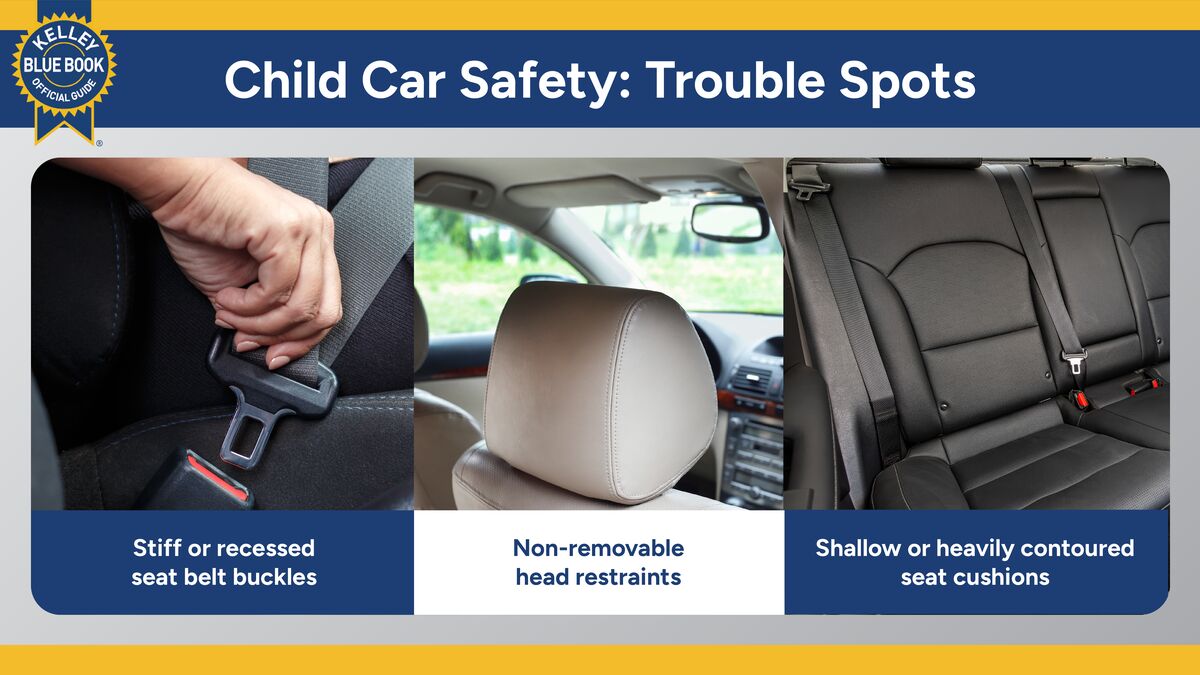
During the test fit, check for:
- Deeply buried lower anchors
- Stiff or recessed seat belt buckles
- Short or heavily contoured seat cushions
- Limited front-to-back space
- Hard-to-reach tether anchors
- Non-removable or forward-tilting head restraints
Head restraints deserve special attention. Webb says some forward-facing car seats do not allow a gap between the child car seat and the vehicle’s seat. Forward-tilting head restraints may protect adult occupants but interfere with some car seat installations.
5. Check LATCH and Tether Anchors
LATCH stands for Lower Anchors and Tethers for Children. Lower anchors can make installation easier, but they do not guarantee every car seat will fit every vehicle.
Make sure the lower anchors are easy to find and reach. For forward-facing seats, check the top tether anchor, too. If you’re shopping for a 3-row SUV or minivan, check the third row carefully. Some third rows have only one tether anchor or anchors placed too close together for certain side-by-side setups.
6. Think About the Next Stage
Buy for the next stage, not just today. Will a rear-facing child soon move forward-facing? Will an older child move into a booster? Will you need room for another car seat? How about a carpool passenger, grandparents, pet, stroller, or sports gear?
Webb points out that three car seats may fit across now, but when the oldest child moves into a booster, that child still needs room to reach and buckle the seat belt.
7. Try the Daily Routine
Car seat fit is not only about installation. Practice loading your child in and out, buckling the harness, tightening the straps, and loading the stroller. If the vehicle will park in your garage, make sure the doors, liftgate, or sliding doors work in that space.
Some dealerships may allow an extended or at-home test drive, which can help you test the vehicle in your driveway, garage, school pickup line, or usual parking spot.
MORE: Inflatable Seat Belts: What Used Car Buyers Need to Know
Get Help if You’re Unsure
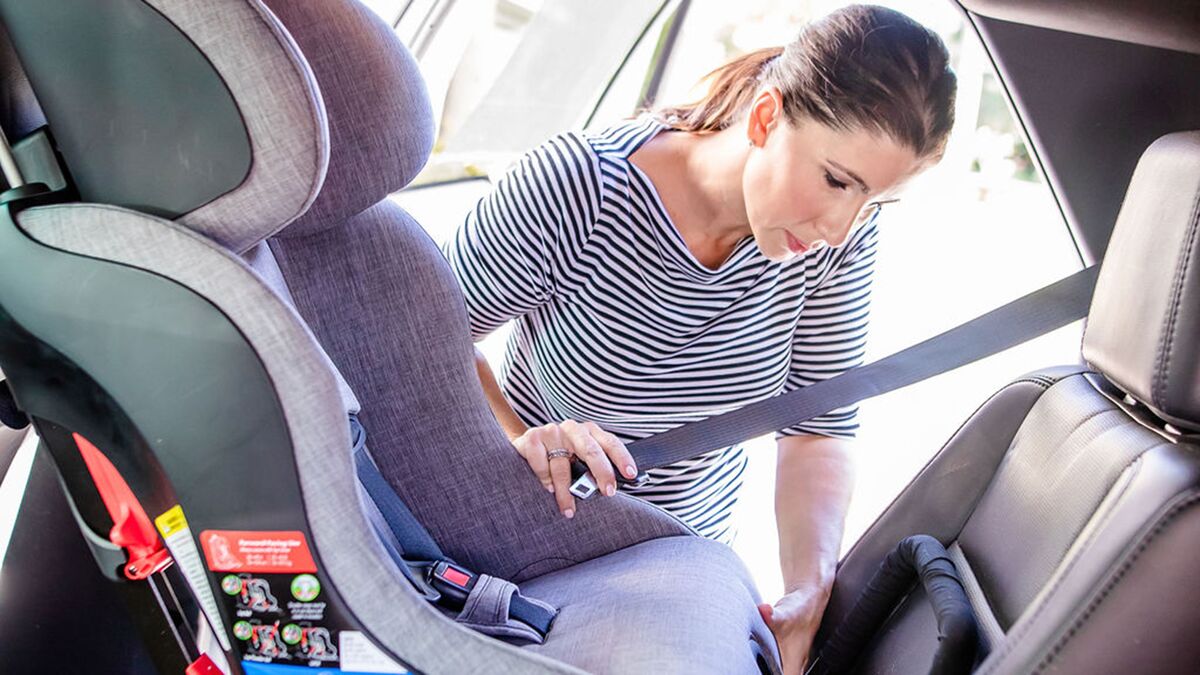
Even with airbags, crash-avoidance features, and advanced driver-assistance systems, correct car seat use still matters. Webb says every car seat legally sold in the U.S. meets federal safety standards, but it is tested to work when used according to the manufacturer’s instructions.
If you’re unsure about your setup, consult a certified Child Passenger Safety Technician. Webb says families can find nationally certified technicians through Safe Kids, National Highway Traffic Safety Administration (NHTSA), state and local resources, and the National Safety Council’s Safety Connection program, which offers virtual car seat checks.
A few extra minutes before you buy can prevent years of frustration and help make sure the vehicle truly fits your family.
Visit our Car Safety Information Center for clear, reliable guidance to help you drive with confidence.
Editor’s Note: We have updated this article since its initial publication.