
Kelley Blue Book turns 100 this year, and as we celebrate our centennial, we’ve been thinking about the history of the automotive industry. Today’s vehicles come in a dizzying array of colors and finishes, but it hasn’t always been that way. “Any customer can have a car painted any color that he wants so long as it is black” is a quote famously attributed to Henry Ford, but his commitment to monotone car production didn’t last.
1920s
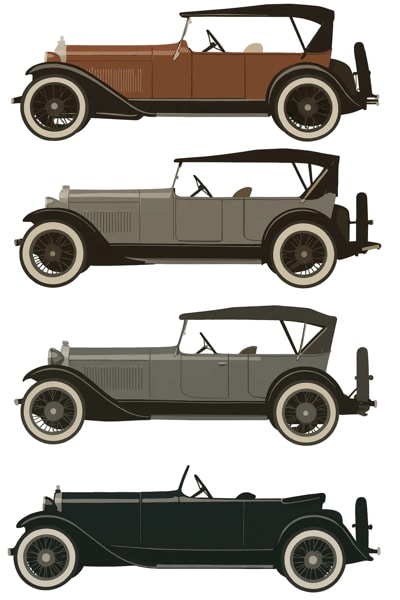
According to automotive paint supplier PPG, Ford had loosened its one-color policy by 1926, offering brown on the Model T. Other automakers followed suit, though the stock market crash later in the decade helped usher in a more muted palette, including shades of green and gray. Neutral colors — white, silver, and gray — also grew in popularity.
1930s
Even as the Great Depression dominated the decade, automakers introduced new colors to market, including navy, tan, and dark green. Early metallic paints debuted using fish scales, which cost an arm and a leg (or a fin and a tail) to produce. Paint companies eventually replaced the scales with aluminum flakes incorporated into the paint.

1940s
World War II loomed over the early 1940s, when many automakers redirected resources to support the war effort. By the end of the decade, a broader spectrum of colors emerged, featuring brighter hues and a wider range of shades.

1950s
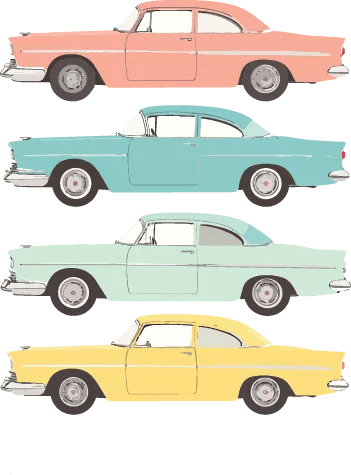
Car design became bolder in the 1950s, reflecting the country’s celebratory mood after World War II. Flashier colors began to appear, such as yellow and light blue, and many automakers offered two-tone paint options. Later in the decade, Daimler-Benz increased its color offerings to 26 individual colors and 23 two-tone options.
1960s
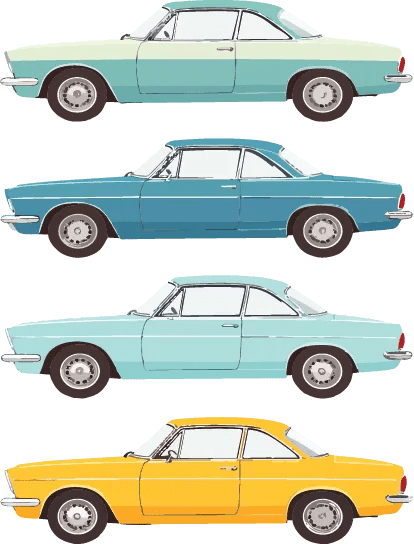
Paint trends in the 1960s built on those of the previous decade, but colors became deeper, with metallic paints using new metal combinations.
1970s
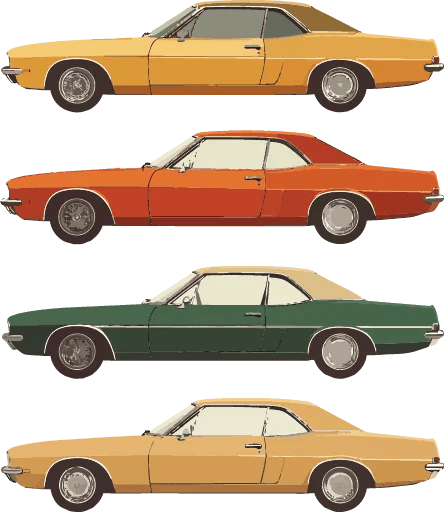
The 1970s brought shag carpet and an endless array of shades of brown to home design, and automotive color palettes followed suit. Automakers leaned into rust tones, browns, and greens. Overall, colors became earthier and warmer, mirroring the feel of the decade.
1980s
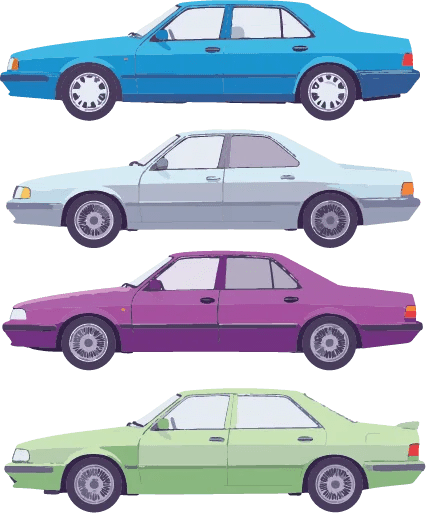
Automotive paints became more advanced in the 1980s, with PPG releasing a new line of metallic coatings and pearl-effect paints coming early in the decade. Application methods also improved, as many companies moved from single-coat paint jobs to at least two coats.
1990s
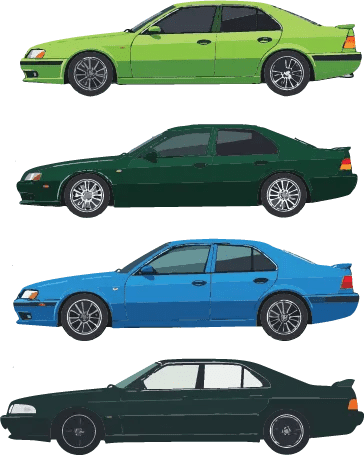
The 1990s were a peak decade of green for the automotive industry. PPG notes that more than 20% of the vehicles sold in North America were green during that time. Automakers leaned into the trend, offering a range of paints in various shades of green.
2000s
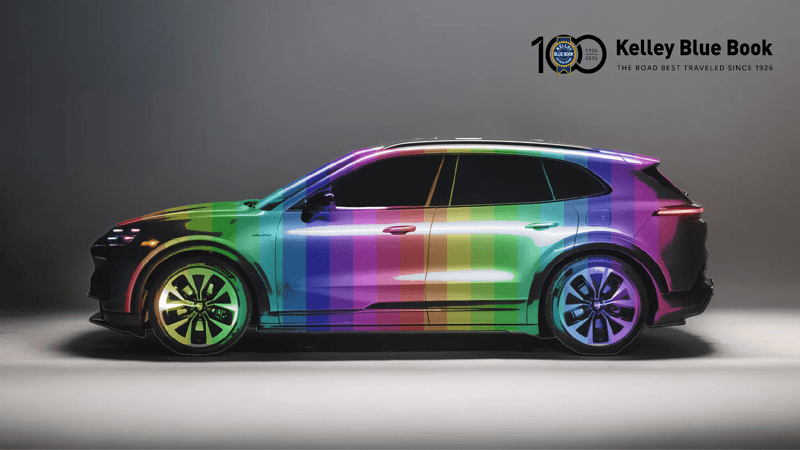
Over the past quarter-century, automotive paint colors have continued to evolve, featuring modern interpretations of classic two-tone schemes, new matte finishes, and more advanced metallic options. Some automakers have introduced color-changing paints, while others are evaluating how these paints interact with the cameras and sensors in modern driver assistance technologies.
Trends in Automotive Paint Colors
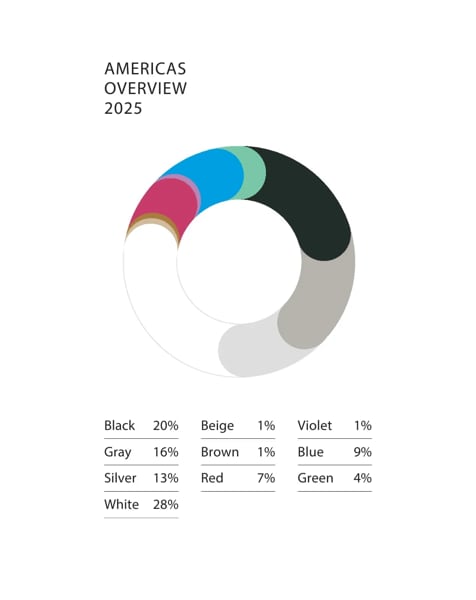
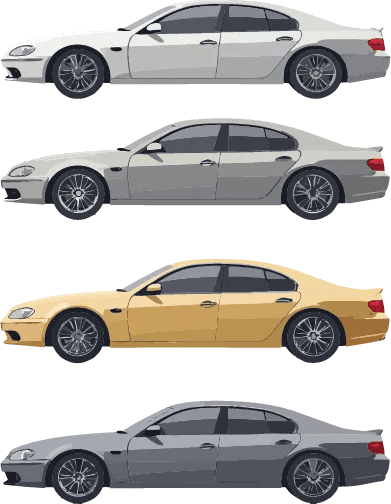
International automotive paint supplier BASF studied color popularity trends at the end of 2025. It found that car buyers in the Americas grew more fond of silver, brown, and green, while gray and white declined in popularity. That said, black, gray, silver, and white colors accounted for more than three-quarters of the cars sold in the region in 2025.
Automotive Paints of the Future
Nothing in the automotive industry stays the same for long — especially paint colors, which follow shifting consumer tastes.
- Sustainability: New paints are expected to reduce environmental impact through lower waste, more energy-efficient manufacturing processes, and more.
- E-ink paints: Still largely in the prototype stage, some automakers have introduced E-Ink or E-Pigment finishes that can display patterns, text, and other graphics.
- Self-healing paint: Some coatings use nanotechnology to help repair or fill minor damage.
- Smart paints: Functional paints that help block heat and other elements are on the way. Nissan’s Cool Paint, for example, promises lower cabin temperatures and better electric vehicle (EV) efficiency.