

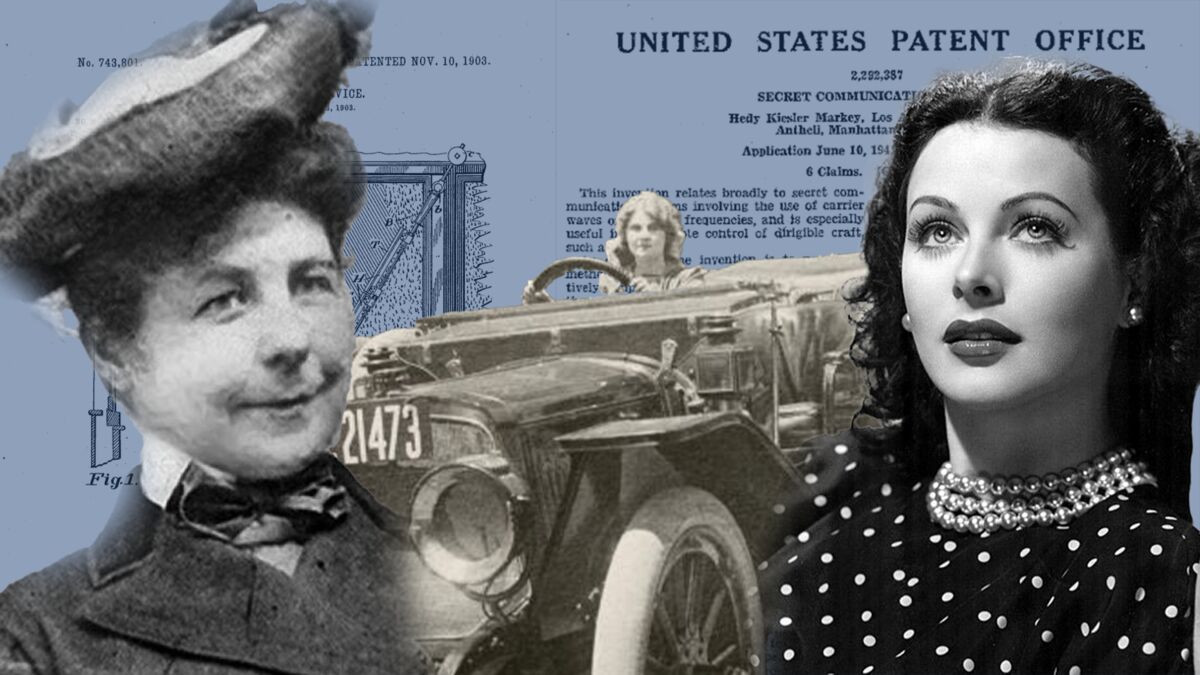
Windshield wipers. Car heaters. Turn signals.
What do all these have in common?
In honor of National Women’s Month, let’s take a moment to recognize some of the incredible innovations created by talented women throughout history. We may take these innovations for granted, but they impact our vehicles and our world in significant ways.
Let’s dig in!
The Humble Windshield Wiper
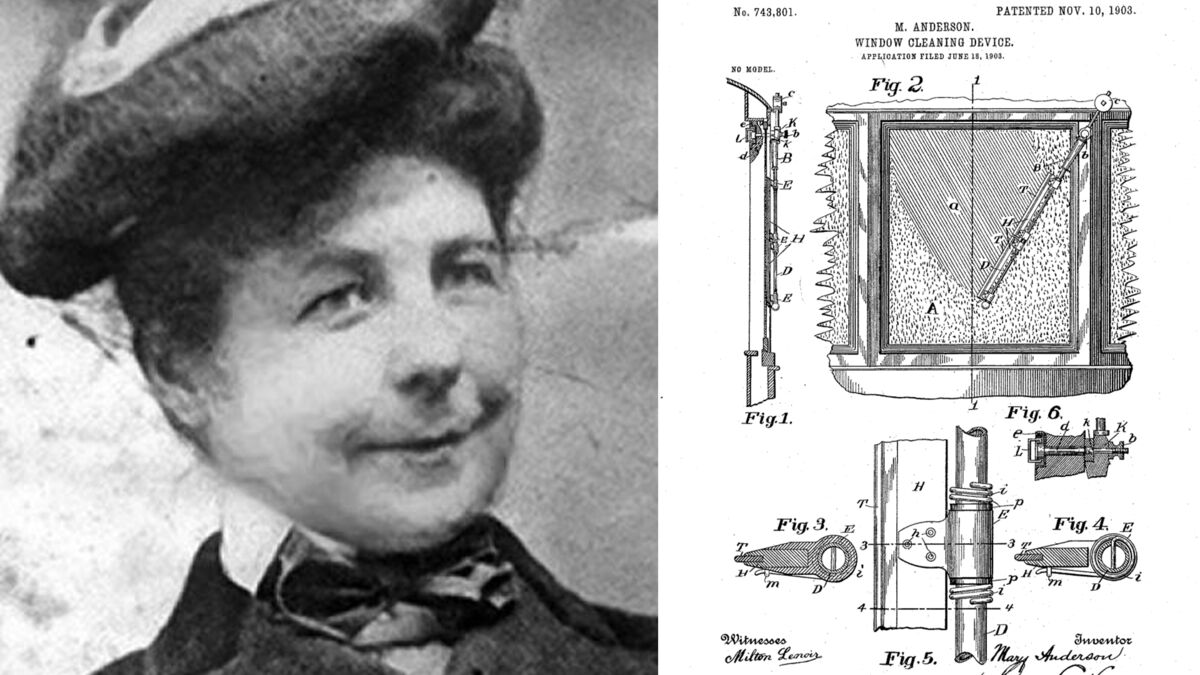
The windshield wiper is a perfect example of an invention people use every single day, yet rarely consider how it became a common (and essential) automotive feature.
Picture this…
The year was 1903. It was a frigid, snowy day in New York City. Mary Anderson noticed that streetcar operators had to open a window to see through the snow that had accumulated on the front window. Some operators even stopped the streetcar to get out and clear their windshields by hand.
Mary had an idea she quickly patented: a lever inside the vehicle that controls a spring-loaded arm with a rubber blade at the end. The lever, which had a counterweight to keep the wiper in contact with the window, could move the blade across the windshield, removing rain or snow.
The windshield wiper was eventually adapted for automotive use. In 1922, Cadillac began installing windshield wipers as standard equipment on its cars.
So, next time you take a drive through the rain or snow, thank Mary Anderson for your clear view of the road.
Turn Indicators and Stop Signals

While many people likely assume that innovation occurs only in a lab or by an engineering team, that assumption is far from the truth.
Florence Lawrence, one of the original Hollywood movie stars, came up with a significant innovation: The turn signal.
She was known at the time for her many short films known as “one-reelers,” typically shot in a week. In the early days of Hollywood, many actors and actresses didn’t receive credit for their work as they do today, yet Florence’s face was recognizable, so she became known as “The Biograph Girl” (named after the film studio where she was on salary).
In these early days of automotive, cars were quite expensive for most consumers. Fortunately (for all of us), Florence had both an interest and the means to be an early enthusiast.
Her first accessory innovation was the “auto signaling arm.” Despite being the first of its kind, this feature was curiously similar to modern turn signals, with the driver operating buttons on the dash which raised and lowered arms on the rear fender of the vehicle.
The secondary component was a stop sign on the rear of the vehicle, activated by pressing the brake and raising a sign to notify other drivers of her intention.
It’s remarkable how these simple innovations are still incorporated in today’s vehicles. Though the technology has advanced, the basic idea is the same: Signal your intent to other drivers and reduce the chance for accidents. Thanks, Florence Lawrence! Now, if we could only solve the issue of drivers who fail to signal.
The Car Heater

For this innovation, we must go back to 1893.
Margaret A. Wilcox, born in 1838 in Chicago, was a mechanical engineer in an era when very few women held such a position. She was an avid inventor, creating multiple home appliance solutions. Her most significant idea, however, was not related to cars at all, at least at the time.
In Chicago, winter weather can subject railcar workers to dangerously frigid temperatures. Margaret had an idea to fix this problem.
After tinkering with the idea of harnessing heat from the locomotive’s engine and routing it to the train cars, she successfully filed U.S. patent number 509,415, the “car heater” on November 28, 1893.
Her patent would not find commercial success due to the lack of temperature control, which caused railcars to overheat. However, her innovations inspired similar heating solutions for automobiles. Automotive engineers followed Wilcox’s designs in 1917 for Jordan Automobiles of Cleveland, and in 1929, Ford introduced the first factory-installed heater in its Model A.
Thank Margaret A. Wilcox the next time you feel comfortable and cozy behind the wheel while all around is white with snow.
The Transparent Invention
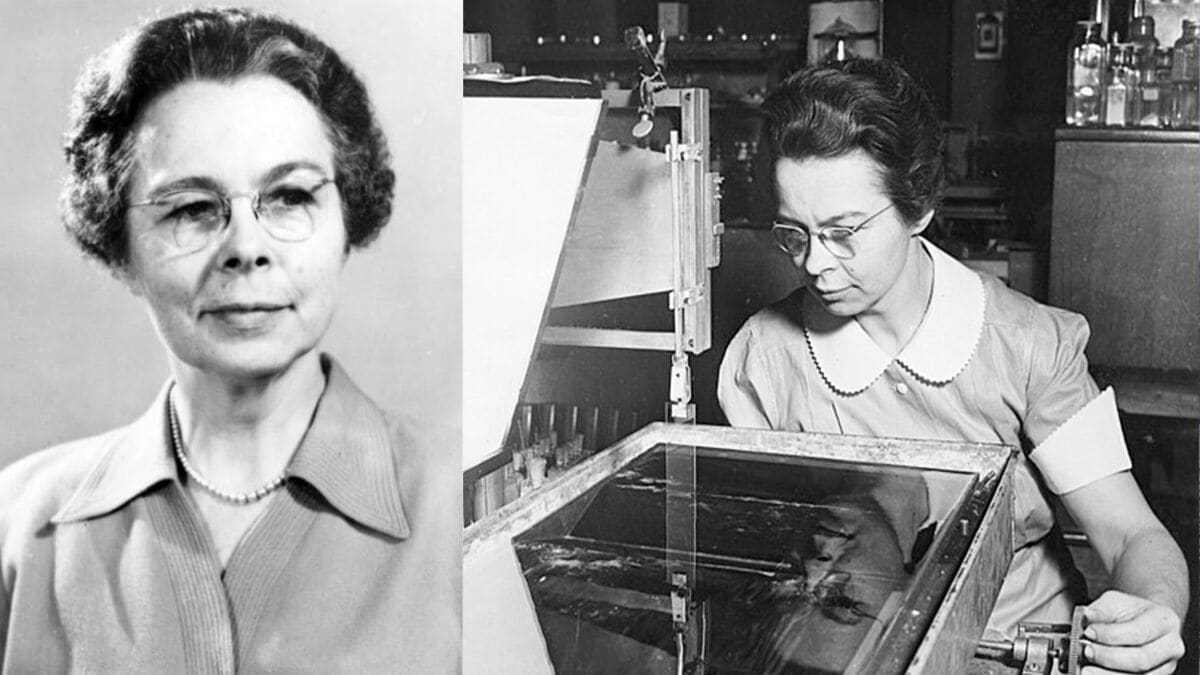
Katharine Burr Blodgett was a prolific physicist and inventor. She had many notable achievements, including becoming the first woman to receive a doctorate in physics from the University of Cambridge in 1926.
She was closely involved with General Electric (GE) throughout her life, and her father even served as a patent attorney for the company. After her graduation from college, she returned to the company as a research scientist, where she partnered with Irving Langmuir (a Nobel laureate and National Inventors Hall of Fame® Inductee).
Her work built upon Langmuir’s discoveries, creating multilayer anti-reflective coatings on glass, and thus, Blodgett successfully produced the world’s first completely transparent glass, or “invisible glass.”
This invention was key to the glass used in automotive applications, such as windshields and windows, among many others.
The Langmuir-Blodgett technique was patented in 1938 (U.S. Patent No. 2,220,860) and has essentially remained unchanged since Blodgett’s discovery.
While Kathryn Burr Blodgett’s innovation may have been transparent, we can clearly see the impact of her achievements.
Movie Star… and Inventive Genius
Wi-Fi, GPS, Bluetooth… these are all technologies that, in the 1940s, would likely have been considered science fiction, yet we use them daily in modern vehicles.
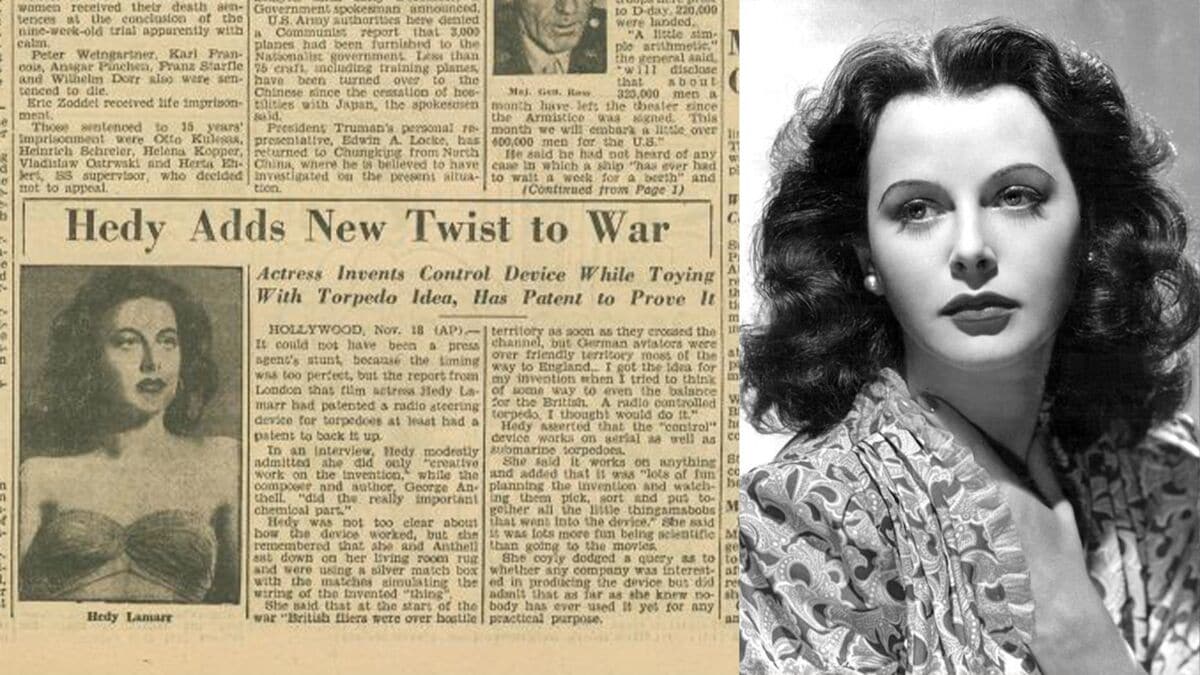
What I find even more incredible is that the technology that made these innovations possible, frequency-hopping spread spectrum (FHSS), was invented and patented by Hedy Lamarr, the famous movie star.
Her life (which could be an entire movie in its own right) was marked by perseverance, cultural struggles, and commercial success. However, some of her most notable and lasting work was done in her free time between shoots.
Lamarr’s first marriage was with Friedrich Mandl, a prominent arms dealer. At the time, in the late 1930s, she attended an arms deal and discovered that the Navy desired a guidance system for torpedoes that could not be jammed by enemies. Working with composer and pianist George Antheil, she created a design for an FHSS system reminiscent of a piano roll. Lamarr submitted the idea to the National Inventors Council (NIC) in late December 1940.

On June 10, 1941, she successfully filed the design as U.S. patent 2,292,387, also known as “Secret Communication System.” Lamarr granted the Navy free use of the patent, but they declined to use the technology at the time, claiming it was too large for the intended application.
FHSS technology is prevalent today, with many wireless systems leveraging Lamarr’s innovation.
While Hedy Lamarr’s filmography may not be familiar to modern audiences, her work on FHSS technology impacts many wireless systems today. It’s difficult to imagine today’s automotive landscape with wireless connections, for which we can thank Hedy Lamarr.
A History of Innovation
While my list may be short, hundreds of thousands of women throughout history have contributed their lives to advancing the technology used in vehicles worldwide.
Without these important women, the world and its automobiles would be very different.