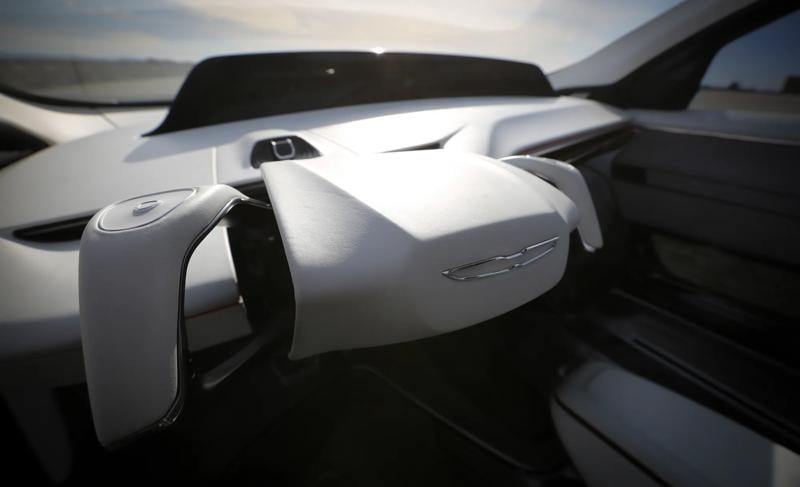

Your car’s steering wheel is one of its most-seen and most-touched features, but unless you hate it, you probably don’t give it a lot of thought. Automotive engineers have, which is why there have been so many interesting, unique designs over the years. Kelley Blue Book celebrates our 100th anniversary in 2026, giving us the perfect opportunity to look back at the steering wheels that have guided automotive interior design over the past century.
Before the Steering Wheel
Some of the earliest automobiles didn’t have steering wheels. Instead, they relied on tiller-style controls. That might seem dangerous at first, but cars of the late 1800s had very modest top speeds, such as the Benz Patent-Motorwagen, which maxed out at around 10 mph. It didn’t take long for speed-hungry drivers to figure out that a wheel provides much better control. One of the earliest steering wheel fitments is credited to a racer driving a 4-horsepower Panhard.
1920s through 1930s
As fun as that history lesson was, we’re only here to talk about the last 100 years. While car steering wheels had horn buttons in the 1920s, most were otherwise very simple. A ring for grip and spokes to connect the wheel to the steering column formed the basis of automotive steering wheel design for decades, though Cadillac pushed those boundaries in the 1930s.
The 1933 Cadillac 355C V8 featured a unique control system on the steering wheel hub that allowed the driver to select one of five ride-control positions, altering the car’s suspension behavior. Buyers had to shell out $2,995 for the vehicle, or almost $76,000 in today’s dollars. Even contemporary Duesenberg cars didn’t have such luxuries.

1940s through 1960s
The 1940s brought a bit more fun to steering wheel design, with color-matched spokes, chrome rings, and fancier grips becoming common in American cars. While they looked incredible, those innovations didn’t add functionality, and they negatively affected crash safety.
The decorative trend continued into the 1950s, though automakers’ logos became much more elaborate during the decade. Cars like the 1953 Chevrolet Corvette featured colorful enamel badges in the center of the steering wheel.
Steering wheel designs leaned into a futuristic look as the industry transitioned into the 1960s, as the Space Race hit full steam. Automakers still relied on chrome accents and pops of color, but the designs became wilder, with more intricate shapes and unique fonts in the logos. Some steering wheels, such as the Ford Mustang’s, took on a fighter jet look, with striking holes in the spokes and bold metal designs.
1970s and 1980s
The 1970s were the decade of drab car colors, and steering wheels weren’t much more exciting. European brands such as Mercedes-Benz had steering wheels that were all business, with blocky shapes and plain, black plastics. The American automakers relied on geometric designs, with even the upscale brands and sports cars employing relatively boring steering wheels.
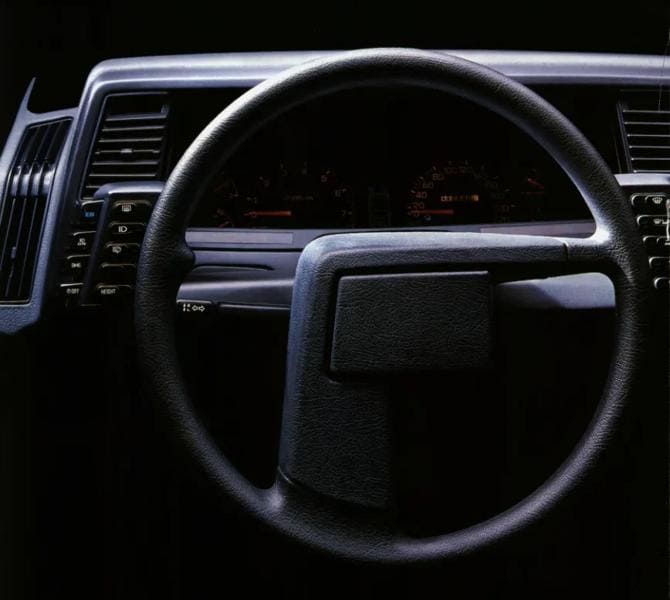
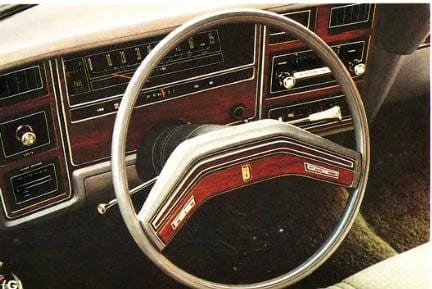

Technology was a big deal in the 1980s, and every automaker wanted to show how far it could go. The steering wheels in some production cars looked like they had been ripped straight out of a concept car gallery, and concept cars took things to an entirely new level. Some cars, such as the Subaru XT, offered funky asymmetrical steering wheels, while others, like the Pontiac Grand Prix, packed in as many buttons as could fit into the center of the wheel.
1990s and 2000s
Automakers returned to more muted designs in the 1990s, but the big story in that decade was the increasing availability of airbags. While front airbags became mandatory in late 1998, many companies began equipping them as standard or available features much earlier.
Things didn’t change much in the early 2000s, though steering wheel control buttons for audio systems, cruise control, and other functions became more common. Some, especially sportier models, employed more ergonomic shapes, with indentations for the driver’s thumbs and fingers to assist with grip.
2010s Through Today
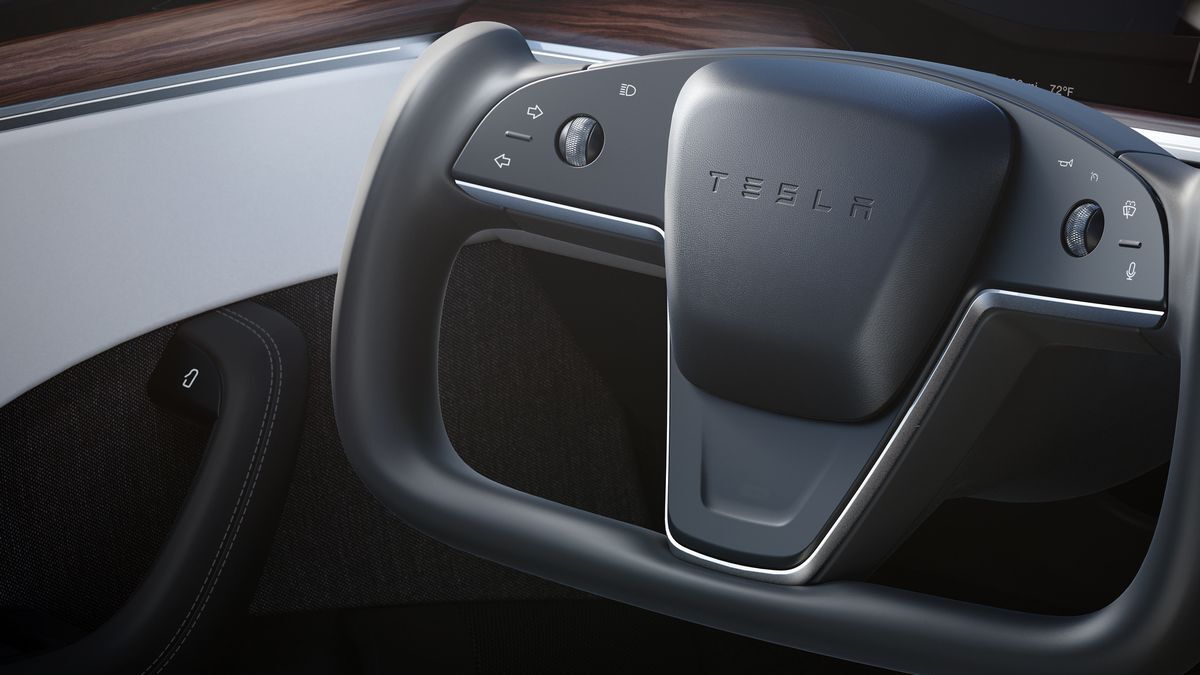
With the rise of touchscreens in the 2010s, some automakers brought touch-sensitive controls to steering wheels later in the decade. That trend continued into the 2020s, though backlash from owners and critics has pushed some companies to rethink that approach. Yoke-style steering wheels have also started popping up, with Tesla, Lexus, and other brands offering the unique, two-handed shape.
Concept Car Steering Wheels
Without the need to be practical, safe, or even usable, concept cars have always pushed the boundaries of design. Concept steering wheels take on wild shapes and often lack features their production-ready counterparts require, such as airbags, horn buttons, and turn signal stalks. Some look as if they were taken straight out of a video game, while others lean heavily into motorsport, with Formula 1-inspired controls and hand grips. Automakers use concept cars to test new design and technology elements, many of which don’t make it to production models, but yoke-style steering wheels discussed earlier are a great example of how forward-looking components can make their way into everyday vehicles.