


- The average sale price of a new car rose last month, and the total supply of cars for sale fell.
- Some brands remain well-supplied; others have thin supplies, leaving buyers less negotiating power.
The supply of new cars for sale in America fell slightly in August. America’s car dealers started the month with 2.73 million cars to sell, and ended it with 2.68 million. Meanwhile, the average new car price again crested the $50,000 mark.
Car dealers measure their stock in a metric called “days of inventory” – how long it would take to sell out of cars at today’s sales pace if they couldn’t acquire more. An old industry rule of thumb tells them to aim for about 75, with 60 days’ worth on the lot and 15 days more on order or in transit.
Related: Is Now the Time to Buy, Sell, or Trade in a Car?
Dealers are making payments on the cars in their inventory, so too many raises their costs. Too few means they might not have a combination of features and colors in stock that appeals to you, and could lose your business.
The average automaker ended August with a 73-day supply – less than ideal and four days lower than July’s figure.
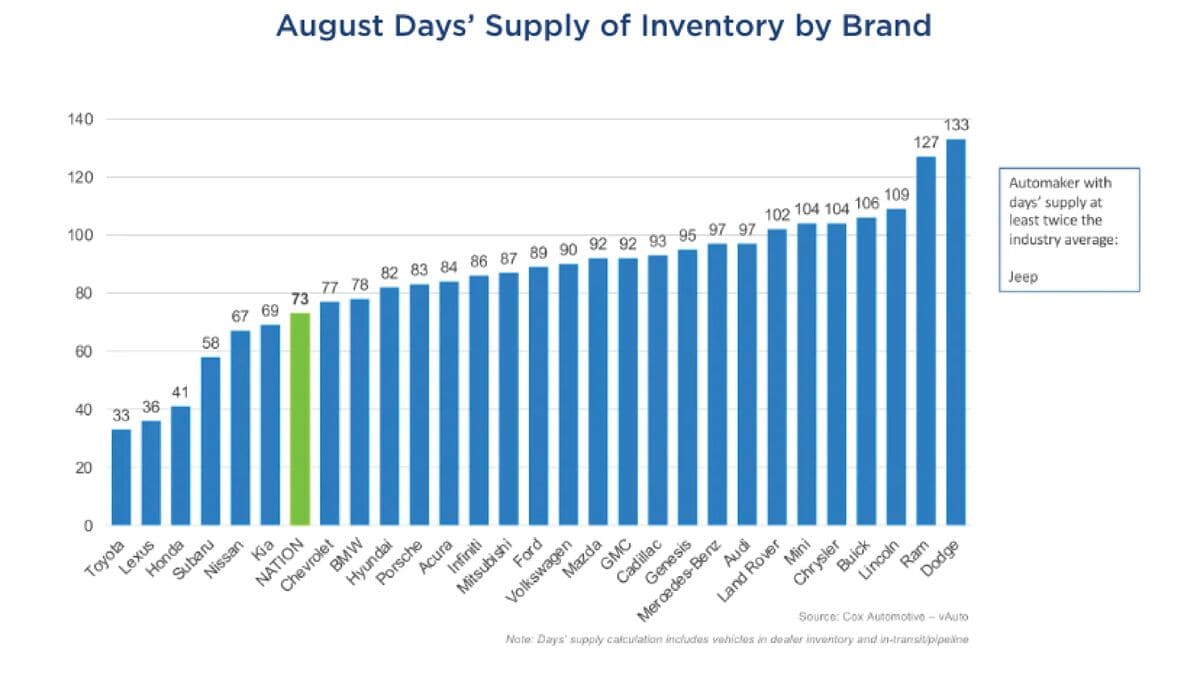
But the average is made up of extremes. Toyota and its Lexus luxury brand maintain the tightest supply in the industry, with barely more than a month of inventory. They’ve spent much of this year short of the RAV4, their usual bestseller.
At the other end of the scale, Stellantis brands like Chrysler, Dodge, Jeep, and Ram all have over 100 days in stock. Their dealers may be more willing to negotiate pricing.