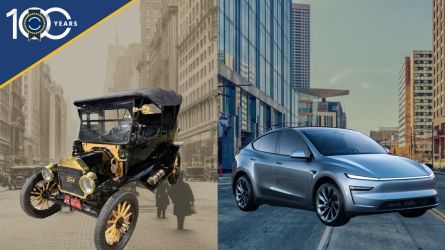


Kelley Blue Book has helped people understand car values and make informed decisions for a century. As we look back at KBB’s history, one of the things that has changed the most is the cost of buying and owning a vehicle. We’re not just talking about the purchase price. There are many factors that shape the cost of owning a car in 2026, so let’s get rolling and see how the impact on your wallet has changed over the years.
What Did a New Car Cost 100 Years Ago?
While we’re here to discuss annual ownership costs over the years, the available data is limited before the 1970s. That said, we do have very detailed pricing guides and manuals from the mid-1920s. In 1928, Chevrolet listed the Touring car at $525, or around $9,870 today, according to the inflation calculator from the U.S. Bureau of Labor Statistics (BLS). A Chevy Imperial Landau was $745, or $14,006 today. Those numbers seriously undercut new-car prices today, but fuel was pricier. According to Energy.gov, the average retail price of gasoline was $0.21 in 1929 — or $3.98 per gallon in today’s dollars. The average price in 2025? $3.10 per gallon.
What Does It Actually Cost to Own a Car?
The United States Department of Transportation (USDOT) has collected average vehicle ownership costs over the last 50 years. Its data assumes an average of 15,000 miles driven per year, and the numbers include fixed and variable costs.
COST OF OWNERSHIP
Fixed vs. Variable Costs: Fixed costs include insurance, registration, and depreciation—expenses that remain relatively constant regardless of miles driven. Variable costs include fuel, maintenance, and repairs—expenses that increase with usage.
Averaged based on 15,000 miles per year. Source: USDOT
In January 2026 dollars, people in 1975 spent an average of $2,154 to own and drive a vehicle. By 2024, the cost had ballooned to $12,296, but it’s important to note that USDOT changed its data collection practices in 2004 to include maintenance, tires, and other costs. That can cloud the comparison a bit, but the reality is that owning a car today is vastly more expensive than it was just a few decades ago.
Why Are Car Ownership Costs So High Today?
It’s easy to point the finger at fuel costs, but, as we noted earlier, gas was pricier almost 100 years ago. Here are some of the reasons car ownership is so expensive today:
- Modern technology: Repair costs have grown significantly as vehicles pack in more high-tech components. While it’s often covered under insurance, windshield replacement is a great example, as many new models require a specialized technician to recalibrate safety sensors when changing out the glass.
- Insurance: Related to the point above, insurance companies are charging more for coverage due to the higher repair costs.
- Fuel: Yes, fuel has always been expensive, but even with today’s hybrids and fuel-efficient vehicles, the costs add up quickly. EV charging, while cheaper than pumping gas in most cases, can also be pricey.
- Depreciation: Electric vehicles, which are included in the ownership data, depreciate much faster than traditional gas vehicles.
- Regulations: While they are relaxing, fuel economy standards and other regulations have made the average vehicle more expensive.
Car Ownership Costs of the Future
Our crystal ball is in the shop, but the real answer is that it’s nearly impossible to predict the future of car ownership costs. Still, we’ll try.
“If current trends hold, owning a car in 2050 might feel less like buying transportation and more like subscribing to a luxury service, except you can’t cancel,” said Erin Keating, Cox Automotive Executive Analyst. “Our data shows the total cost of private mobility climbing toward 154% of 2018 levels by late 2027, driven by persistent pressure across payments, insurance, and repair costs.” Cox Automotive is the parent company of Kelley Blue Book
But Keating said that we can’t blame it all on the economy.
“It’s not just inflation. It’s that vehicle ownership is fundamentally restructuring around higher baseline costs. Twenty-five years out?” she asked. “Future buyers might look back at 2025 and wonder what it was like when a car payment was still the biggest line item in the mobility budget, not just the buy-in.”